By M. Haroon | Last updated: September 2026
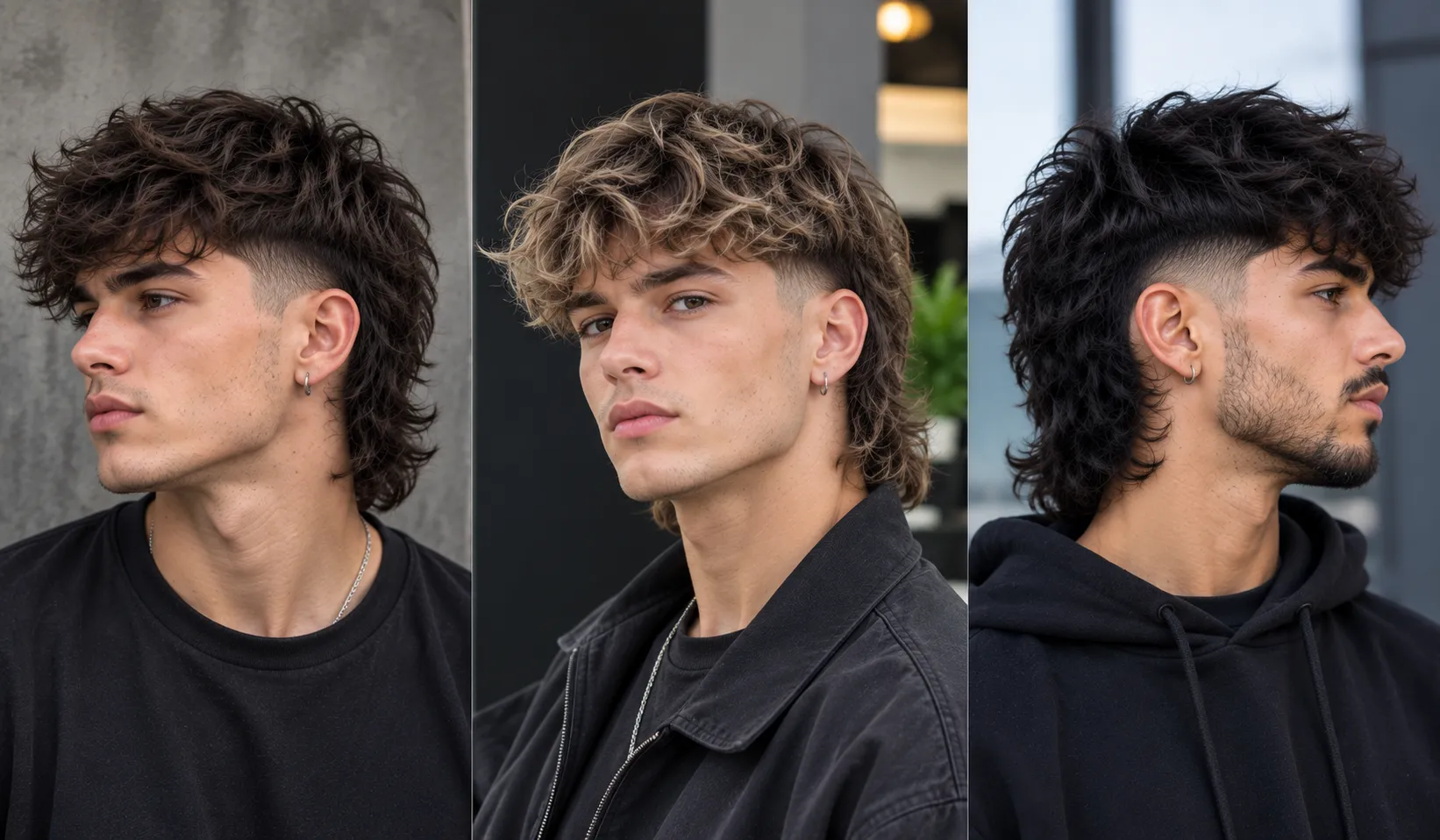
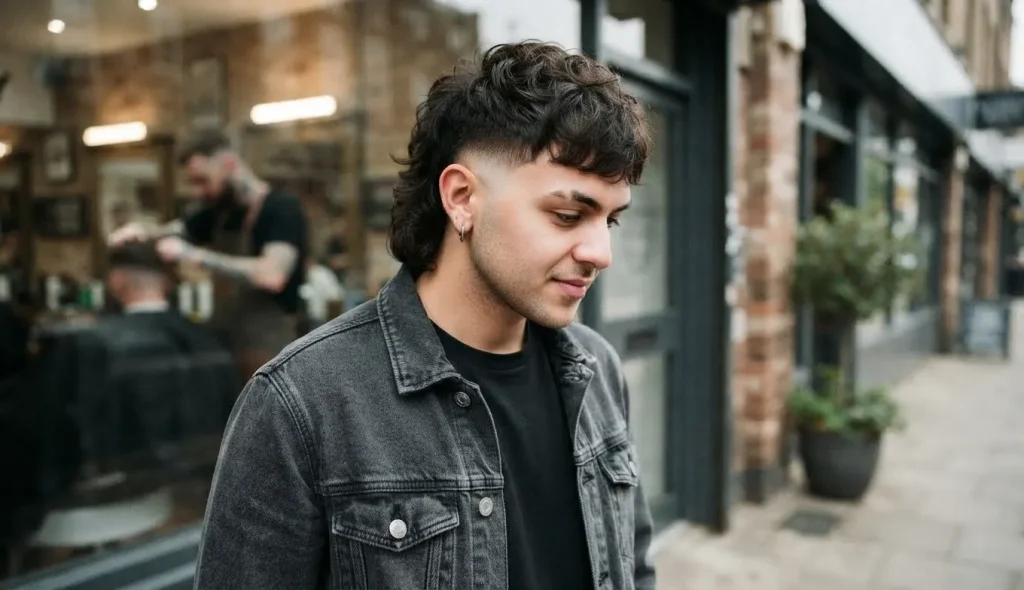
Short on the sides, long in the back. That’s the whole idea behind a modern mullet, but the execution has come a long way since the 80s version everyone jokes about. Barbers blend the two lengths with a fade now instead of leaving that hard, awkward line, and they add layers on top so it looks styled instead of just grown out.
I’ve seen it work on straight hair, curly hair, wavy, coily, pretty much anything, as long as the fade height and back length actually match the person’s face instead of getting copied off some Pinterest photo. Here’s everything worth knowing before you sit in the chair, including the stuff most articles skip. What it actually costs. What the growing-out phase really looks like. And what to do if your barber gets it wrong.
What Actually Makes a Mullet “Modern”

Old mullets had one real problem. There was no transition. Short hair, then suddenly long hair, stuck together at the neck like two different haircuts got glued on by accident.
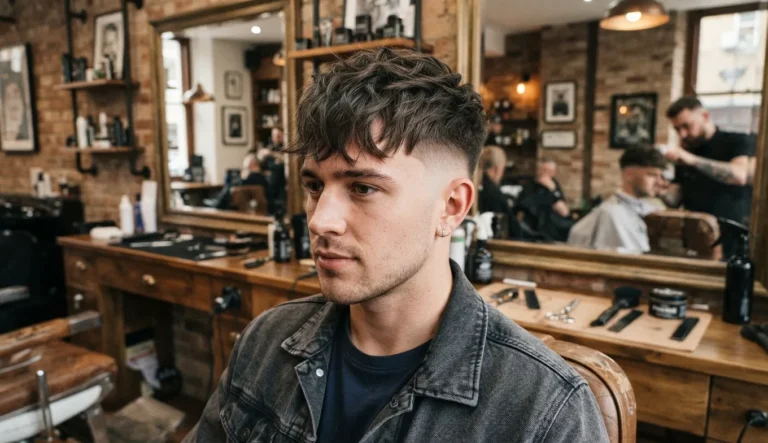
A modern one fixes that with a fade or a taper. The sides shrink into the length gradually instead of just stopping. Most barbers point-cut the top too, so it looks intentional rather than overdue for a trim.
If you ask me, the back length is where all the personality lives. Keep it just past the collar and it barely reads as a mullet from the front, more like a longer taper fade with a surprise in back. Let it hit the shoulders and now everyone knows exactly what you’re doing. Neither one’s wrong. It just comes down to how much attention you actually want.
Where the Cut Came From
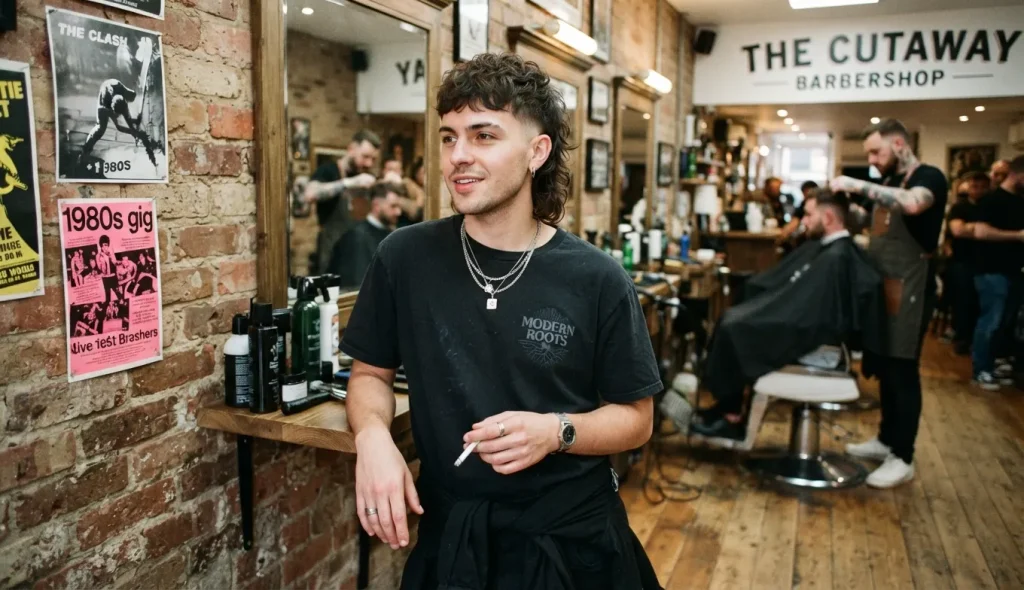
Some hair historians trace short-front, long-back cuts all the way back to the sixth century, which is a neat piece of trivia and not much else. The version people actually picture started in the 70s, with musicians like David Bowie and Rod Stewart wearing early versions of it. It peaked in the 80s thanks to guys like Billy Ray Cyrus, then pretty much disappeared for two decades.
Funny enough, the name came after the cut itself. The Beastie Boys dropped the word in a 1994 song and it just stuck.
Then 2020 happened, and barbershops closed for months. A lot of guys ended up with hair that was long in the back whether they’d planned that or not. Barbers started shaping that accidental growth into something on purpose, and that’s really how the mullet came back. Not as some deliberate revival. More of a happy accident that stuck around.
Athletes ran with it next. One well-known look at AFL rosters in Australia found roughly one in five players had some version of a mullet, with the youngest guys leading by a mile and almost nobody over thirty bothering. Actors followed close behind. Jacob Elordi, Paul Mescal, and Austin Butler have all worn their own takes on it in recent years, and honestly that’s probably what pushed it from “niche throwback” into something barbers hear every single day now.
READ MORE : Mid Taper Fade Curly Hair: Style, Cost, and Care Guide
Choosing the Right Mullet for Your Face and Hair
Most guides skip this part completely, which is a shame because it’s the part that actually decides whether the cut works. Get the fade height or back length wrong and it’ll mess with your proportions way more than the mullet shape itself ever could.
Face Shape
| Face Shape | What Helps | Styles to Try |
| Round | Height on top, higher fade on sides | Modern mullet, mohawk mullet |
| Square | Softer, textured top | Curly mullet, shaggy mullet |
| Long | Fuller top, shorter back length | Short mullet, French crop mullet |
| Oval | Almost anything works | Classic mullet, curtain mullet |
| Heart | Fringe that softens the forehead | Curtain mullet, comma hair mullet |
| Diamond | Volume at the temples, medium back length | Wolf cut, layered mullet |
Not sure which one’s yours? Skip the mirror trick everyone recommends and just measure with your eyes, forehead against cheekbones against jaw. Whichever’s widest gives you the answer.
Hair Type
| Hair Type | Best Fit | Watch Out For |
| Straight | Sharp fades, clean lines | Flat crown without product |
| Wavy | Natural texture mullets | Frizz without a leave-in |
| Curly | Volume-heavy styles, tighter side fade | Weight from heavy pomade |
| Coily/Afro | Shorter, controlled back length | Length pulling the shape out of proportion |
| Fine | Texture powder over clay | Heavy products flattening volume |
| Thick | Heavier layering, stronger hold products | Bulk if layers get skipped |
The Full List of Modern Mullet Styles
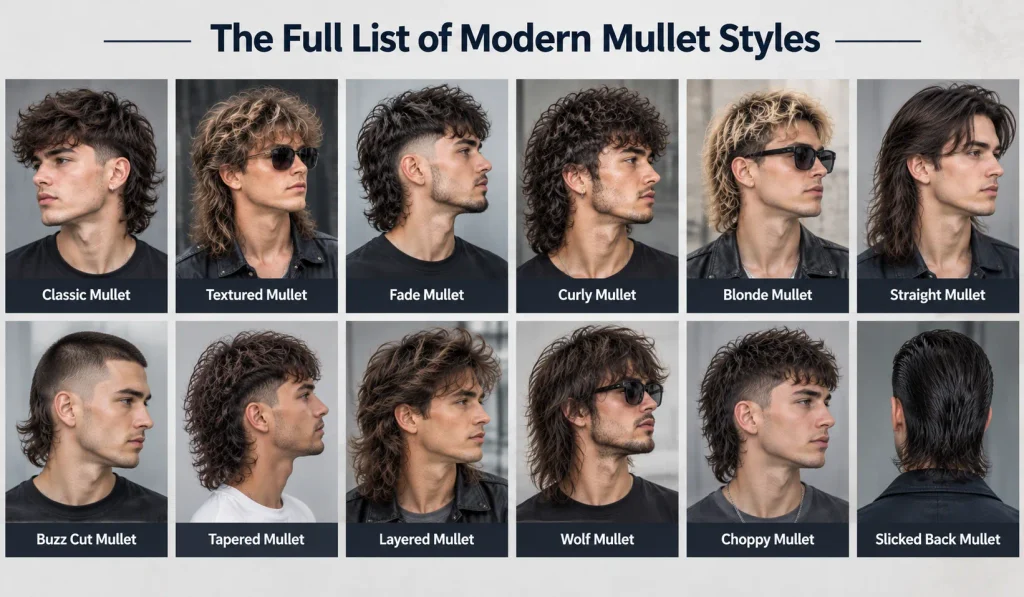
There’s a lot of names floating around for what’s basically the same handful of ideas. Here’s how they actually break down.
Fade mullets — short, faded sides paired with length left in the back:
- Mullet fade / skin fade mullet: skin-close sides, sharp contrast
- Low fade mullet: fade sits just above the ear, subtle enough for most offices
- High fade mullet: starts near the temple, reads a lot sharper
- Burst fade mullet: curves around the ear instead of a straight line, gives it a rounder look
- Taper, mid taper, and low taper mullets: softer alternatives if a full skin fade feels like too much
Textured mullets — skip the sharp fade and lean on natural movement instead:
- Curly mullet, wavy mullet, shaggy mullet: layers cut through the top and back until it moves on its own
- Fluffy mullet, textured mullet: extra volume without much shape work
- Permed mullet: uses actual chemical curls to fake volume that straight hair won’t give naturally
Fringe mullets — where most of the personality sits up front:
- Curtain mullet: parted down the middle, swept to both sides, common in Korean and K-pop styling
- French crop mullet: blunt, straight fringe instead of anything swept
- Comma hair mullet: fringe curved into a soft shape across the forehead
- Mullet with bangs: straight fringe up front, length everywhere else
Bold mullets — for anyone who doesn’t mind the attention:
- Mohawk mullet, undercut mullet: shaved sides, dramatic contrast
- Spiky mullet, punk mullet: top spiked or pushed forward hard
- Faux hawk mullet: same idea, toned down slightly
None of these are what I’d call office-friendly, but they work great somewhere more relaxed.
Regional and cultural takes:
- Korean mullet, K-pop mullet: soft, face-framing layers, smoother top than most Western versions
- Wolf cut: started in Korea before short-form video spread it everywhere, basically a mullet crossed with heavy shag layering
- Asian mullet, Euro mullet: similar regional spins with their own fringe and volume choices
By length, since it’s really the same haircut at different commitment levels:
- Short mullet: barely peeks past the collar, good entry point if you’re nervous
- Medium mullet: sits between the two, most versatile day to day
- Long mullet: reaches the shoulders, takes real patience to get there
How to Ask Your Barber for a Mullet
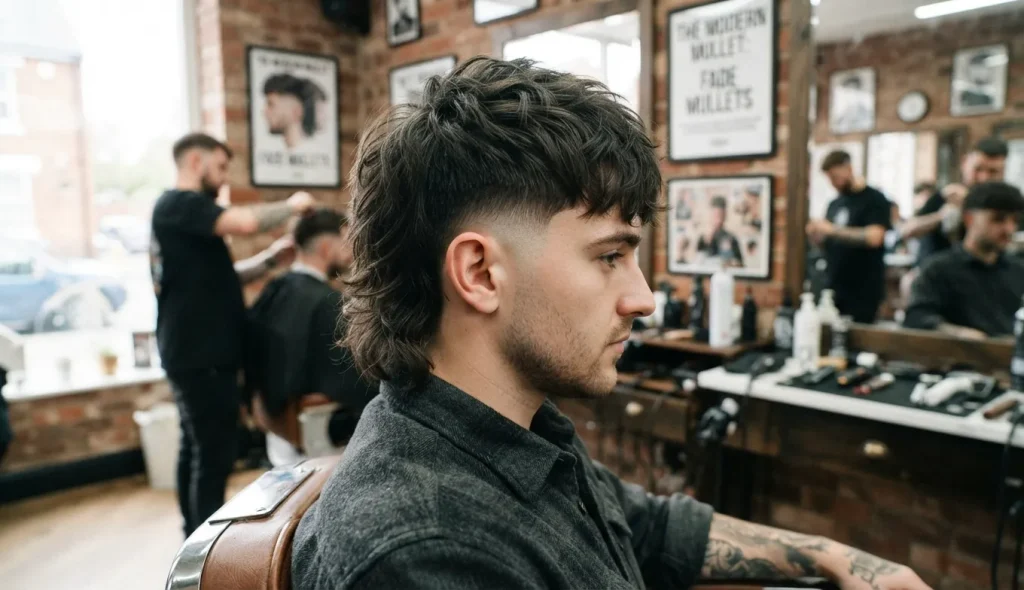
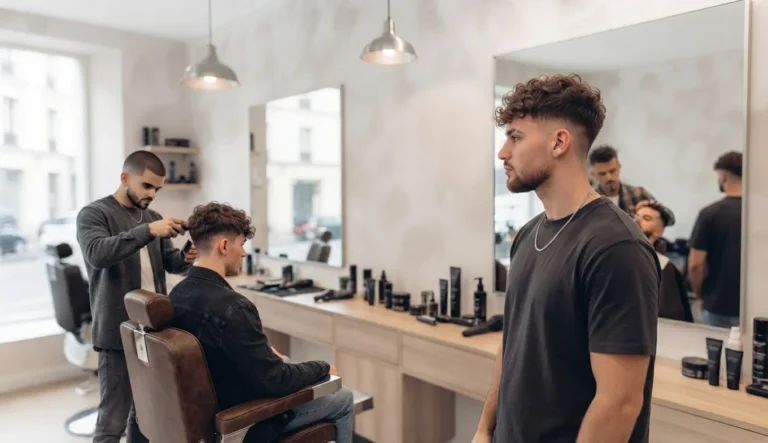
Bring three photos, not one. Front, side, back. A single front-facing shot tells your barber nothing about how much length you actually want kept in the back, and you’ll end up guessing together in the chair. Nobody wants that.
Give an actual guard number for the sides, a one or a two, and say plainly if you want skin, low fade, or just a taper. Say the back length in inches, not “long.” Two guys can both say “long” and mean anything from four inches to shoulder length, I’ve seen it happen.
Bring up your morning routine too, seriously. If you’ve got five minutes before work, tell them that. A decent barber will shape the cut around how much effort you’ll realistically put in, not around a photo you’ll never actually recreate at home.
“Just give me a mullet” is basically asking for something way more dramatic than you meant.
How to Style It
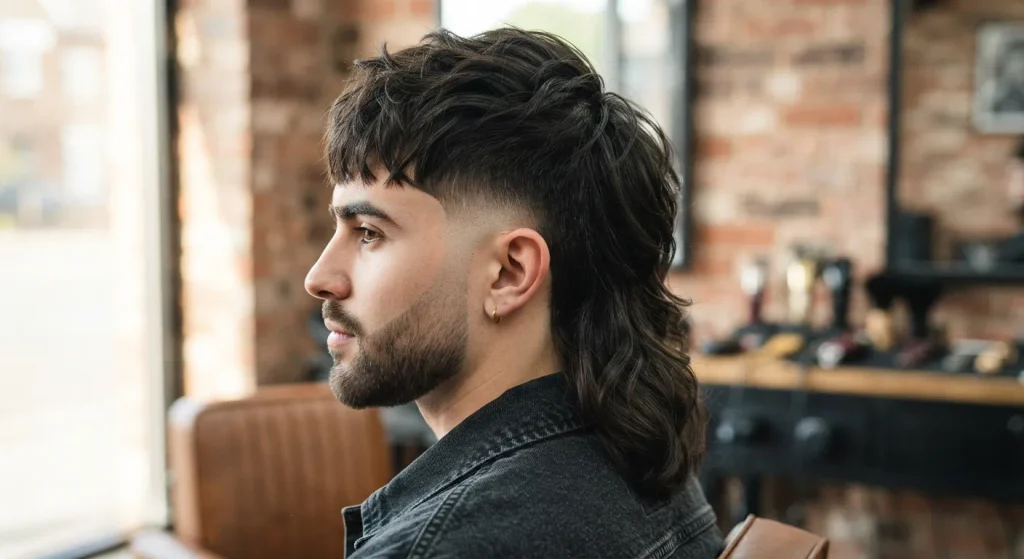
It starts in the shower, not with the product. Clarifying shampoo once a week clears buildup out. The light conditioner keeps volume from sinking, since anything heavier flattens the top fast.
Towel dry, then work sea salt spray through while it’s still damp. It adds grip and a bit of rough texture that helps everything hold through the day without going crunchy or stiff.
If your hair’s curly or wavy, a Diffuser on low Heat, dried in sections, keeps the curl pattern intact instead of stretching it loose. Straight hair prefers the roots blown upward first for lift, then pushed back.
Finish it off with clay for firm matte hold, pomade if you want shine, or texture powder if your hair’s too fine to handle much weight.
What It Actually Costs
Nobody talks about this, which is strange since it’s probably the first thing most guys actually want to know. Real barbershop pricing in the US runs pretty wide:
- Standard cut with clippers and shears: 25 to 45 dollars
- Skin fade, since it takes more time and precision: 36 to 55 dollars
- Beard trim added on: another 15 to 25 dollars
- Perm for a curly mullet: roughly 80 to 150, usually every few months rather than every visit
The city matters more than the actual cut, in my experience. Reported averages put a basic haircut around 32 to 34 dollars in Chicago, Denver, and Dallas, closer to 37 in New York, and up around 45 to 49 in LA and San Francisco.
READ MORE : Mid Taper Fade Guide: Styles & Face Shapes (2026)
Trim the sides every four weeks and a skin fade mullet runs somewhere between 470 and 715 dollars a year. Stretch that out to six weeks and it drops to about 310 to 475. These numbers shift depending on your city and your barber’s skill level, obviously, but at least now you’ve got a real range instead of a shrug.
Maintenance and Trim Schedule
The sides always grow out faster than the back, and that mismatch is exactly what turns a mullet from sharp into sloppy. Most barbers land on four to six weeks for the sides. The back barely needs touching, mostly just to clean up split ends and keep the layers looking even.
Between cuts:
- Light leave-in if your hair dries out, especially if it’s colored
- Smoothing serum for frizz on humid days
- Heat protectant before any blow-drying, every time, no exceptions
Growing Out a Mullet: What the First Few Weeks Actually Look Like
Nobody warns you about this part, so I will. Getting enough length in back for a real mullet takes three to five months depending on how fast your hair grows, and the first month just looks like you’re overdue for a haircut. That’s completely normal, don’t panic about it.
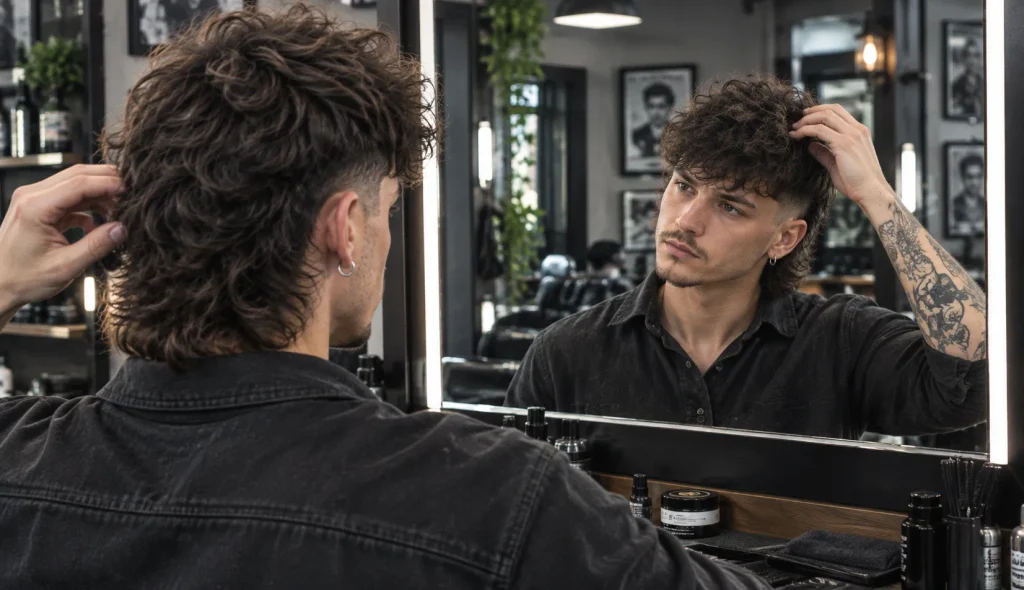
Ask your barber to keep the sides sharper than usual through this stretch. A crisp fade pulls attention away from that awkward in-between length at the back. Once it finally clears the collar, usually somewhere around week eight or ten, the whole thing suddenly reads as intentional instead of neglected.
Still trim just the ends every couple of months while you’re growing it out. Stops split ends from creeping up without slowing down the length you’re actually trying to keep.
Fixing a Mullet That Went Wrong
This happens more than people admit. A few common problems and what actually fixes them:
- Back grew out unevenly: Don’t reach for the clippers and shave it all off in frustration. Ask your barber to even the layers out first and see what’s actually salvageable before you cut away months of growth.
- Fade grown out past the line: A quick re-fade appointment between your regular trims usually sorts it without touching the back at all. Most barbers knock that out in fifteen minutes for a reduced price.
- Just done with it: Ease out gradually instead of chopping it all at once. Cutting the back shorter over two or three visits blends way better than one drastic cut that leaves an obvious step behind.
Wearing a Mullet at Work
Cleaner versions, think classic mullet, low fade mullet, French crop mullet, read as professional enough for most offices. The contrast’s there, it’s just quiet about it.
Mohawk and undercut mullets fit creative jobs, hospitality, and trades a lot more comfortably than a strict corporate office. Not sure where yours lands? Ask for a subtle taper instead of a sharp fade and keep the back shorter. Still technically a mullet, just an easier sell.
Mistakes Worth Avoiding
- Being vague with your barber. “Just do a mullet” almost always comes back more dramatic than you meant.
- Skipping side trims. The fade outgrows the back length fast and throws the whole shape off balance.
- Heavy product on fine hair. Flattens instead of lifting it.
- Ignoring your face shape. You end up fighting your own features instead of working with them.
- Growing it out with zero trim schedule. Turns into a mess by month two, every single time I’ve seen it tried.
Frequently Asked Questions
What is a modern mullet?
Short, faded, or tapered sides with a longer back, blended together with texture instead of a hard line.
How is it different from a classic mullet?
A classic mullet has a sharp, unblended line between the short front and long back. A modern one fades that transition and usually adds layering on top.
What face shape suits a mullet best?
Oval has the most room to work with. Round, square, long, heart, and diamond shapes all suit it too, once the fade height and top volume get adjusted for them.
How often should I get it trimmed?
Every four to six weeks for the sides. The back needs it far less, mostly just to remove split ends.
Can curly hair handle a mullet?
Yes, easily. Curly hair adds volume on its own and pairs well with a diffuser and a light curl cream.
How long does it take to grow one out?
Three to five months before the back reaches a length that clearly reads as a mullet. The first month will look rough, that’s just part of it.
What does a mullet cost per year?
Somewhere around 310 to 715 dollars depending on trim frequency, your city, and whether you’re getting a skin fade or just a taper.
Can I wear a mullet at a corporate job?
Subtle versions with a clean taper and shorter back length usually work fine. Bolder, high-contrast versions do better in relaxed workplaces.
Conclusion
A modern mullet isn’t just short sides and a long back anymore. It’s a cut that actually gets shaped around your face, your hair type, and how much time you’re willing to spend on it every morning. The styles are only half the picture. Knowing what to say to your barber, what it’ll cost you over a year, and what the awkward growing-out weeks actually look like matters just as much, maybe more.
Skip the vague requests, bring real photos, and get the sides trimmed on schedule. That’s really the whole difference between a mullet that looks intentional and one that just looks overdue for a haircut. Pick the version that fits your face and your routine, not the one that
About the author
M. Haroon writes about men’s grooming and hairstyling, focused on practical, barber-tested advice instead of trend roundups. This guide is built on current barbershop pricing, documented style history, and standard barbering practice. Use it to have a better conversation with your barber, not to replace one. Every head of hair is different, and a good barber will adjust anything here to fit yours.