By M. Haroon. Last updated: September 2026.
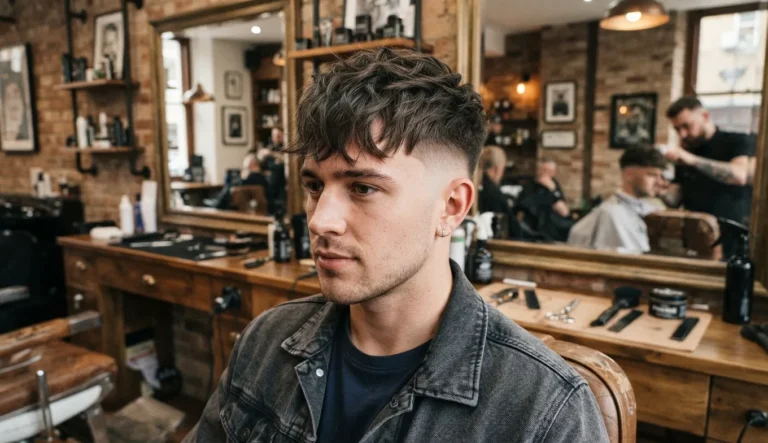
A low fade stays short around your ears and neck, then climbs into longer hair on top. Most barbers start the blend about an inch above the ear, so the contrast stays soft instead of jumping out at you. Move that starting point around and you’ve basically got a different haircut: taper, mid fade, high fade, all the same idea, just placed differently on the head.
Here’s the thing nobody tells you upfront: a fade that starts an inch too high looks fine on day one and rough by day ten. This guide walks through 30 styles, the actual guard numbers to ask for, a script you can hand your barber word for word, and what to do if you’re one of the guys who gets razor bumps from close cuts.
Key takeaways
- Never say “just a fade.” Give the height, the bottom (skin, shadow or taper) and the top length.
- Of the three fade heights, the low fade grows out the slowest.
- Curly hair shrinks as it dries, so judge the fade height on dry hair.
- Start with a longer guard. A barber can always go shorter, but nobody can glue length back on.
- Coarse hair plus a skin fade often means razor bumps. A shadow fade or taper is the safer pick.
In this guide: What is a low fade · Low fade vs taper · Low vs mid vs high · Which fade is right for you · 12 styles in detail · 18 more styles · Face shape · Hair type · Barber script · Guard chart · Cost · Grow-out timeline · Styling · DIY · Mistakes · FAQ · Conclusion
What Is a Low Fade Haircut?
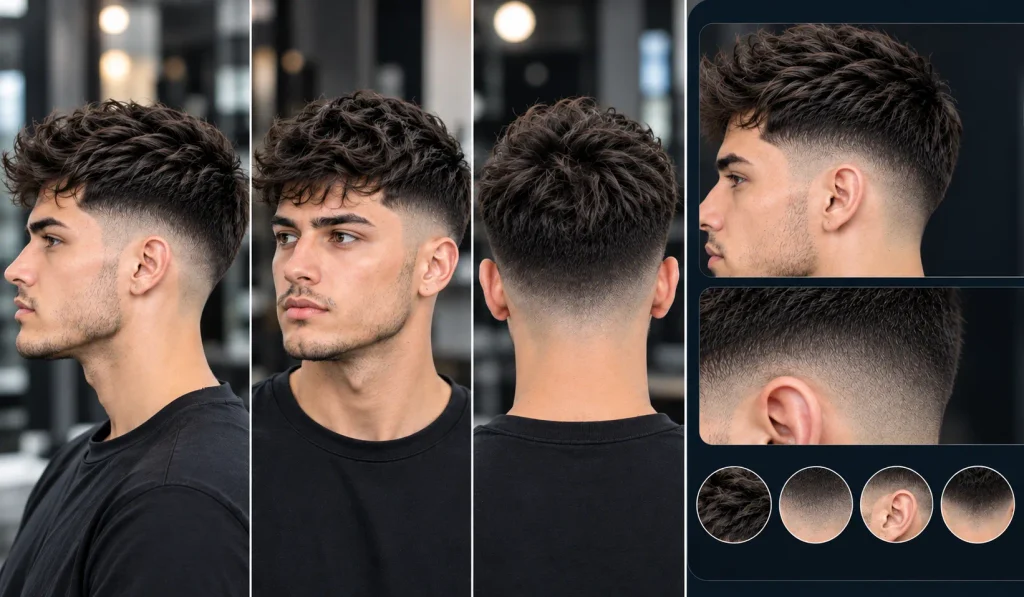
Think of a low fade as a clipper cut where the shortest hair sits down low, around the ears and the nape. From there the length climbs in small steps until it meets the longer hair on top. If you can point to the exact spot where short turns into long, the blend isn’t good. That smooth transition is what barbers call the blend, and honestly it’s the quickest way to tell a great barber from an average one.
Most barbers begin about 2.5 cm (1 inch) above the top of the ear, curve the line around the ear and bring it down toward the neck. Some start a little higher or lower. There’s no official standard, so “low” means something slightly different in every shop. That’s exactly why a photo or a measurement works better than the word on its own.
The top is completely up to you: a buzz, a crop, curls, a quiff, even hair long enough for a bun. That freedom is a big reason the low fade never leaves barbershops.
Low Fade vs Taper: What’s the Difference?
People mix these two up all the time, and so do some barbers.
| Low taper | Low fade | |
| How short does it go? | Stays longer at the base | Can go to skin or a very short shadow |
| Area covered | Mostly sideburns and neckline | A bigger area around the ears and back |
| Look | Soft, conservative | Sharper, more contrast |
| Best for | Formal settings, first-timers | Anyone who wants a clearer edge |
Low Fade vs Mid Fade vs High Fade
The only real difference is where the blend begins, but that changes the contrast, the upkeep and how formal the cut feels.
| Low fade | Mid fade | High fade | |
| Starts | About 2.5 cm above the ear | Around the temple | Above the temple |
| Contrast | Soft | Medium | Strong |
| Typical touch-up | 3 to 4 weeks | 2 to 3 weeks | About 2 weeks |
| Best for | Office, school, first fade | Most casual looks | Statement cuts |
Which Low Fade Is Right for You?
A quick cheat sheet before you scroll through the styles:
- Safest, most professional look: low taper fade
- Sharp contrast, and you don’t mind frequent touch-ups: low skin fade
- Coarse or curly hair that gets razor bumps: low shadow fade or taper
- Curls or an afro: low temp fade or low burst fade
- A modern edge without going bold: low drop fade
- You hate barber visits: low taper with a tapered neckline
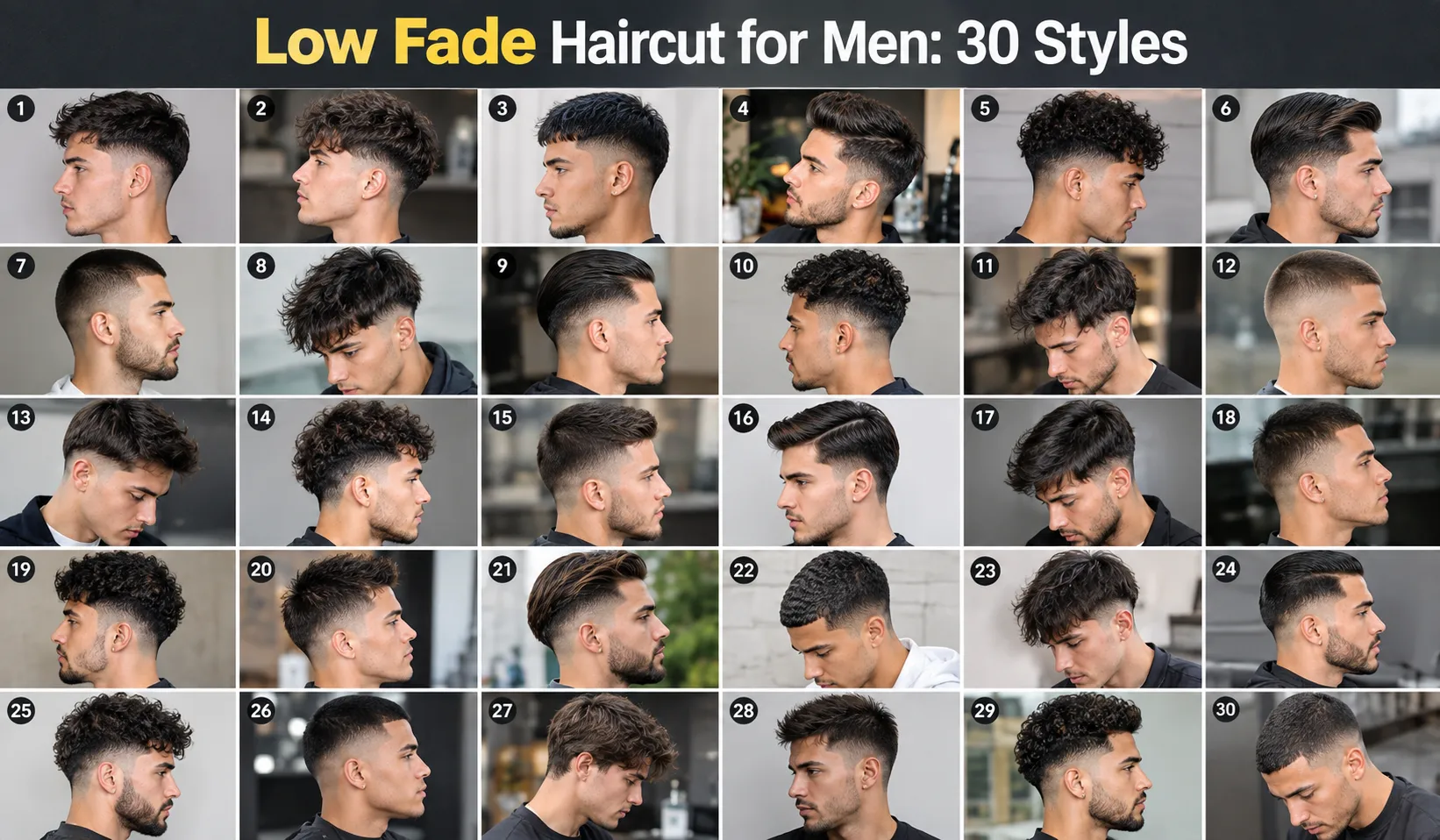
12 Low Fade Styles in Detail
Each one comes with who it suits, what to say to your barber, a product that works and when to go back.
Fade types
1. Low taper fade.
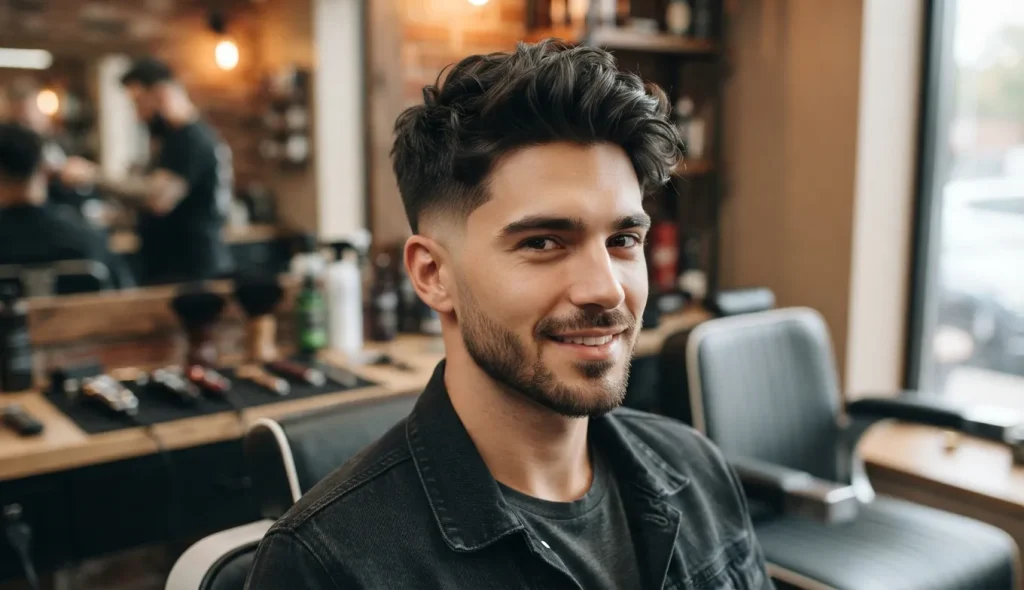
A soft blend around the ears and neckline, with the sides left fuller. It’s the go-to for first-timers, offices and anyone who wants zero drama. Say: “Low taper, keep the sides fuller, natural neckline.” A light cream or matte clay is enough. Go back every 3 to 4 weeks.
2. Low skin fades.
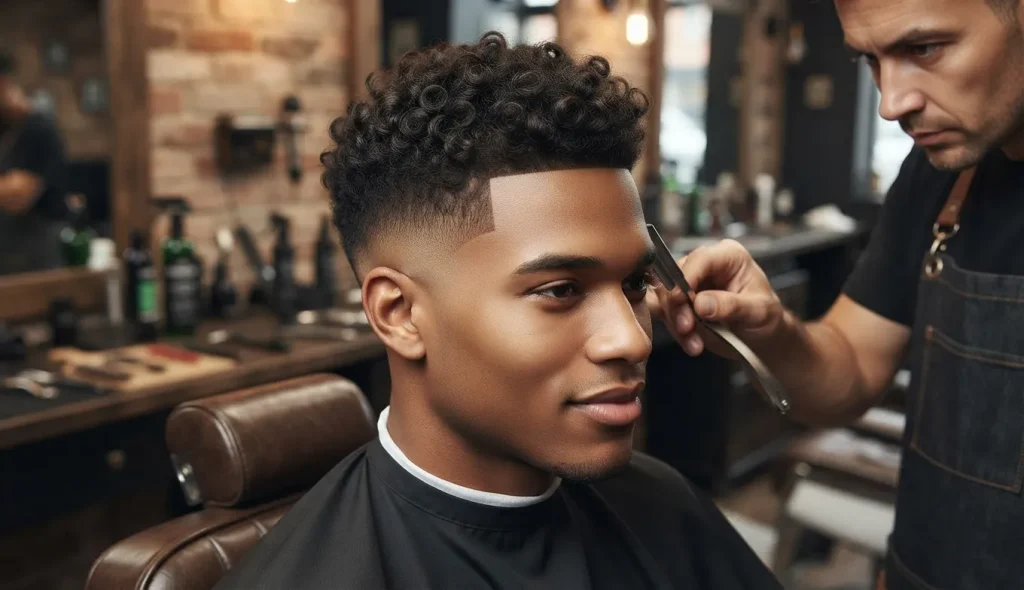
The blend ends at bare skin, so you get strong contrast and a very clean look. The catch: it stops looking fresh quickly. Say: “Low skin fade, start about an inch above the ear, blend it smooth.” The fade itself needs no product, so choose one for your top. Expect to return every 2 to 3 weeks, and skip this one if you’re prone to razor bumps.
3. Low drop fade.
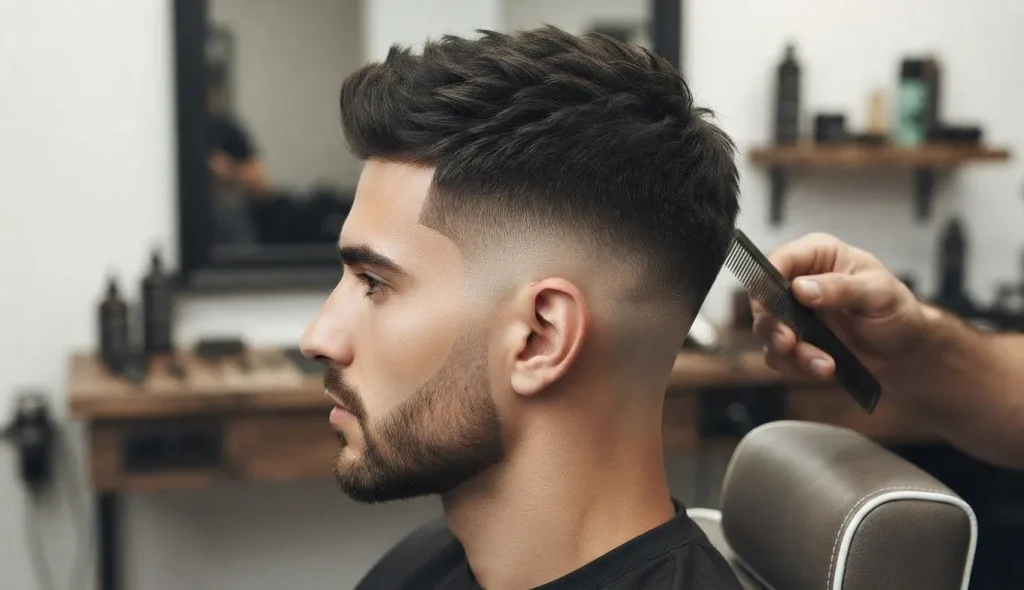
Instead of running flat, the line curves down behind the ear and follows your skull. It looks modern without being loud. Say: “Low drop fade, curve it behind the ear.” Matte paste or clay on top works well. Every 3 weeks.
4. Low burst fade.
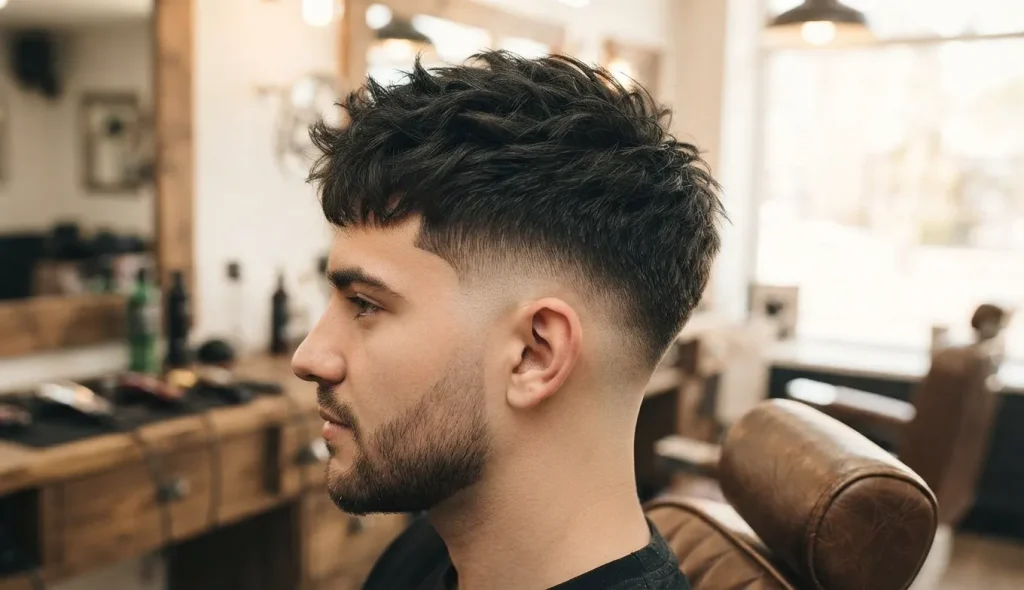
This one arcs around the ear in a half circle and leaves the back longer, which is why it pairs so naturally with curls, mullets and mohawks. Say: “Low burst fade, arc around the ear, leave more length at the back.” Work matte clay through dry hair from back to front. Every 3 weeks.
5. Low temp fade.
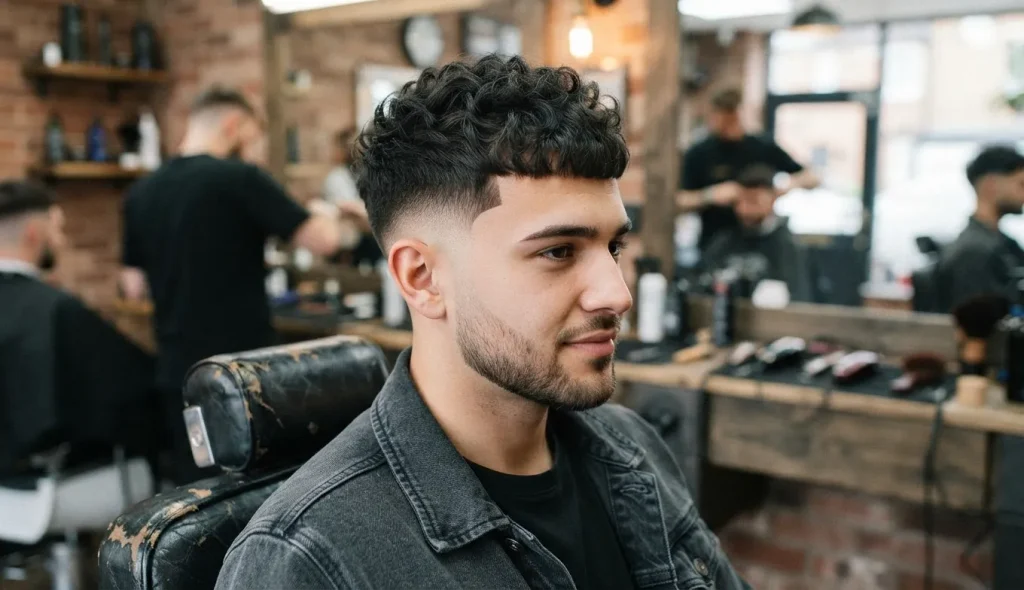
Only the temples and neckline get faded, so the overall shape stays natural. It’s a strong choice for afros and short curly hair. Say: “Low temp fade, tight at the temples, clean lineup, keep the back fuller.” Curl cream or a light oil suits it. The temple edge loses definition first, so plan on 2 to 3 weeks.
6. Low shadow fade.
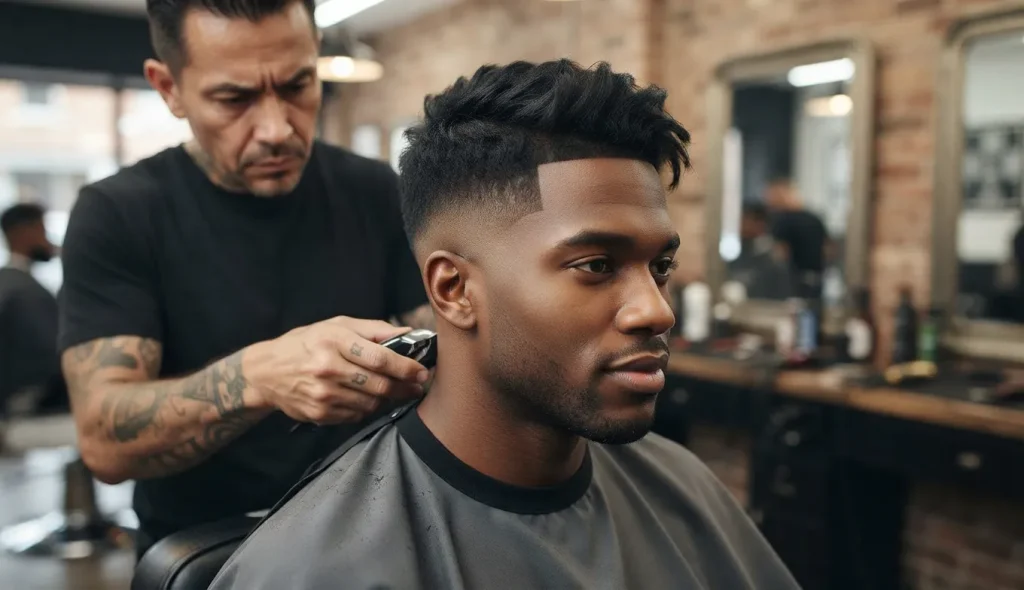
Instead of going to skin, the blend stops at a short guard, usually a #0.5 or #1. It’s softer than a skin fade and much kinder to sensitive skin. Say: “Low shadow fade, stop at a #1, no skin.” Matte clay or paste on top. Every 3 to 4 weeks.
Top styles

7. Buzz cut with a low fade.

One guard length on top, usually #2 to #4. Go longer if your head shape is a bit uneven, since a longer guard hides that better than a short one. Say: “Low fade, #3 on top, blend it into the sides.” No product needed. Every 3 weeks.
8. Textured crop.
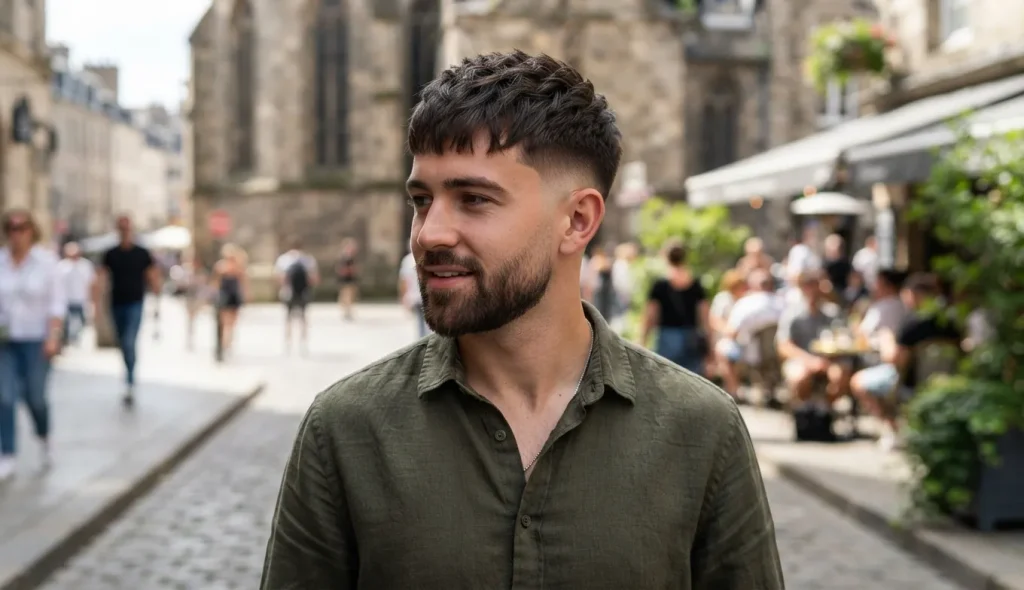
A choppy top with a short fringe. It’s casual, modern and forgiving on fine or wavy hair. Say: “Low fade, textured crop, about 5 cm on top, short fringe.” Matte clay or paste. Every 3 to 4 weeks.
9. Side part.
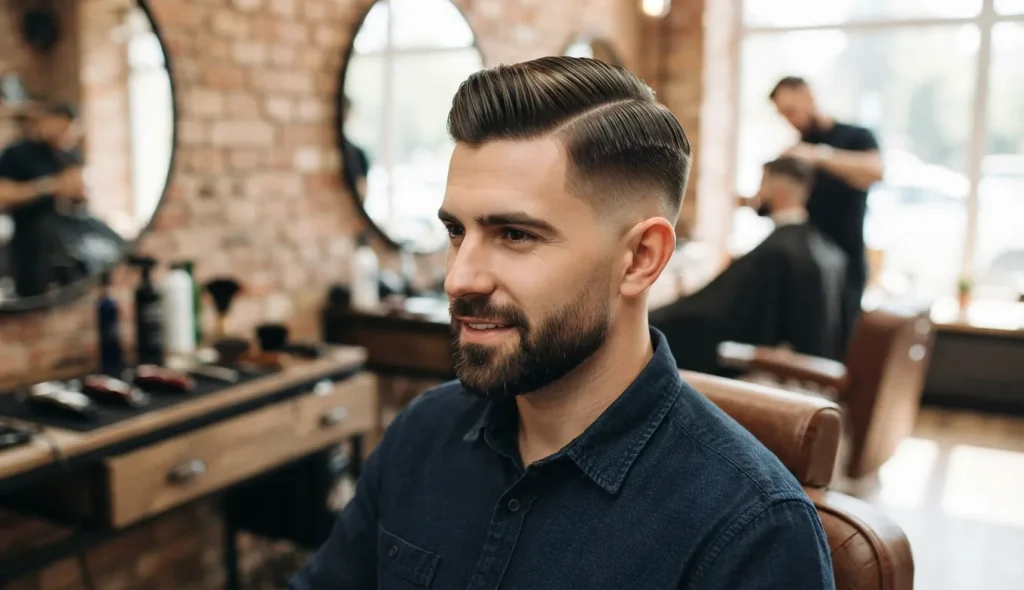
A crisp part over a smooth top, and the classic office pairing. It looks best with a low taper. Say: “Low taper fade, hard side part, leave about 6 cm on top.” Pomade if you want shine, cream if you want it natural. Every 3 weeks.
10. Quiff.

Height at the front with a soft finish. Round faces do well with it because the volume makes the face look longer. Say: “Low fade, leave 7 to 8 cm at the front for a quiff, shorter toward the back.” Blow-dry the roots up first, then add matte clay. Every 3 weeks.
11. Curly top.

Loose curls sitting over tight sides. The contrast is what makes the curls look deliberate. Say: “Low fade or temp fade, leave the curls long enough to form, and set the fade height on dry hair.” Curl cream works best, ideally with a diffuser. Every 3 weeks.
12. Long on top.

Short blended sides with enough length up top to sweep back or to the side. The fade stops the cut from looking overgrown. Say: “Low taper, keep the length on top, just tidy the ends.” Light cream, plus a little oil if your hair runs dry. Every 4 weeks.
READ MORE : Mid Taper Fade Guide: Styles & Face Shapes (2026)
18 More Low Fade Styles
- Crew cut. A short, even top with a neat outline. Styling takes under a minute.
- French crop. A blunt, straight fringe over a short top. Blow-dry it forward.
- Caesar. Short top brushed forward. The fringe helps soften a receding hairline.
- Comb over. A deeper part swept across the head. Looks sharp with a beard.
- Slick back. Combed straight back with a bit of light pomade.
- Pompadour. Big volume at the front, swept back. Blow-dry it up before you shape it.
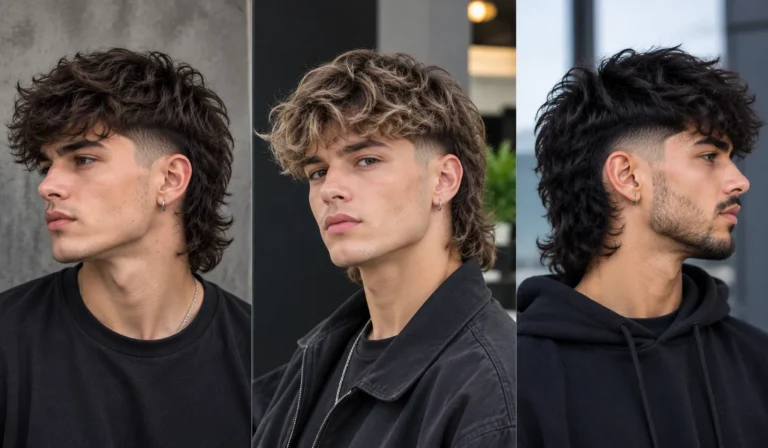
- Mullet. Short sides, length at the back. The fade keeps it modern.
- Man bun. Long hair tied at the crown with tidy sides.
- Middle part. Hair falls to both sides from the center. Best on straight or wavy hair.
- Messy fringe. A layered top with a forward fringe. Sea salt spray adds grit.
- 360 waves. Brushed waves over a low fade. You’ll need a steady brush routine.
- Afro. A full, round top with a clean edge.
- Blowout. Volume lifted with a dryer over tight sides.
- Edgar. A blunt fringe over short sides. Suits thick hair.
- Mohawk or faux hawk. Length down the center, sides tight.
- Fade with a design. A razor line or pattern in the fade zone. Pick a barber who does these often, and book a day or two before an event, because the lines blur within a week.
- Fade with a beard. The fade merges into the beard line. Keep the beard edges sharp so the two look connected.
- Blonde top. Bleach or dye adds contrast. Use conditioner, because bleach dries hair out.
How to Choose a Low Fade for Your Face Shape
The fade stays low for every face shape. The top does the balancing.
| Face shape | Best top | Why |
| Round | Quiff or pompadour | Height makes the face look longer |
| Square | Textured crop or side part | Softens strong angles |
| Oval | Almost anything | Balanced proportions handle most cuts |
| Oblong | Fringe or a shorter top | Avoids adding more height |
| Heart | Side part or fringe | Balances a wider forehead |
| Diamond | Fringe or textured top | Adds width at the forehead |
Best Low Fade by Hair Type
Straight hair.
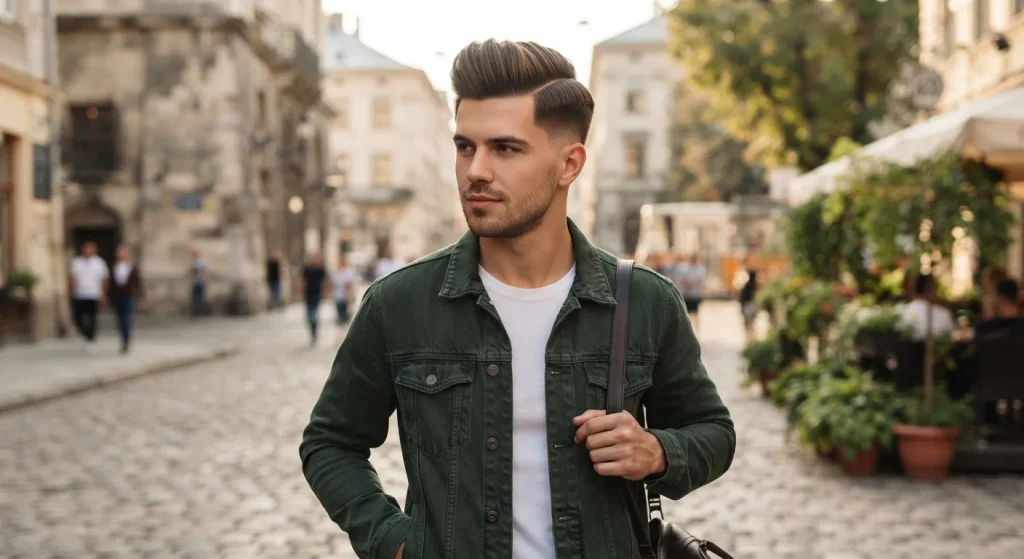
It shows every uneven patch, so blend quality matters even more. Ask for some layers on top so the cut doesn’t look flat.
Wavy hair.

Keep about 5 to 7 cm (2 to 3 inches) on top so the waves have room to show.
Curly hair.

Curls pop against tight sides. One thing many guys miss: curls shrink when they dry. A fade that sits at ear level on wet hair can look noticeably higher once it’s dry, so describe the height you want based on dry hair.
Coily hair.
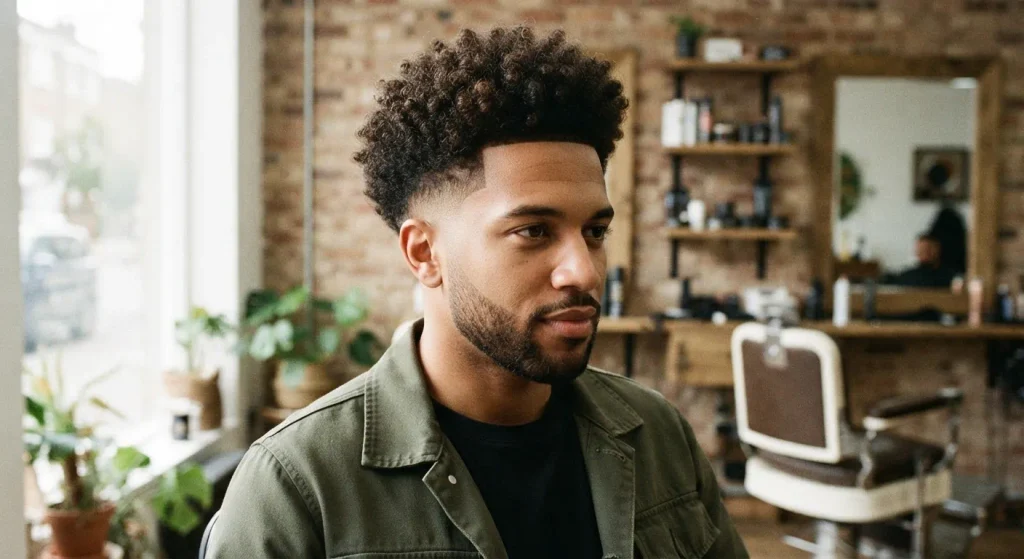
A temp fade or taper keeps a natural outline. If you go for a skin fade, plan on shorter gaps between visits.
Fine or thinning hair.
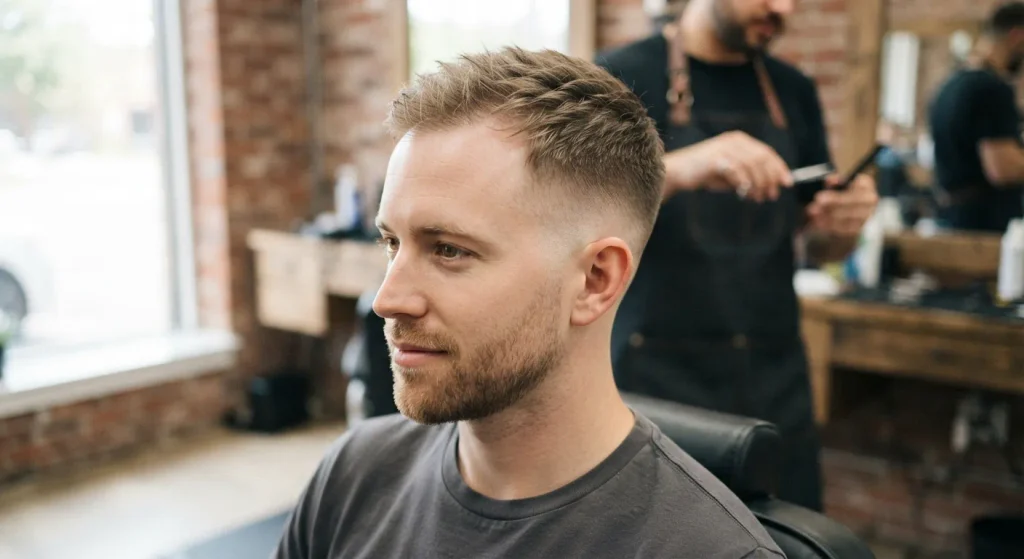
A low fade leaves more hair on the sides, which makes the head look fuller. Keep the top textured and not too short. A choppy crop or a Caesar hides thin spots far better than a slick back.
Thick hair.
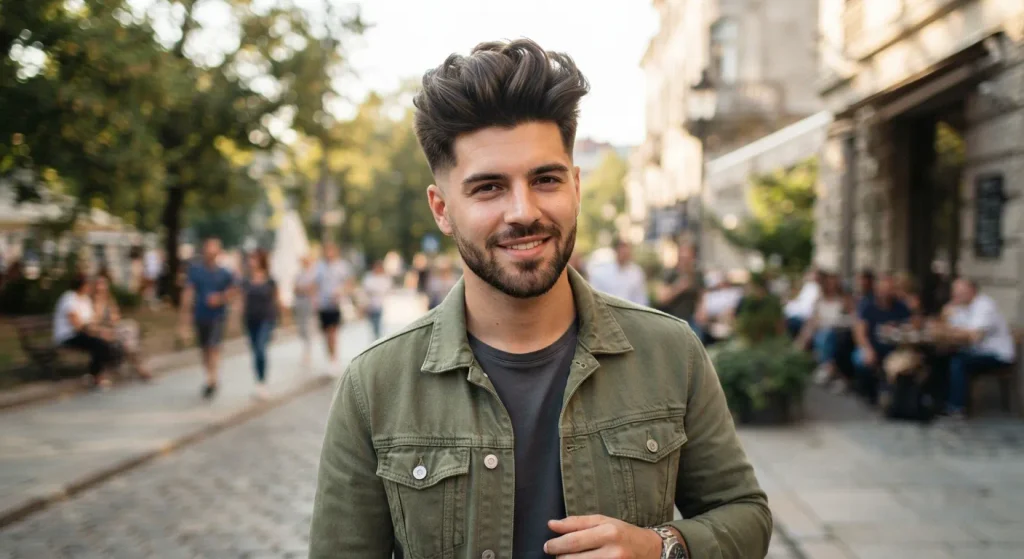
Ask the barber to point-cut or thin the top so it lies flat. The fade already removes bulk from the sides.
A Note on Razor Bumps
Very close cuts can cause ingrown hairs, especially on coarse or curly hair around the neck. The medical term is pseudofolliculitis barbae. According to the American Academy of Dermatology, the bumps appear when hair curves back into the skin after close cutting or shaving. If you break out after a skin fade, switch to a shadow fade or a longer guard. If it keeps coming back, see a dermatologist.
READ MORE : Mid Taper Fade Guide: Styles & Face Shapes (2026)
How to Ask Your Barber for a Low Fade
“Just a fade” leaves far too much to guesswork. Give four details:
- Fade height (in cm, inches, or “one finger above my ear”)
- Fade type (skin, shadow or taper)
- Top length and style
- Neckline shape and lineup
Here’s a script you can copy:
“I’d like a low fade. Start the blend about an inch above my ear. Take the bottom to a shadow, not skin. Leave about two inches on top with some texture, and keep the neckline tapered. Soft lineup, please.”
Swap in your own numbers, and bring photos from the front, side and back. One photo can’t show a fade line.
Signs your barber understood you
- They ask where the fade should start before picking up the clippers.
- They begin with longer guards and work down.
- They check both sides against each other.
- They show you the back in a mirror before finishing.
If a barber starts cutting without asking a single question, slow them down and repeat your script.
Clipper Guard Cheat Sheet
| Guard | Length (inch) | Length (mm) | Typical use |
| #0 / bare blade | Skin | 0 | Bottom of a skin fade |
| #0.5 | 1/16 | 1.5 | Bottom of a shadow fade |
| #1 | 1/8 | 3 | Bottom of a shadow fade or short sides |
| #2 | 1/4 | 6 | Sides above the fade |
| #3 | 3/8 | 10 | Sides above the fade |
| #4 | 1/2 | 13 | Short top |
| #6 | 3/4 | 19 | Medium top |
| #8 | 1 | 25 | Longer top |
Neckline Options
- Blocked: a square edge. Sharp on day one, messy by week two.
- Rounded: a soft curve and a good middle ground.
- Tapered: fades into the skin. It grows out best, so choose it if you want low upkeep.
How Much Does a Low Fade Cost?
It depends on your city, the shop and the barber’s experience. A basic low fade or taper usually costs less than a skin fade finished with a razor. Designs, beard work, long hair and colour all add time and money.
In the US, a basic low fade or taper typically costs $30 to $45 at a regular barbershop, and a skin fade with beard work usually runs $45 to $60. Chains are cheaper, often $23 to $30, while upscale salons can charge $50 to $85 or more. Tip is normally extra.
Two habits help without costing extra: ask the price before you sit down, and stick with one barber. They learn your head shape and how your hair grows, so every cut gets more accurate.
How Long Does a Low Fade Last?
Most low fades stay neat for three to four weeks. Scalp hair grows roughly 1 cm (half an inch) a month, so the blend softens as the sides fill in.
- Weeks 1 to 2: crisp edges and a clean blend.
- Week 3: the neckline turns fuzzy and the fade line softens.
- Week 4: the sides lose their shape. Time to book.
Care between visits
Wash with a gentle shampoo when your scalp feels oily or itchy, and moisturize dry skin on the sides. Close-cut sides also leave more scalp exposed to the sun. The American Academy of Dermatology recommends broad-spectrum sunscreen with SPF 30 or higher on exposed skin, and that includes your scalp.
How to Style a Low Fade at Home
| Product | Hold | Finish | Best for |
| Matte clay | Strong | Matte | Textured crops, thick hair |
| Paste | Medium | Low shine | Messy fringe, medium hair |
| Pomade | Medium to strong | Shine | Side part, slick back |
| Sea salt spray | Light | Rough, matte | Fine or wavy hair |
| Curl cream | Light to medium | Soft | Curls and waves |
Use a dime-sized amount and add more only if you need it. Too much product is the fastest way to make a good cut look greasy, and it shows the scalp on thin hair.
- Start with damp hair.
- Blow-dry the roots up or forward, depending on the style.
- Warm the product between your palms.
- Work it through the top with your fingers, then comb for clean lines.
- Keep product off the faded sides.
Can You Cut a Low Fade at Home?
Yes, but a bad blend is hard to hide, so go slowly and use longer guards than you think you need.
- Set up two mirrors so you can see the sides and the back.
- Use a #2 guard (#3 for thick hair). Cut flat against the head to set a guideline about 2.5 cm above the ear.
- Move down with a #1, stopping below the guideline.
- Blend the line with the next guard up, using small scooping motions. Barbers refine this by hand with clipper-over-comb or scissor-over-comb work.
- Clean the neckline with a trimmer.
- Compare both sides before you cut anything shorter.
If it looks uneven, stop and see a barber. Chasing a mistake shorter only makes it worse.
8 Common Low Fade Mistakes
- Asking for “just a fade.” Give a height, a type and a top length.
- Skipping photos. Bring images from several angles.
- Letting the fade creep too high. Point to the spot above your ear and say “low.”
- Ignoring how your hair dries. Curly hair shrinks, so the fade can end up higher than planned.
- Cutting the top too short. Thin hair looks fuller with some length.
- Using too much product. It weighs hair down and shows the scalp.
- Ignoring the neckline. A tapered neckline keeps the cut fresh longer.
- Skipping sun care. Close-cut sides burn easily.
FAQ
What is a low fade haircut?
The sides and back are very short near the ears and neck, blending up into longer hair on top. The blend starts about 2.5 cm above the ear.
What is a low fade haircut called?
Barbers usually say low fade, low taper fade or low skin fade. A taper stays softer, and a skin fade goes to bare skin.
What clipper guard is used for a low fade?
Barbers typically set the guideline with a #2 or #3, then work down to a #1, #0.5 or bare blade near the ear and neck.
What is the difference between a low fade and a low taper?
A taper trims the sideburns and neckline and leaves the sides fuller. A fade cuts shorter over a larger area and can go to skin.
Low fade or high fade: which is better?
Neither. A low fade is softer and grows out slower. A high fade is bolder and needs more visits. Most first-timers start low.
How often should I get a low fade?
Every three to four weeks for most people, or every two to three weeks if you want it razor-sharp.
Is a low fade good for work?
Yes. The soft blend reads clean and professional, especially with a side part or a short crop.
Does a low fade work with thin hair?
Yes. It keeps more hair on the sides, which makes the head look fuller. Keep the top textured.
Can curly hair get a low fade?
Yes. Tight sides make curls stand out. Ask for a taper or shadow fade if close cuts irritate your skin.
Can I get a low fade with a beard?
Yes. The fade blends into the beard line. Keep the beard edges sharp so the two look connected.
Conclusion
People love the low fade for a simple reason: it looks clean without asking much from you. It grows out gently, works with almost any top style, and fits an office, a classroom or a weekend out. What decides the result isn’t luck, it’s communication. Give your barber a height, a type, a top length and a photo, and you’ll almost always get the cut you pictured.
Choosing your first fade? Start with a low taper or a shadow fade. Got curly hair? Judge the height of dry hair. If close cuts irritate your skin, skip the skin fade and let a longer guard do the work. Book every three to four weeks, keep the neckline tapered, and protect your scalp from the sun.