By M. Haroon · Grooming writer · Sources checked against the American Academy of Dermatology and working barber technique · Updated September 2026
Low taper fade curly hair works because it protects what’s holding your curls up. Instead of stripping the sides high and leaving the top floating with nothing underneath, this cut keeps the blend low, right around the sideburn, ear and nape. Clean edges, full curls, a shape that survives past day one.
Most guys who complain their curly fade “doesn’t grow out right” didn’t get a bad haircut, they got a taper that climbed too high. This guide covers the exact guard numbers, why length should be measured dry, and what to say in the chair to keep the blend where it belongs.
At a glance
| Question | Short answer |
| Where does the taper start? | Sideburn and nape, never past the temple |
| Shortest guard used? | #1 or #2 (as low as #0.5 on dense 4C hair) |
| Best measured wet or dry? | Dry, always, because curls shrink |
| How often to rebook? | Every 2 to 4 weeks for the taper |
| Works on which curl types? | All of them, 2A through 4C |
| Average US cost? | $25 to $45, up to $80+ in big cities |
The one sentence that decides whether you like this haircut
“Keep the weight above my ear.”
That’s the whole cut, really. The guard number, the product, the face-shape chart every other article on this topic runs, all of it sits downstream of that one instruction. Curls are held up by the hair underneath them. Take that support away and the top doesn’t look fuller. It looks like a bush balanced on a bald patch.
I’ve watched a lot of guys leave a chair disappointed with a technically clean fade, and it’s almost always the same cause. The taper crept up past the temple. The blend itself looked fine. The proportion was wrong.
So this guide is built around proportion first, and everything else after.
What a low taper fade actually is
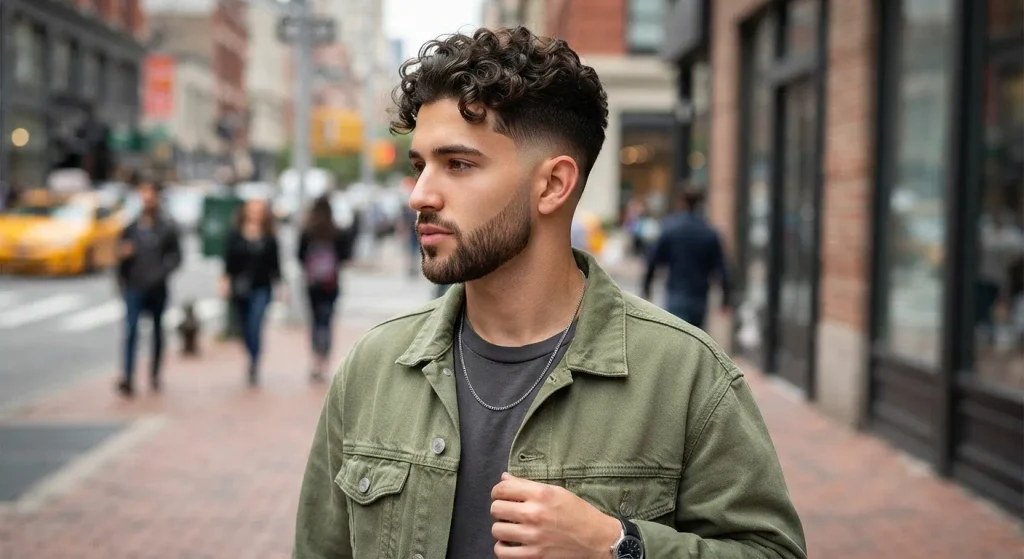
A low taper fade shortens the hair in a gradual blend across three zones: the temples, the sideburns and the nape. It ends at a #1 or #2 guard in most versions, doesn’t go to skin, and doesn’t climb toward the crown.
Three words get used interchangeably online, and barbers will tell you that’s sloppy:
- Taper, a gradual shortening that usually stops at a guard rather than bare skin.
- Fade, a cut that goes shorter still, often all the way to skin.
- Low, which describes where the blend starts on the head, not how short it finishes.
“Low taper fade” is a hybrid term the internet coined and barbers have since accepted. In practice it means a soft, low blend that stays above the ear and leaves the curl pattern alone.
On straight hair this cut barely registers. On curly hair it reads instantly, because curls add vertical height, and the eye catches the contrast between clean sides and full texture on top straight away.
Glossary: the words your barber actually uses
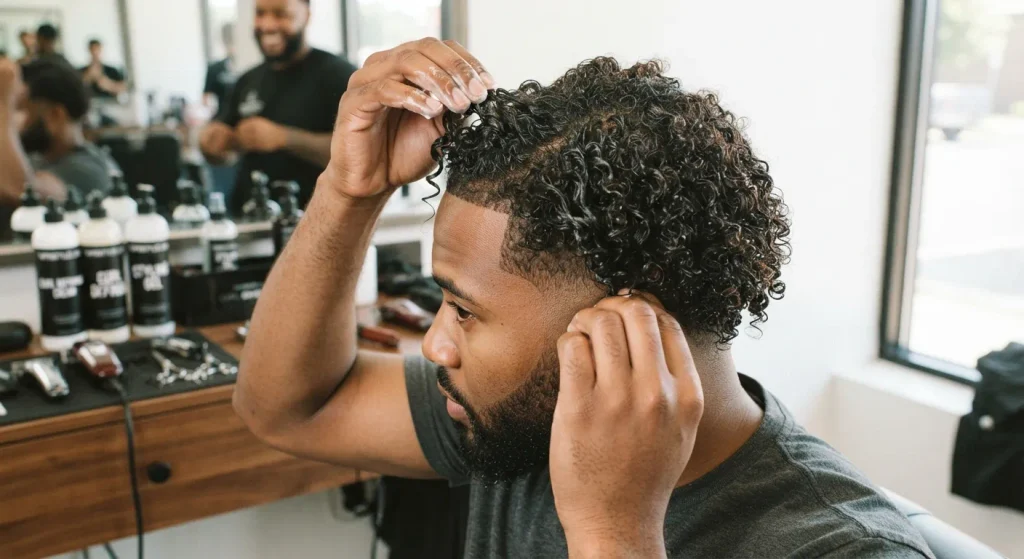
Knowing these makes the conversation in the chair shorter and gets you a more accurate cut.
- Guard: the plastic clipper attachment that sets cutting length, numbered #0 (bare skin, roughly 1/16 inch) up through #8.
- Shrinkage: the percentage curly or coily hair contracts once it dries, sometimes 50 to 75 percent on tight textures.
- Curl clump: a natural grouping of individual curl strands that fall and dry together; cutting through the middle of a clump breaks the pattern.
- Thinning shears: scissors with notched blades that remove bulk without shortening length; useful at the perimeter, risky through curl clumps.
- Parietal ridge: the widest point of the skull, roughly where a mid or high fade would start; a low taper stays well below it.
- Crown whorl: the spiral growth pattern at the back of the head, sometimes called a cowlick when it sits at the front.
- Line up (or edge up): sharpening the hairline, temple and neckline with a trimmer for crisp, defined edges.
- Point cutting: a scissor technique that cuts into the ends of curls at an angle, softening the line without removing bulk all at once.
- Diffuser: a bowl-shaped attachment for a blow dryer that spreads airflow to dry curls without disturbing the clump pattern.
Low taper vs every other fade, in plain terms
| Cut | Where the blend starts | Shortest point | Contrast | Best for |
| Low taper | Sideburn and nape | #1 to #2 guard | Soft | Offices, first timers, easy grow-out |
| Low fade | Just above the ear | Skin or #0 | Medium | Cleaner sides, more definition |
| Mid taper | Temple height | #1 to #2 | Stronger | Sharper silhouette |
| Drop fade | Curves down behind the ear | Varies | Medium | Rounder head shapes |
| Burst fade | Circles the ear | Skin at the ear | Bold | Afros, mohawks, full curl volume |
| Taper fade (skin) | Sideburn and nape | Bare skin | High | Crisp edges, frequent visits |
If you’re stuck between a low taper and a low fade: the low taper is the one your boss won’t notice. The low fade is the one your friends will.
My honest take, and plenty of barbers will argue with this: most guys with 3A to 3C curls should be asking for a low taper, not a low fade. The fade looks sharper on day one. The taper looks better on days 8 through 25, which is where you actually spend most of your time between cuts.
Why curls change everything about the cut
Four things make curly hair behave differently under clippers and scissors than straight hair does, and a barber who skips any of them is guessing.
1. Shrinkage.
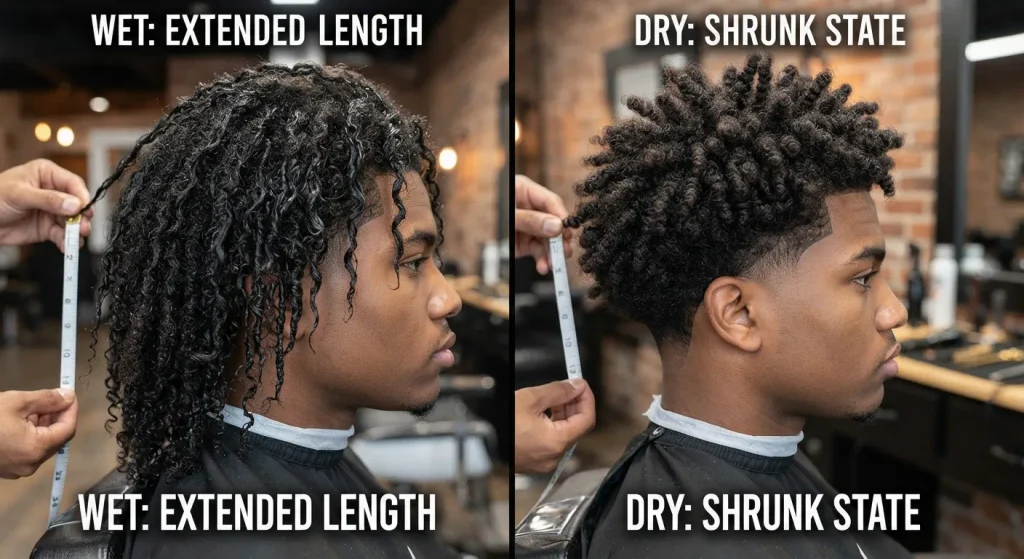
Curls contract as they dry. Wet hair can read 50 to 75 percent longer than its final dry length on tight textures. A guy with 4C coils can have six inches of stretched hair that settles into two. This is the single biggest reason guys walk out feeling like the barber took off more than they asked for. The barber didn’t. He cut exactly what was asked, measured wet.
Fix: always give your number as a dry measurement. “About three inches when dry,” not “take off an inch.”
2. Density and bulk.
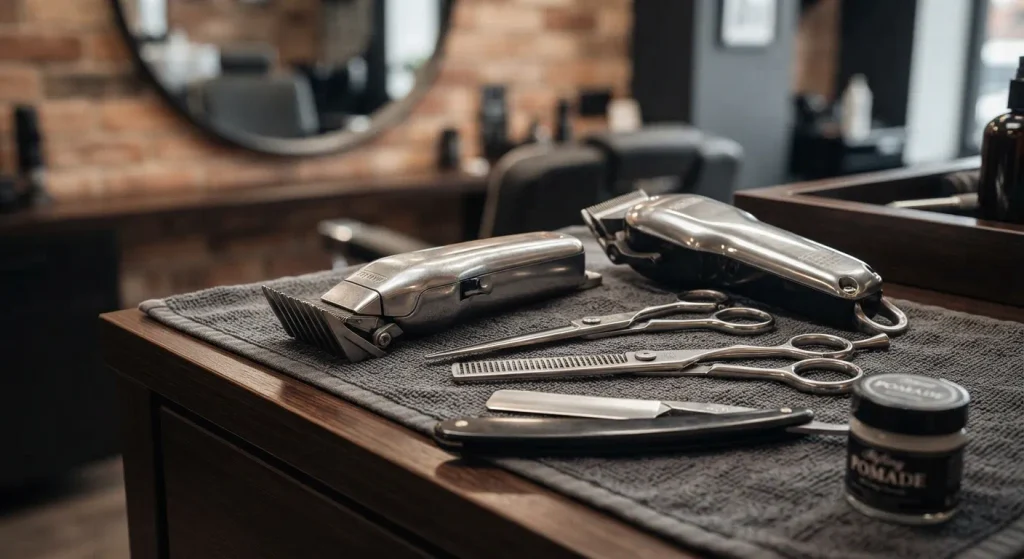
Curls stack up around the ears and add width. A good low taper trims that width without touching the curl pattern above it. This is where thinning shears go wrong. Used lightly at the perimeter, they’re fine. Run through the top, they slice individual curls at random lengths and shatter the clump pattern. The result is frizz no product fixes, and it takes months, not weeks, to grow back out.
3. Growth direction.
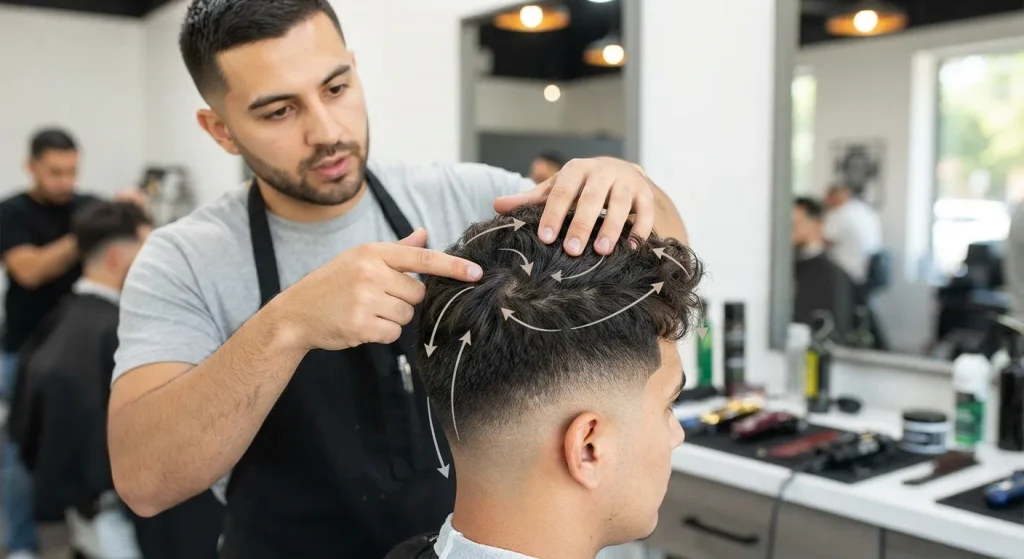
The temple whorl, the front hairline and the crown often grow in three different directions on the same head. A barber who cuts everything toward one axis is fighting the hair, and the hair wins by week two.
4. The crown.
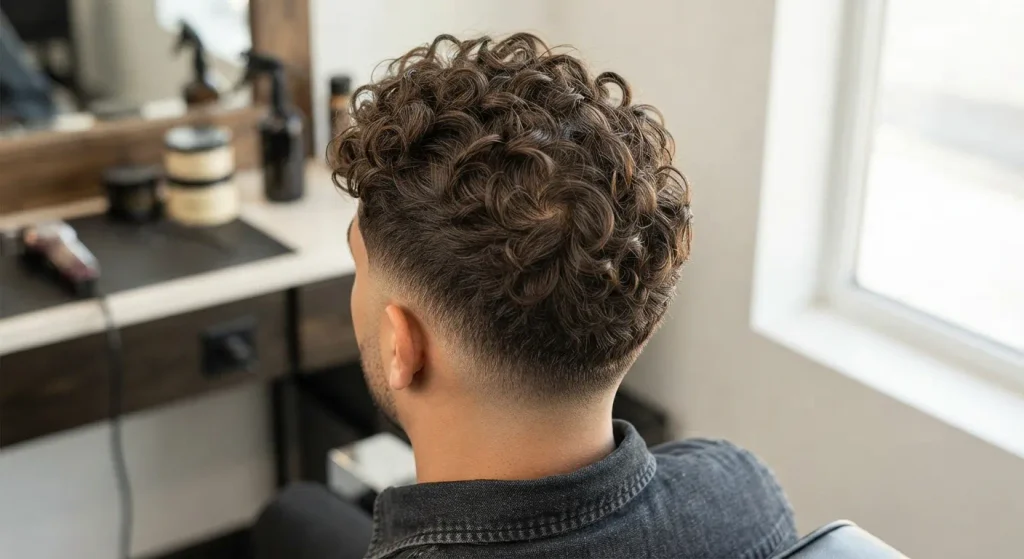
A strong crown whorl pushes curls up or sideways. Flatten it during the cut and it springs back within days. Cut with the direction it already grows and it reads as natural volume instead of a flaw.
Wet or dry cutting, does it matter?
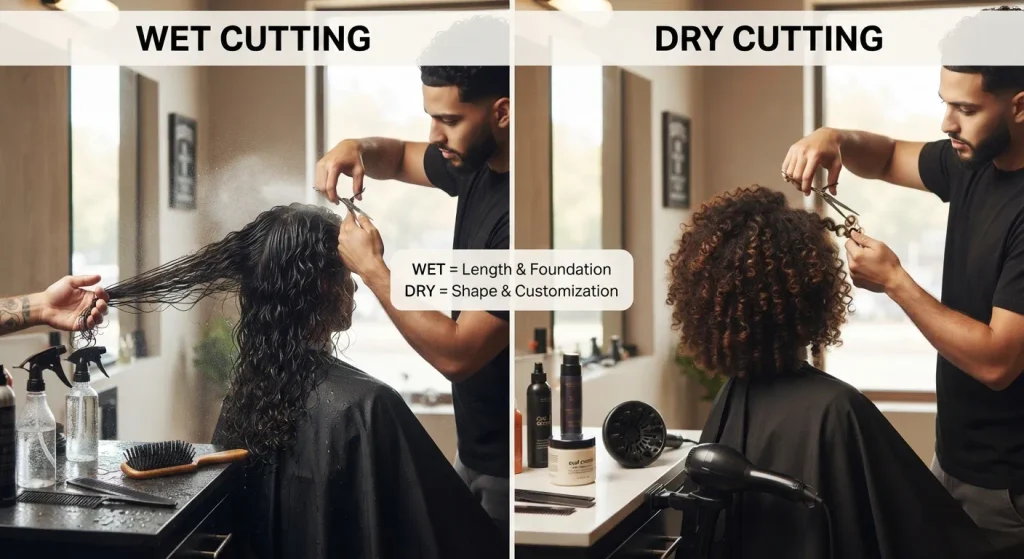
Both work. Dry cutting, the method behind the DevaCut and the Rëzo cut, lets the barber see the actual curl clump and exactly where it falls once it’s dry. Wet cutting is faster and gives cleaner lines, and it’s fine with a barber genuinely experienced in texture who mentions shrinkage before starting. The real tell isn’t the method. It’s whether shrinkage comes up in the conversation at all.
Your curl type, and what it means for the guard number
Most stylists still reach for the Andre Walker system, the typing scale popularized by Oprah Winfrey’s longtime stylist, running from type 2 (waves) through type 4 (tight coils), with A, B and C subtypes for tightness within each.
Treat it as a starting point, not a rulebook. Plenty of people carry two textures on one head, looser at the crown and tighter at the nape is genuinely common.
| Curl type | Pattern | Dry length on top | Guard at shortest point | Touch-up window |
| 2A to 2C | Loose S-waves | 3 to 5 in | #1 to #2 | 3 to 4 weeks |
| 3A to 3B | Springy loops, pen-sized | 3 to 4 in | #1 to #2 | 2 to 4 weeks |
| 3C to 4A | Tight corkscrews | 2 to 4 in | #1 to #2 | 2 to 3 weeks |
| 4B to 4C | Zigzag coils, heavy shrinkage | 1.5 to 4 in | #0.5 to #2 | About 2 weeks |
Two patterns worth noticing. Looser curls carry length better, a 2B wave at five inches still reads as a haircut, while a 4C Coil at five inches is a different haircut entirely, that’s an afro, and it calls for a different taper strategy altogether. Tighter coils also show regrowth faster at the hairline, because the contrast between fresh, skin-adjacent taper and two weeks of new growth is more visible on dense coils. That’s the actual reason the touch-up window tightens as curl pattern gets tighter, not just habit.
The low taper on 4C and coily hair specifically
This gets its own section because it’s where a lot of generic men’s haircut content falls apart.
A low taper is genuinely one of the best cuts for 4C hair, for a reason that has nothing to do with trends: it gives you a clean, defined perimeter without asking you to reduce volume on top. Keep the afro, the sponge twists, the finger coils, the frohawk, whatever shape you’re building, and the taper simply frames it.
What actually changes at this texture:
- Line-up decisions carry more weight. A sharp line up on coily hair looks great and needs upkeep every 7 to 14 days. Can’t commit to that? Ask for a natural hairline, cleaned rather than moved back. A receded line up is close to permanent, and barbers push hairlines back more often than most admit.
- Moisture stops being optional. Coily hair is structurally the driest texture there is, because the bends in the strand keep natural sebum from traveling down the shaft. The American Academy of Dermatology specifically advises people with coily, curly or chemically treated hair to shampoo less often and cut back on heat styling, for exactly this reason.
- The taper can sit lower. A #0.5 or #1 at the nape reads clean on 4C hair without looking severe, because the density above it is high enough to carry that contrast.
- Twist-outs and sponge twists sit beautifully on a low taper. The taper handles the edges, the twists carry the pattern, and the two don’t fight each other.
If a barber has never cut a taper on coil texture before, find one who has. It’s not gatekeeping, it’s a genuinely different skill, and the difference shows in the first ten minutes.
Face shape, hairline and lifestyle
Face shape is a volume placement tool, not a list of permitted haircuts. Ignore anyone who says a shape “can’t” wear something.
- Round: build height through the crown, keep the sides tight, avoid volume at ear level.
- Square: a soft fringe or rounded top eases a strong jawline.
- Oblong or long: skip extra height, a forward fringe shortens the face visually.
- Oval: nearly everything works, so choose by curl pattern instead.
- Diamond: keep some width in the upper sides to balance forehead and cheekbones.
- Heart: a fuller fringe balances a narrower chin.
Receding hairline? Ask for a forward fringe and a low-contrast blend, since high contrast draws the eye straight to the temples. Thinning crown? Keep length there. A tight taper under a thin crown makes the thin spot more obvious, not less. Wearing glasses? Ask specifically for a clean finish around the ear so the arms sit flat. And if you’re cutting this in real humidity, and if you’re reading this from Faisalabad, Lahore, or anywhere with a proper summer, you are, go slightly shorter than the reference photo. Humidity adds visual volume you didn’t ask for.
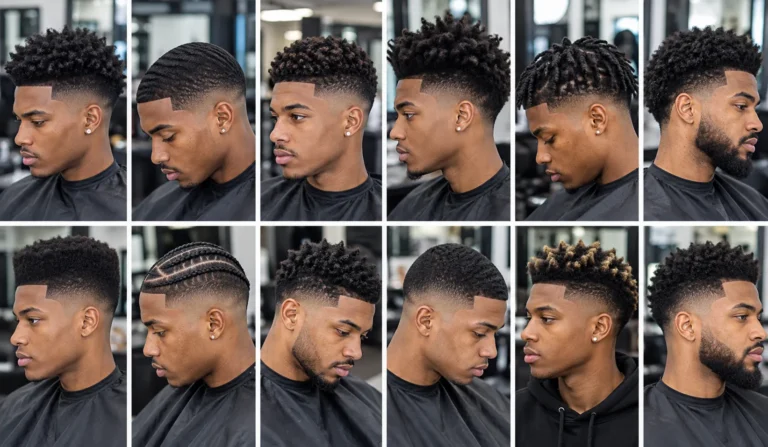
12 ways to wear a low taper with curls
Same base, different top. Pick by how much time you’re actually willing to spend on it each morning.
Short and low effort
- Natural curl taper.
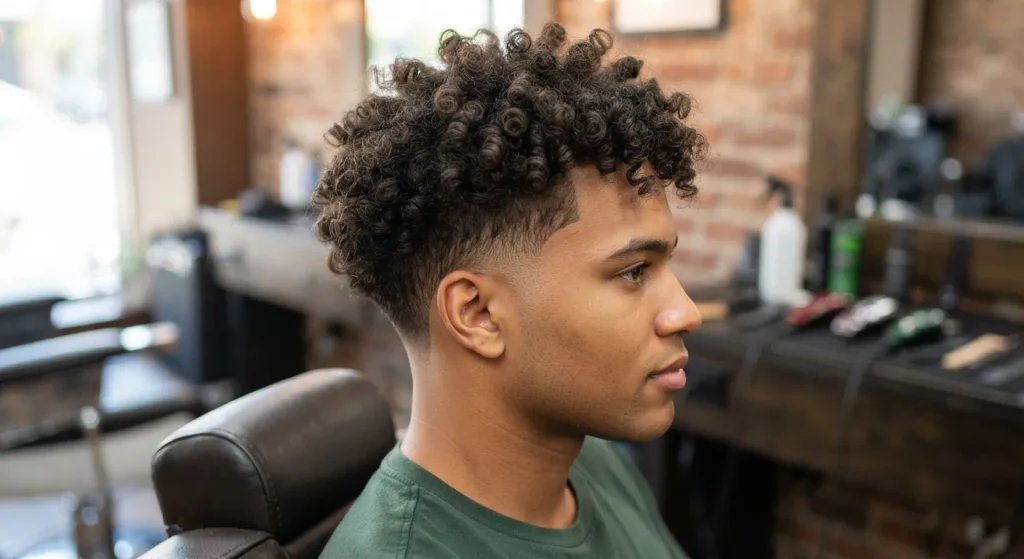
Clean temples and nape, curls left untouched on top. The most forgiving option on this list, the one I’d hand to anyone getting their first taper.
- Curly crop.
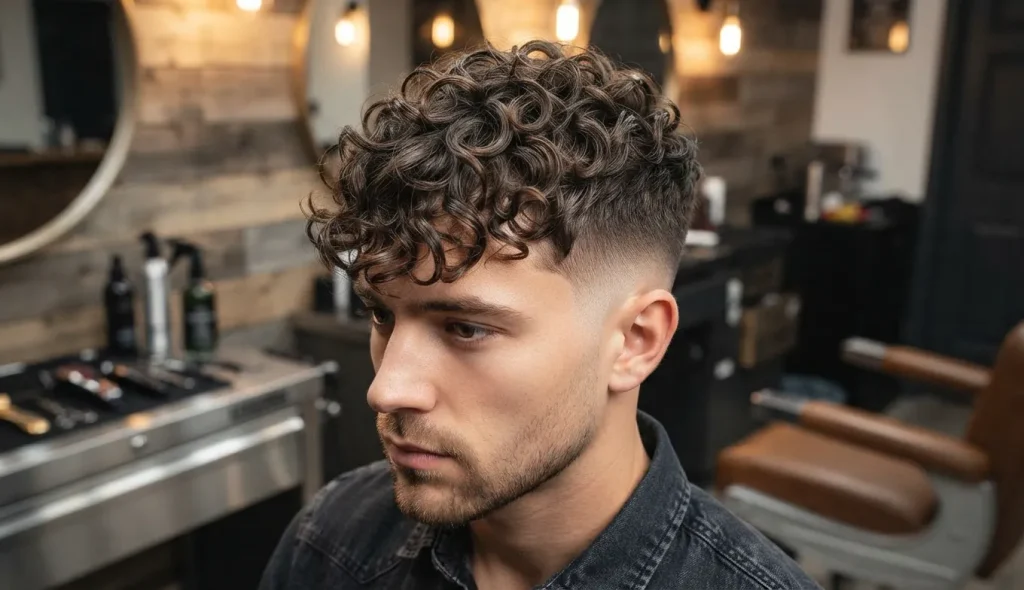
1.5 to 2.5 inches on top, curls staying clumped. Go shorter and the clumps break apart into fuzz.
- Curly Caesar.
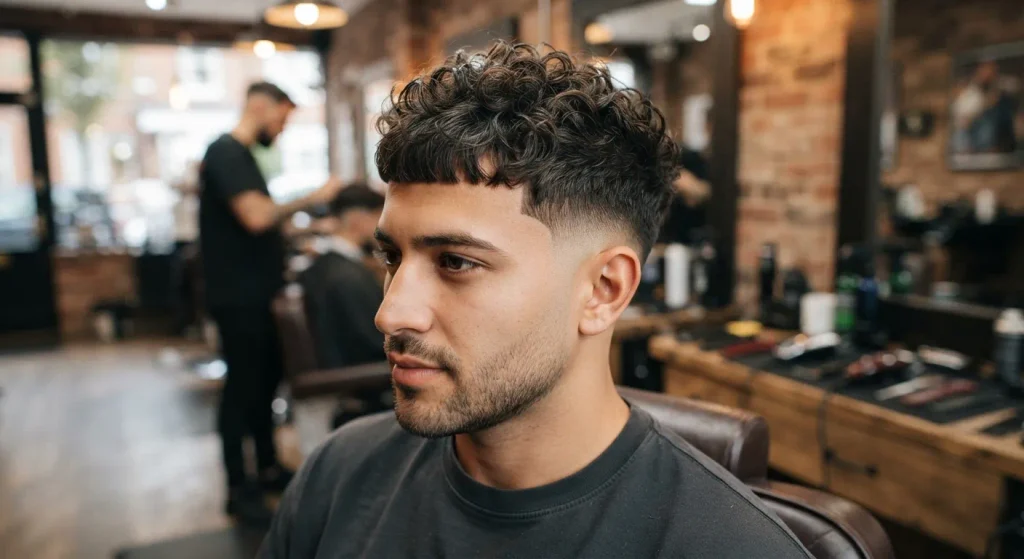
Short curls pushed forward into a blunt micro fringe. Needs enough front length to read as deliberate rather than accidental.
READ MORE : Mid Taper Fade Fringe: The Complete Guide 2026
Fringe and height
- Curly fringe.
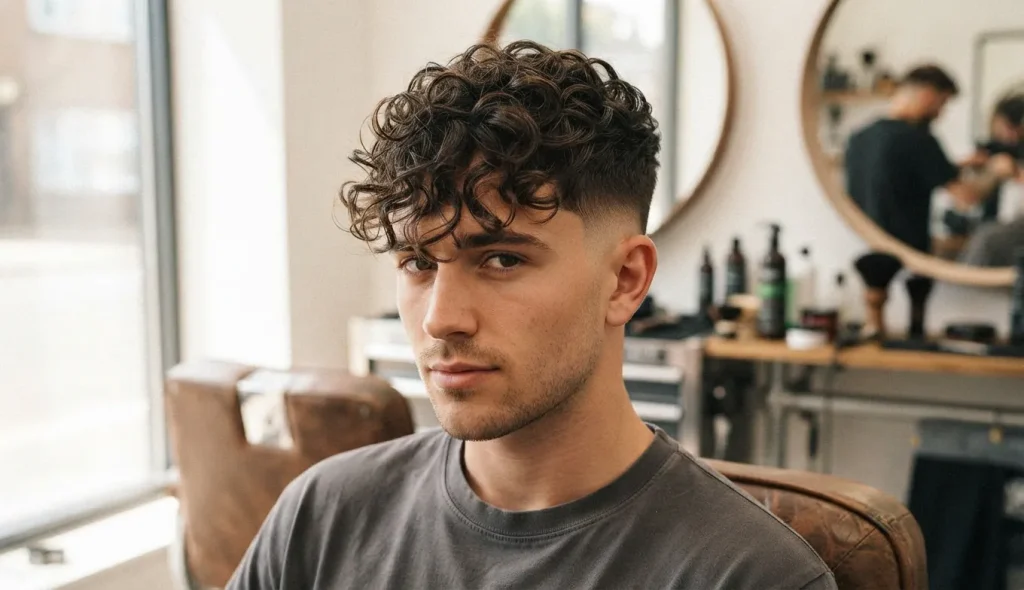
Curls falling toward the forehead, the best fringe option for a high forehead. Cut dry, always.
- Blowout taper.
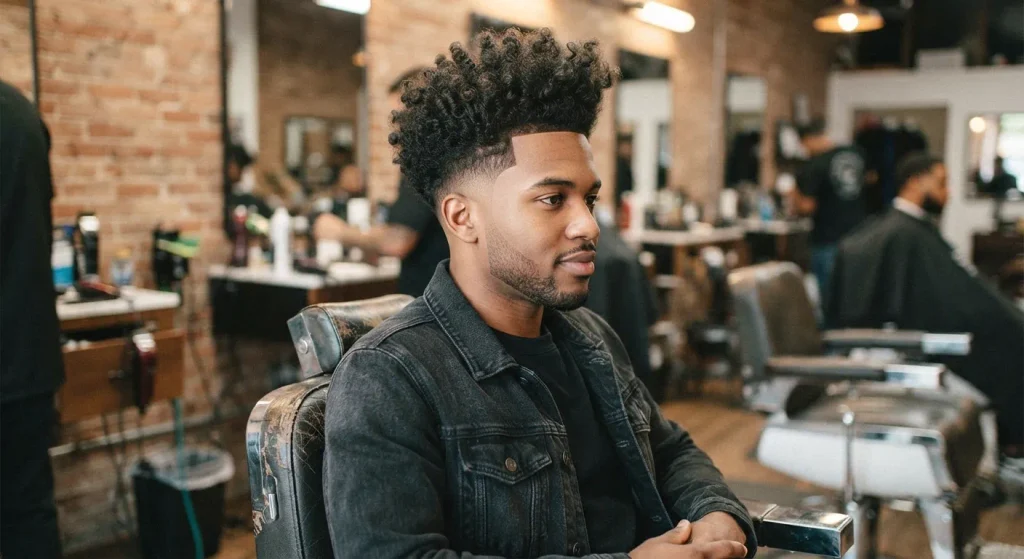
Diffuse or pick the top to stretch the curl and build height, volume without committing to length.
- Tapered afro.
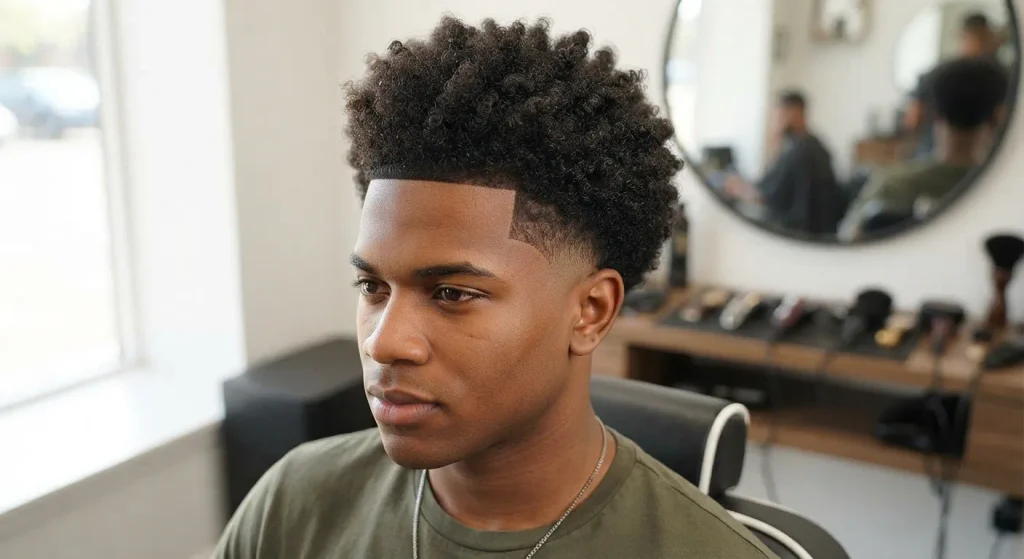
Full round shape on top, clean low taper around the perimeter. Hydration does more for this look than the haircut itself.
Length and movement
- Loose curly flow.
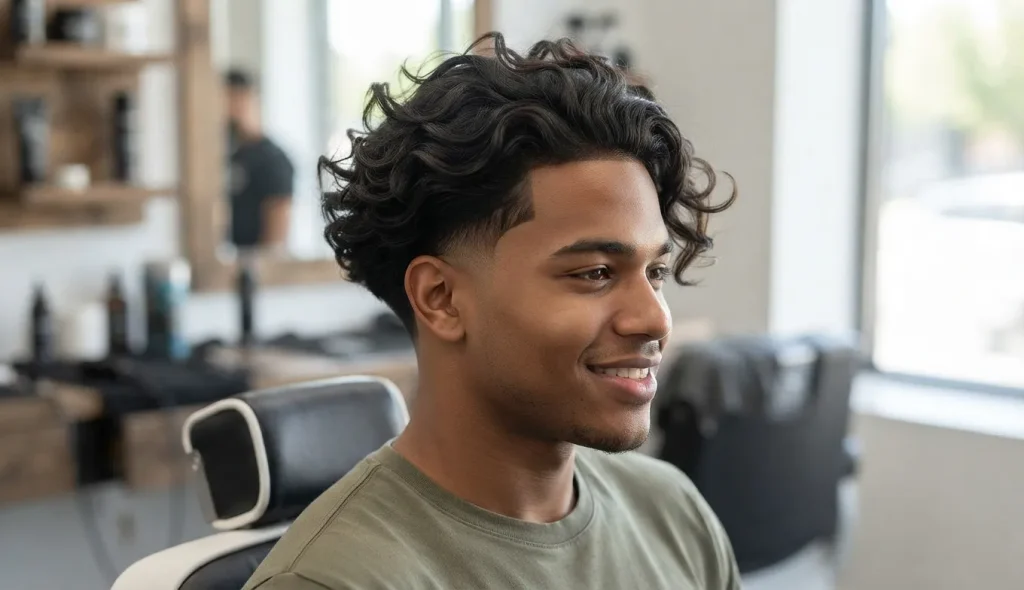
5 inches or more on top. Keep the taper conservative or the top starts to read detached from the sides.
- Curly mullet.
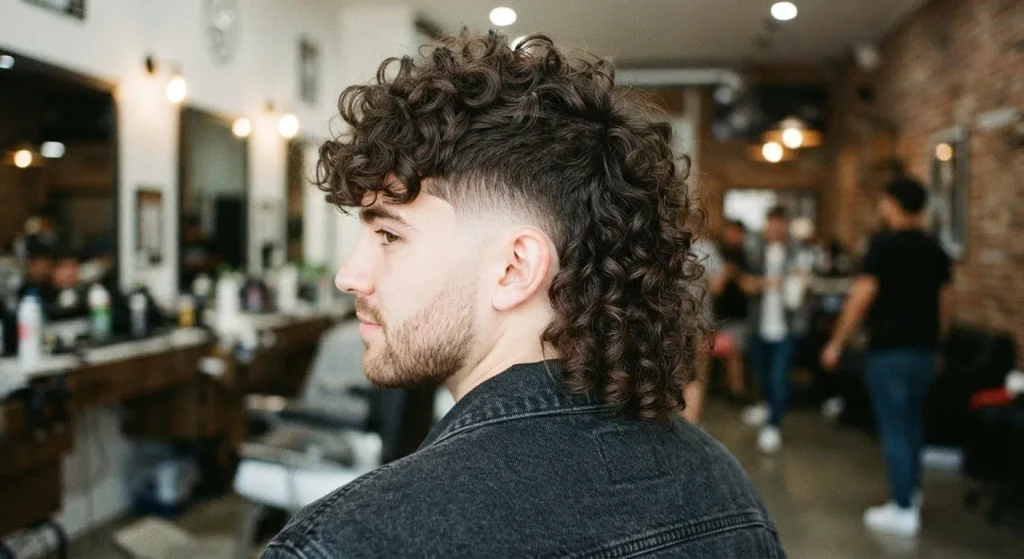
Longer back, tapered around the ears. Wearable on 2C to 3B, harder to pull off on tight coils.
- Curly side part.
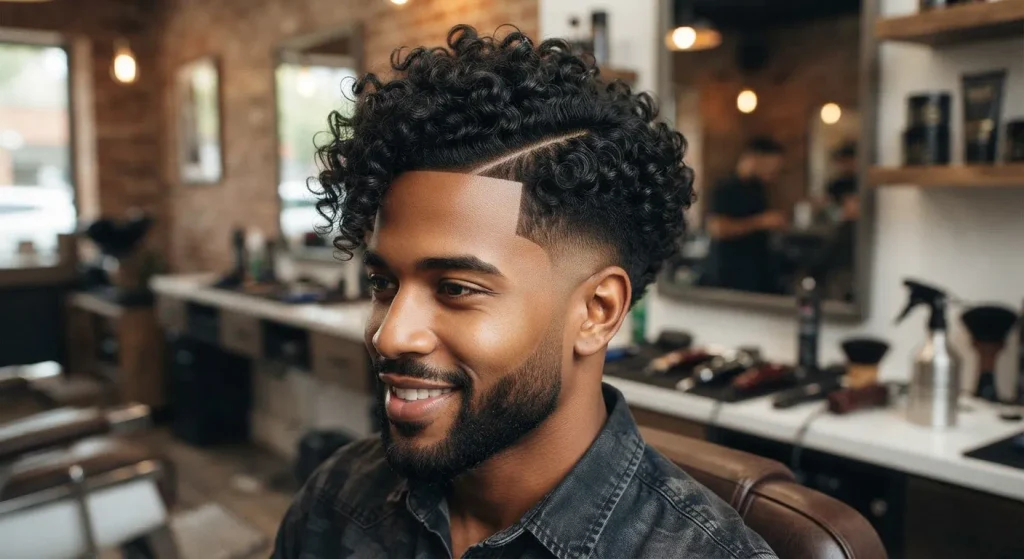
Natural part or a shaved hard part. The natural part is softer and grows out invisibly, the hard part is sharper but needs a barber every two weeks.
Detail work
- Taper to beard blend.
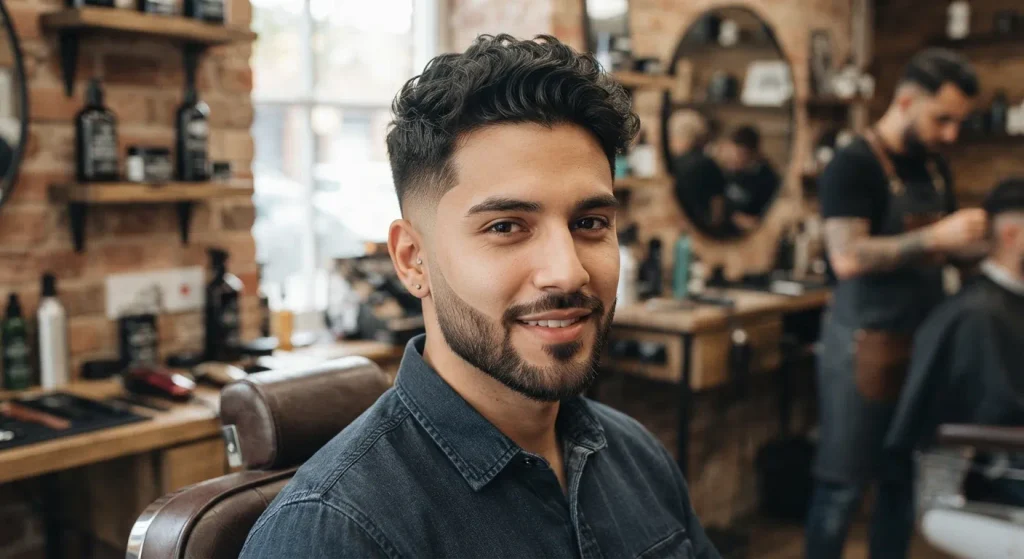
The sideburn density steps down into the beard with no visible jump. Ask for it by name: “connect the sideburn into my beard.”
- Twist-out or sponge twist on a taper.
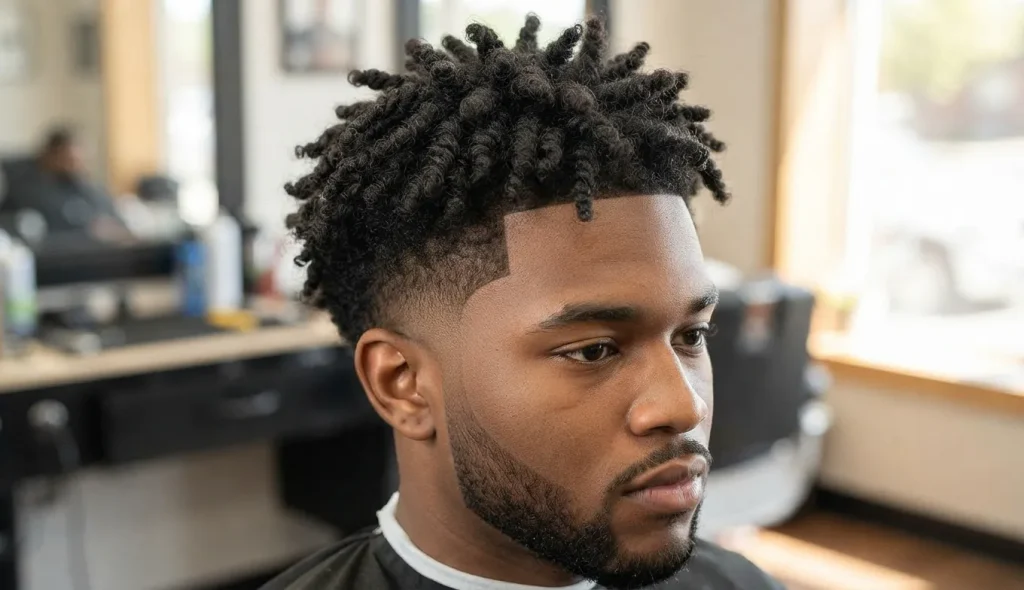
Pattern on top, clean edges below, moisture and a light hand are the
12. curls.
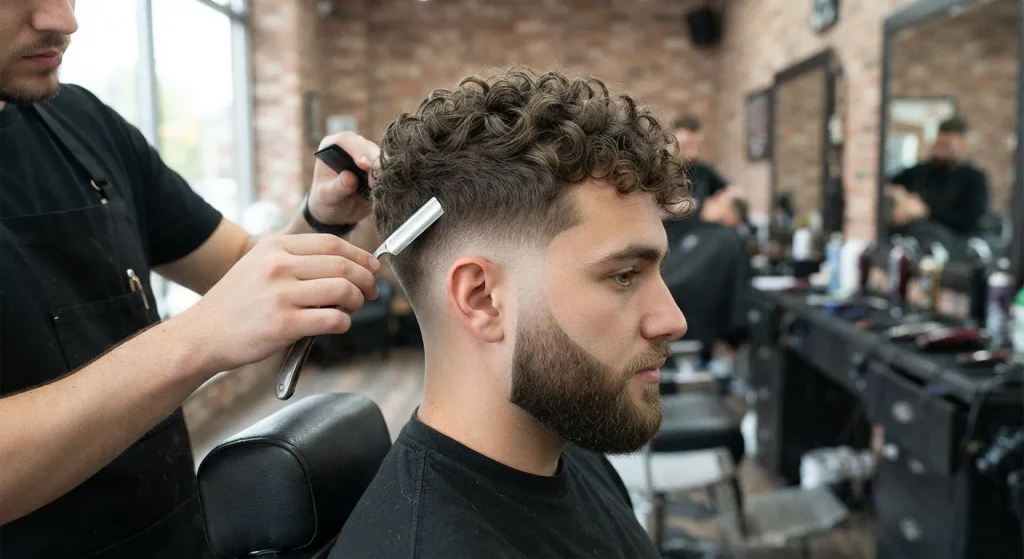
Blonde, copper, frosted tips. Colour raises the cuticle and dries the strand, so add a bond-building treatment and expect to trim more often.
What to say in the chair
Photos communicate shape. They don’t communicate length, density or shrinkage, so say the specifics out loud.
The script:
“I want a low taper, starting just above my ears. #1 or #2 at the shortest point. Leave about [X] inches on top, dry. Keep the weight above my ear, and cut my curls the way they fall naturally. Please don’t chase the blend upward.”
Add one line for your situation:
- Tight coils: “Plan for shrinkage, that’s a dry measurement.”
- Beard: “Blend the sideburns into my beard, no hard jump.”
- Fringe: “Leave the front long enough to fall forward.”
- Thinning crown: “Keep length through the crown.”
- Hairline: “Clean the line, don’t move it back.”
Four questions worth asking before they start:
- Do you cut curls dry or wet?
- Have you cut my curl type before?
- How are you accounting for shrinkage?
- Are you using thinning shears anywhere? (The correct answer is: not on top.)
A barber who works with texture daily answers these in about ten seconds without getting defensive. One who gets defensive is telling you something.
Red flags, and what to say:
| What you see | Say this, immediately |
| The taper is climbing past the temple | “Stop there, I want the weight above my ear.” |
| Wet cutting, no mention of shrinkage | “That’s a wet length. I want three inches dry.” |
| Thinning shears heading for the top | “No thinning on top, please.” |
| Clippers on before any length conversation | “Before you start, what guard are you using?” |
Speak up in the first two minutes. After that you’re negotiating with hair that’s already on the floor.
On price: most US barbershops run $25 to $45 for a taper, with $50 to $80+ in major metros or at specialist textured-hair shops. A line-up-only touch-up between cuts usually runs $10 to $20. Ask before you sit down. A shop that won’t quote a price upfront is a shop with a flexible one.
Keeping the top alive between cuts
The taper looks after itself. The curls don’t.
Wash day (1 to 2 times a week)
- Shampoo, gentle and sulfate-free. The AAD’s guidance on washing textured hair less often is the single most useful habit in this whole section.
- Condition, then detangle with fingers or a wide-tooth comb, never a fine comb, never dry.
- Leave-in conditioner on damp hair, root to tip.
- Scrunch in curl cream, less than you’d think you need.
- Air dry, or diffuse on low heat and low speed.
- Don’t touch it while it dries. Every touch adds frizz.
Between washes: mist with water, scrunch in a pea-sized amount of cream, and go. Sleep on a satin or silk pillowcase, or wear a satin bonnet or durag. Cotton pillowcases grab the cuticle and undo a good wash day by morning.
What to actually buy
| Product | Job | Solid options |
| Leave-in conditioner | Moisture, detangling | SheaMoisture, Cantu, Curlsmith |
| Curl cream | Definition, frizz control | Uppercut Deluxe, Bumble and bumble, Aunt Jackie’s |
| Light gel or mousse | Hold without crunch | Eco Style, Aveda, Curlsmith |
| Texture powder | Root lift on a fuller top | Any matte powder |
| Clarifying shampoo | Monthly buildup reset | Any sulfate clarifier |
The mistake almost everyone makes is using too much product. Heavy pomade and wax flatten curl clumps and read as grease. If your hair looks darker and stringier an hour after styling, you used roughly double what you needed.
The grow-out timeline
The edges go before the top does, so book around the edges, not the whole head.
| Time since cut | What you’ll see | What to do |
| Week 1 | Sharp blend, clean nape | Nothing, enjoy it |
| Week 2 | Neckline and temples fuzzing | Line-up touch-up if you want it crisp |
| Week 3 | Blend softening, sides thickening | Most people rebook here |
| Week 4 | Fuller, rounder, still intentional | Fine for a natural look |
| Week 6+ | Taper’s gone, shape drifting | Full reshape |
Taper touch-ups: every 2 to 4 weeks. Top trims: every 8 to 12 weeks, or whenever curl lengths start looking uneven across the head.
READ MORE : Low Taper Fade Curly Hair: Styles, Tips & Barber Guide 2026
If you can only get to a barber monthly, ask for a softer, lower-contrast blend from the start. It looks slightly less sharp on day one and noticeably better on day 25. That trade is worth making.
If the taper went too high: don’t panic and don’t shave it down further. Have a barber soften the line with scissors or a longer guard, then leave it alone for three to four weeks while the sides fill in. Keep the top full so the transition reads smoother. Next visit, lead with the line: “Don’t chase the blend upward.”
Seven mistakes that ruin a curly low taper
- Giving wet length. Curls shrink. Dry measurement, every time.
- Letting the taper climb. It removes the support the curls sit on, so the top looks bigger and disconnected, not fuller.
- Thinning the top. Breaks the clump pattern and takes months to grow out.
- Fighting the crown. A crown whorl cut against its own direction undoes the shape within a week.
- Copying a photo without matching texture. A cut that’s sharp on 4B coils can look limp on 2B waves. Match the curl type, not the vibe.
- Overloading product. Clumps collapse and the cut disappears under the weight of it.
- Skipping moisture entirely. Dry curls look frizzy regardless of how clean the fade is. The fade is maybe 30 percent of the finished look, the rest is hair care.
Frequently asked questions
Is a low taper good for curly hair?
Yes, it’s arguably the best default cut for curls. It cleans up the temples and neckline while leaving curl volume and weight intact on top, and it works best when the blend stays below the temple.
How long should the top be for a low taper?
Most men keep 2 to 4 inches dry. Looser waves can carry 5+ inches. Tight coils look sharpest at 1.5 to 3 inches. Always judge it dry, never wet.
Does a low taper work on 4C hair?
Yes, and it’s one of the strongest options for coily texture specifically. Ask the barber to plan for shrinkage, keep the edges clean, and rebook roughly every two weeks.
What guard number should I ask for on curly hair?
A #1 or #2 at the shortest point covers most curl types. Dense 4B to 4C hair can go as low as #0.5 at the nape without looking severe, because the density above carries the contrast.
Should curly hair be cut wet or dry?
Either works. Dry cutting shows the real curl shape and removes shrinkage guesswork. Wet cutting is fine with a barber experienced in texture who raises shrinkage before starting.
How often do I need a touch-up?
Every 2 to 4 weeks for the taper. Tight coils and line-ups need the shorter end of that window. Soft, low-contrast blends can stretch past a month.
Should I get a line-up with curly hair?
Only if you’ll maintain it every 1 to 2 weeks. Otherwise ask for a natural hairline, cleaned rather than reshaped, and tell the barber not to push the line back.
Can I cut a low taper myself?
You can maintain the neckline with a trimmer and a steady hand. The blend itself is genuinely hard, and a bad one takes 4 to 6 weeks to grow out. Leave it to a barber.
Low taper vs low fade, what’s the real difference?
The low taper stops at a guard and blends gently. The low fade usually goes to skin and shows more contrast. Both start low. The taper grows out better, the fade looks sharper on day one.
How much does a low taper fade cost?
Roughly $25 to $45 at most US shops, $50 to $80+ in major cities or at textured-hair specialists. A between-cuts line-up typically runs $10 to $20.
Will a low taper make my hair look thinner?
No, if it’s kept low. Yes, if it climbs. A taper that reaches the temple removes the density that props the curls up from below, and the whole silhouette collapses.
Conclusion
A low taper fade keeps the blend low, right around the sideburn, ear and nape, using a #1 or #2 guard. That’s what lets curls hold onto the weight that gives them their shape. The real trick is proportion. Measure length dry, since curls can shrink up to 75 percent, skip thinning shears on top, and don’t let the taper creep past the temple. It works for every curl type, 2A through 4C, and it’s especially good for coily hair when you pair it with real moisture care and a line-up schedule you’ll actually stick to.
Expect touch-ups every 2 to 4 weeks, somewhere between $25 and $80 depending on where you live. Honestly, the guard number matters less than what you tell the barber. Say you want the weight kept above your ear, ask for a dry cut, and make sure they’re working with your natural growth direction and crown, not against it.