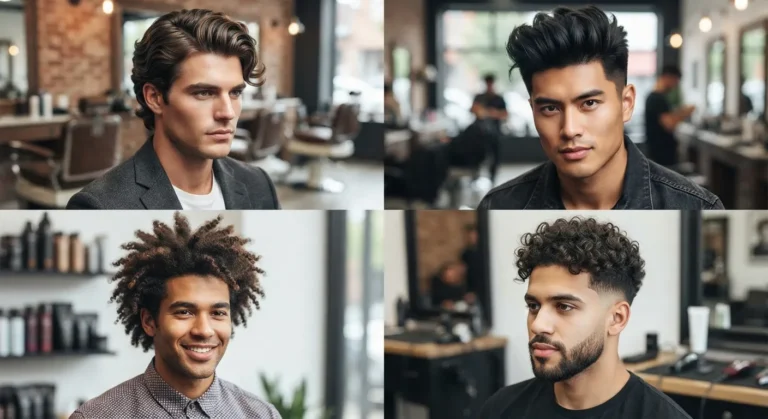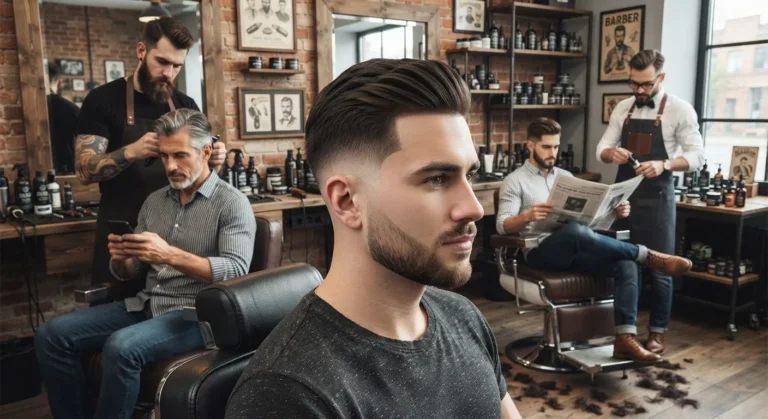
By M. Haroon | Grooming and Men’s Style Writer | Updated September 2026
High Taper Fade for Black Male clients is one of the best options if you want sharp, defined sides without sacrificing your natural texture on top. The sides get blended tight and clean, and the fade line sits higher up near the temples giving you that strong contrast a traditional fade doesn’t always deliver.
This style works beautifully with pretty much any texture: coily, curly, wavy, or loc’d hair all take to it well. Temples, sideburns, and the neckline stay crisp, which really pulls the whole look together.
What makes a High Taper Fade for Black Male clients so versatile is what you can pair with the top 360 waves, an afro, twists, locs, cornrows, curls, you name it. But getting the blend height just right isn’t one-size-fits-all. Face shape, hair density, curl pattern, and how much your hair shrinks up all play a role in how it turns out. That’s really where a good barber earns their money knowing how to adjust the blend and the top length so it actually works for your hair, not just a generic template.
What a High Taper Fade Actually Is
People use “taper” and “fade” like they’re the same word. They’re not, and knowing the difference changes what you ask for. A taper shortens hair gradually as it moves down toward the neckline and hairline, but it never touches skin. There’s always some length left, even at the very bottom. A fade blends all the way down to bare scalp at some point on the head.
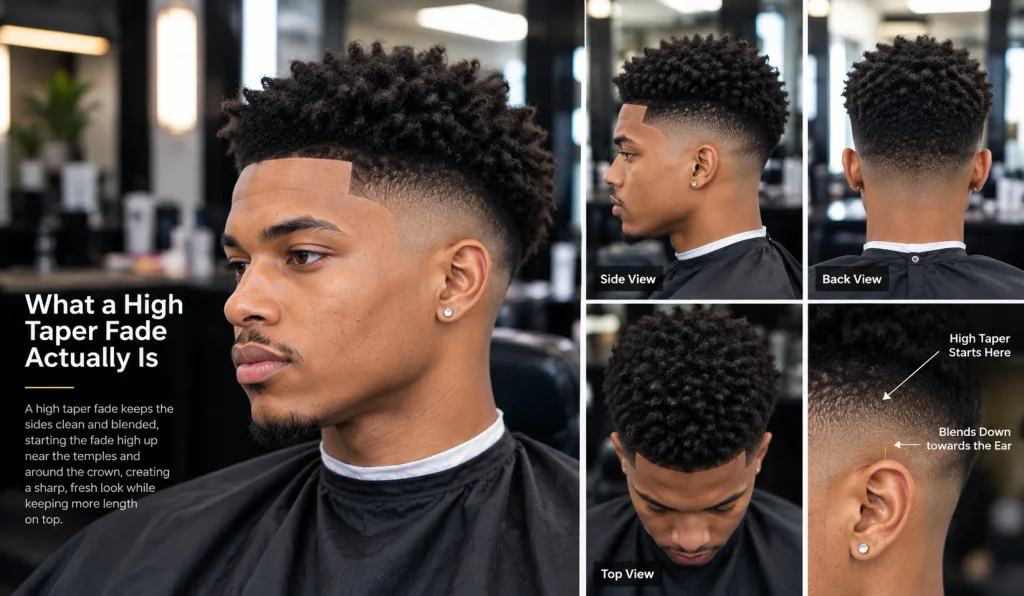
A taper fade does both: gradual shortening on top that finishes in a tight, skin close blend near the hairline. The “high” in high taper fade just tells you where that blending begins, above the temple, roughly between the ear and the crown, instead of down near the ears (low) or halfway up (mid).
| Style | Where it starts | Skin exposure | Touch up frequency |
| Low taper fade | Near the ears | Rarely | 3 to 4 weeks |
| Mid taper fade | Halfway up the side | Sometimes | 2 to 3 weeks |
| High taper fade | Above the temple | Often, at the edges | 1 to 3 weeks |
| Skin fade | Anywhere, always to skin | Always | 1 to 2 weeks |
The higher the fade sits, the bolder the contrast, and the more often you’re back in the chair, because there’s simply more hair to grow back into shape.
Why This Cut Keeps Winning in Black Barbershops
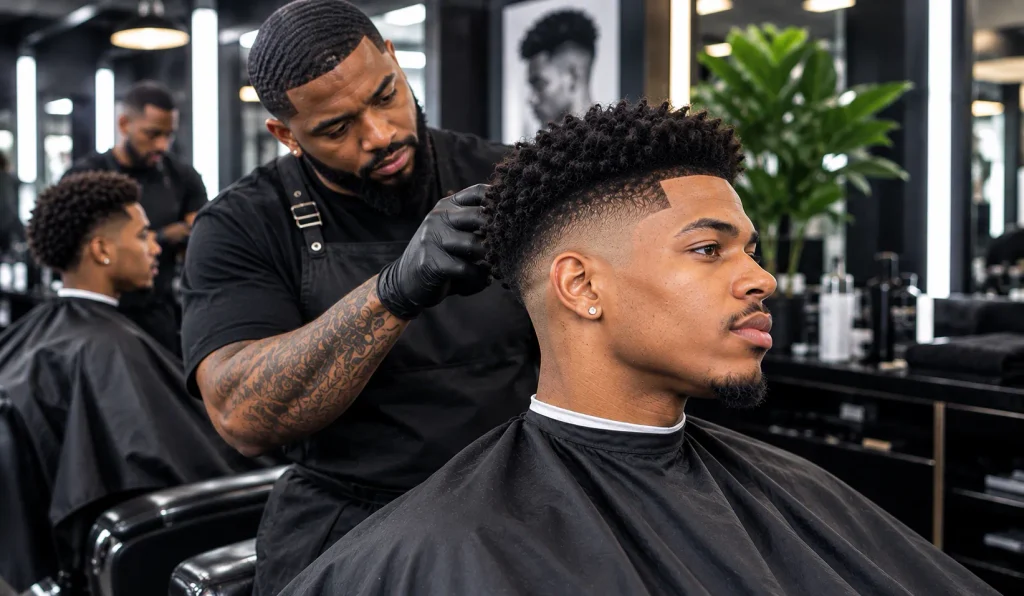
Ask five different barbers why this is one of the most requested cuts for Black male clients and you’ll get five slightly different answers, but they circle the same three points. First, it works with basically anything on top: an afro, waves, locs, twists, a curly crop, a slicked back style. The sides do their job quietly and let the top carry the look.
Second, it handles the full range of Black hair texture without a fight. Type 3 curls, 4A, 4B, 4C, all of it fades cleanly, though (and this matters) each one needs a slightly different approach on top, which we’ll get into.
READ MORE : Mid Taper Fade for Black Male: 22 Best Styles for 2026
Third, and this is the part that doesn’t show up in most SEO listicles, the fade has real weight in Black barbershop culture beyond just looking sharp. It’s tied to identity, to showing pride in natural texture instead of hiding it, to the ritual of the barbershop chair itself. A high taper fade doesn’t erase that texture. It frames it.
How Barbers Actually Cut It, Step by Step
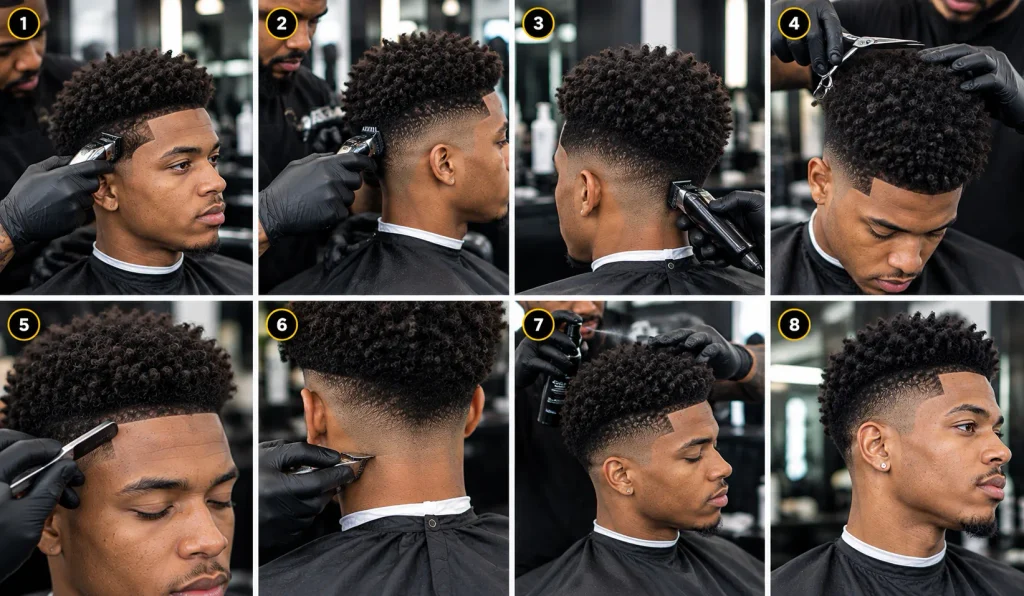
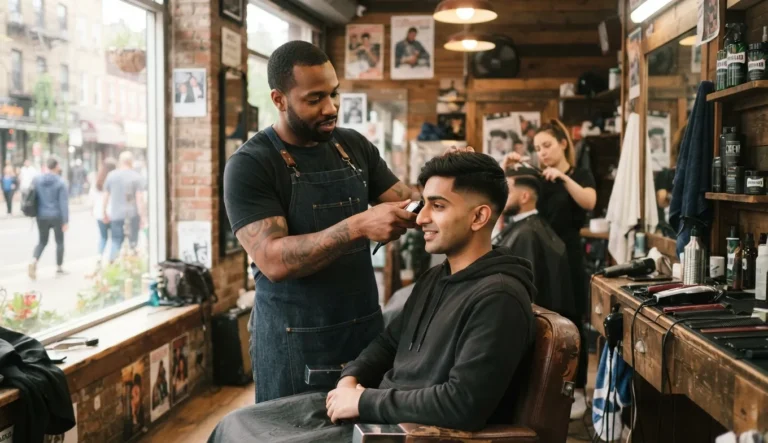
If you want to know whether your barber is doing this right, here’s the actual process.
- Dry hair first. Most barbers cut textured hair dry, not wet. Wet curls and coils sit differently and stretch out. Cut them wet and you’ll misjudge where the length lands once it dries and springs back up.
- Clipper guards, building up gradually. Typically starting around a #0 or #1 near the bottom of the fade zone and working upward: #1, then #2, then #3, in overlapping passes from the bottom up. Smaller number, shorter hair, each pass slightly longer than the last.
- Detail work with a zero gap trimmer or straight razor. This is what removes the visible “step” or line between guard sizes and smooths everything near the skin. Some barbers finish the hairline and neckline with a straight razor or foil shaver for a razor sharp edge.
- The top gets handled separately, scissor work for more control, or clippers over comb for even length across the whole crown.
- A final check from multiple angles. A barber who’s actually good at this will step back, check the blend in the mirror from the side and back, and fix anything that reads as a visible line rather than a smooth gradient.
The mistake that ruins more cuts than anything else? Skipping a guard size. Jump from a #1 straight to a #4 and you get a hard band instead of a gradient, and no amount of styling product fixes that. If it’s your first time getting this cut, find a barber who works with textured hair regularly. Not every barber does, and it shows in the blend.
Hair Type Changes Everything: What to Expect by Texture
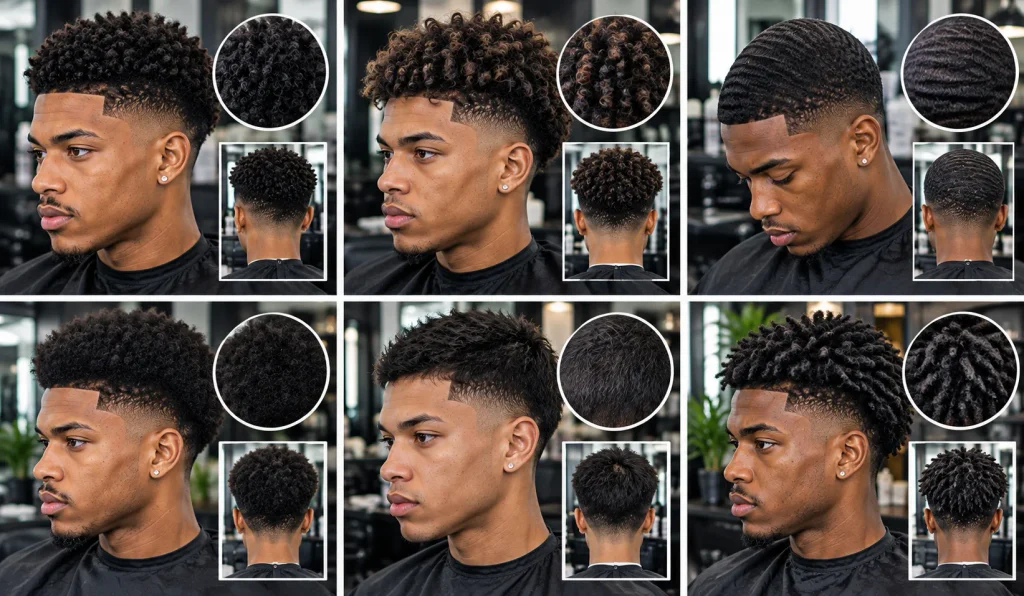
This is where most guides go generic and just say “works on all hair types.” True, but how it works is different enough that it’s worth breaking down.
Type 3 (curly): The curl pattern is loose enough that it stays visible without fighting shrinkage. This is close to the easiest texture to get a clean, predictable result with.
Type 4A and 4B: Needs a bit of extra length left on top compared to what the “finished” look seems to call for, otherwise the coil pattern disappears once it dries and springs up.
Type 4C: Shrinks the most of any texture, and it’s not close. A barber who doesn’t account for this will cut it shorter than you wanted without meaning to; the hair simply pulls up more once it’s dry and settled. If you have 4C hair, say the word “shrinkage” out loud in the chair. It changes how much they leave.
Locs, twists, and waves: All pair well with a high taper fade because the tight sides let whatever’s happening on top actually read as the focal point instead of blending into longer hair. Waves specifically benefit from the contrast; the pattern on top stands out more against short, tight sides.
Straight hair: Gives the cleanest, most visually sharp blend line of any texture simply because there’s no curl pattern to interrupt it.
READ MORE : Low Taper Fade for Straight Hair: The Complete Guide 2026
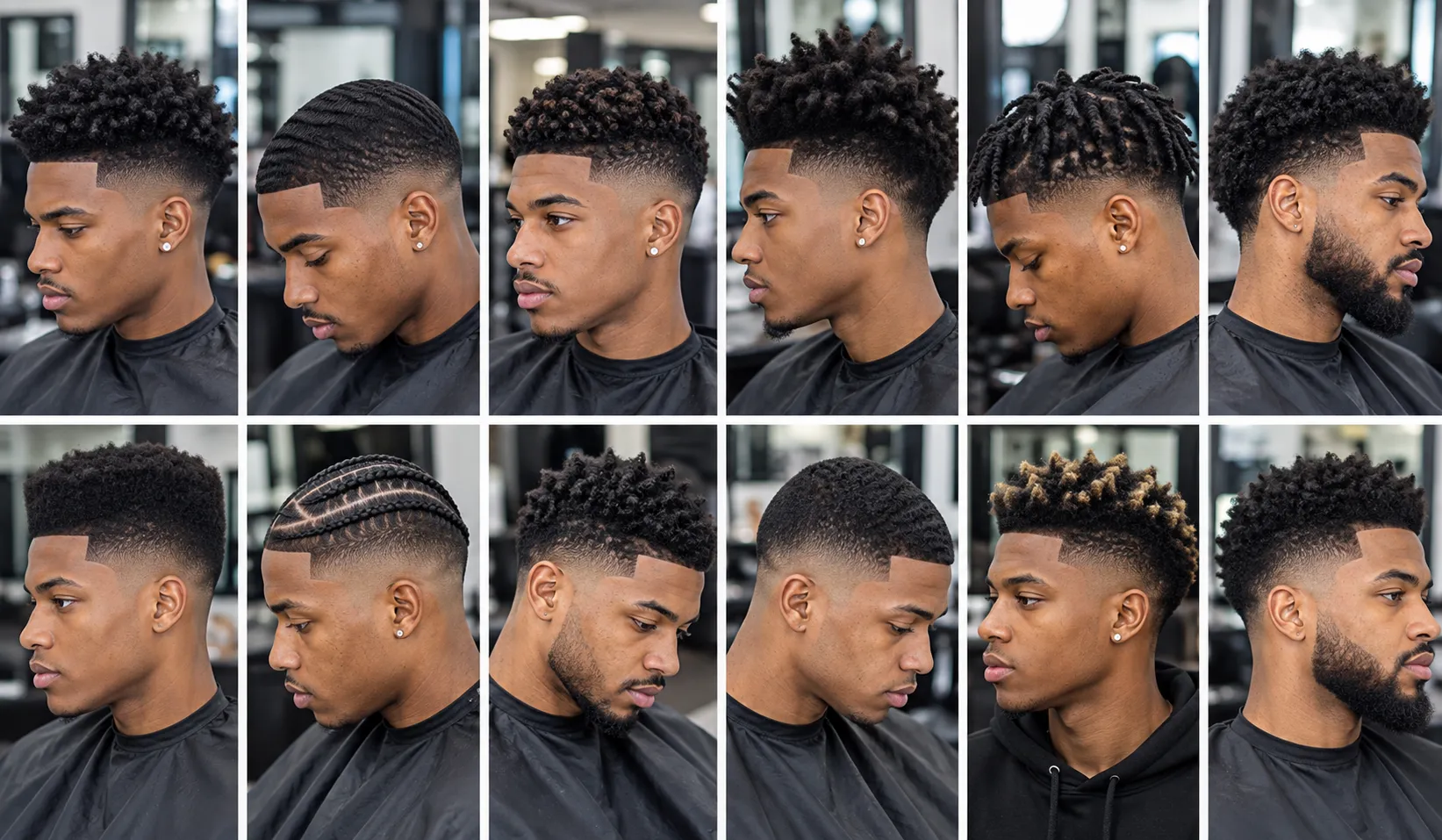
High Taper Fade Looks to Show Your Barber
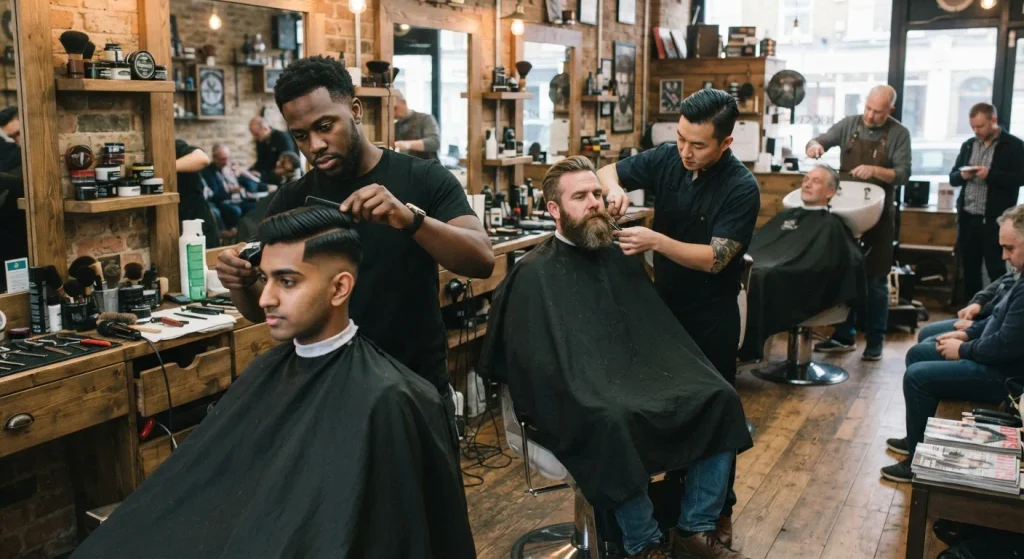
A description only gets you so far. Barbers work off what they can see, so pick two or three of these, save the photos, and bring them in. Each one below also comes with the one thing worth saying out loud when you ask for it, because the same fade height reads completely differently depending on what’s happening on top.
1. Curly Taper Fade
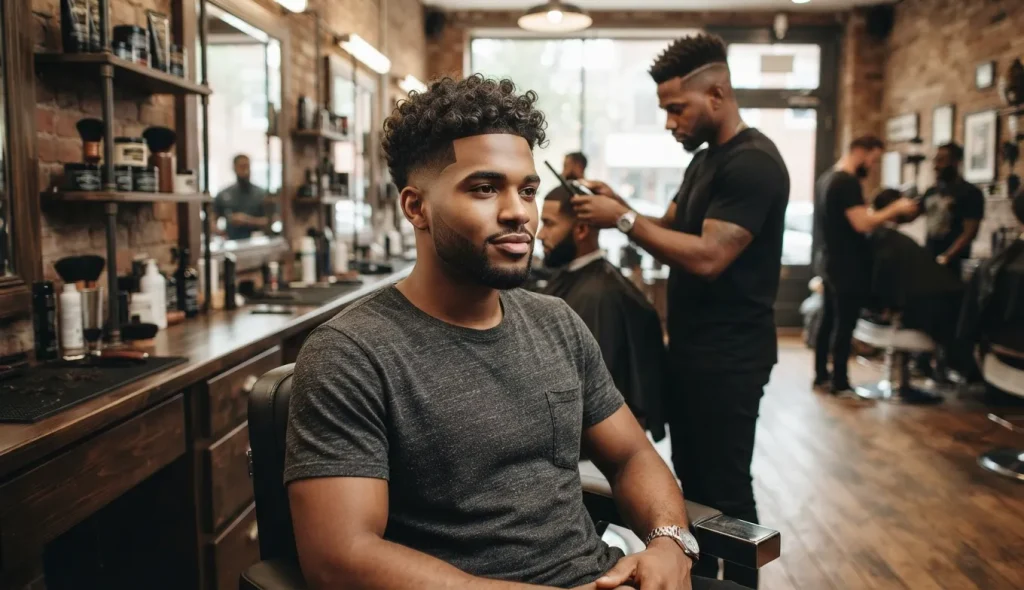
Loose, springy curls stay full on top while the sides fade up tight. Because Type 3 curls hold their shape without much shrinkage, this is one of the more predictable versions to get right on the first try. Say this: just confirm how much length you want left, since curl bounce can make the top look shorter than it measures.
2. 4C Coily Taper Fade
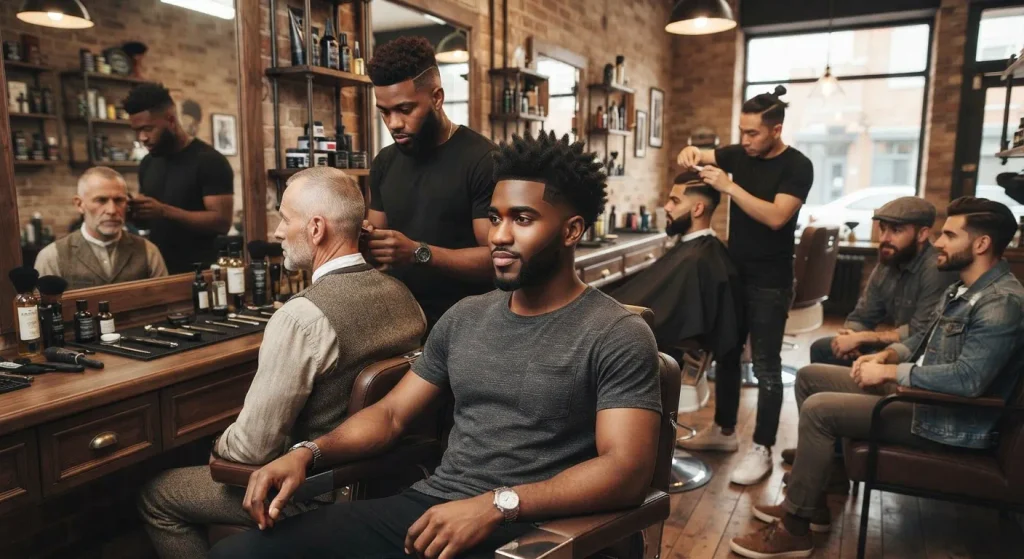
The sides fade high and clean, but the top needs deliberate extra length built in before it’s ever cut to “final” size. This is the look where skipping the shrinkage conversation causes the most disappointment. Say this: “my hair shrinks a lot when it dries, leave extra length on top.”
3. Afro Taper Fade
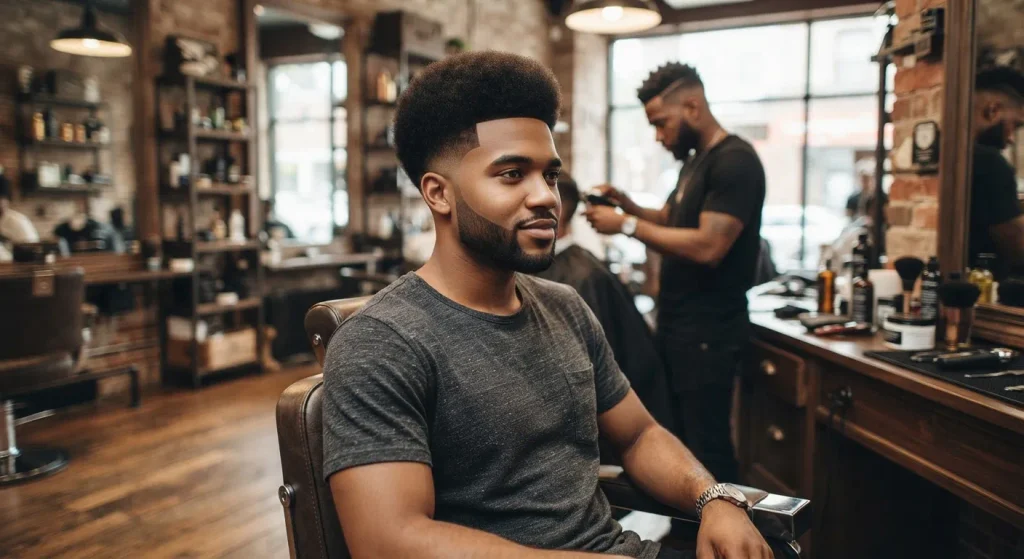
A full, Rounded Afro sits above a crisp high fade, and the tight sides do the work of removing bulk so the afro keeps its shape instead of looking heavy. Works especially well if you want volume without the sides fighting for attention. Say this: specify how rounded or how boxy you want the afro’s outline shaped.
4. High Taper Fade with 360 Waves

The pattern of the waves reads sharper against short, tight sides than it would against longer hair. This pairing is about contrast: the fade is the frame, the waves are the picture. Say this: ask for the fade to stop cleanly at the wave pattern so brushing doesn’t disturb the line.
5. Slicked Back Taper Fade
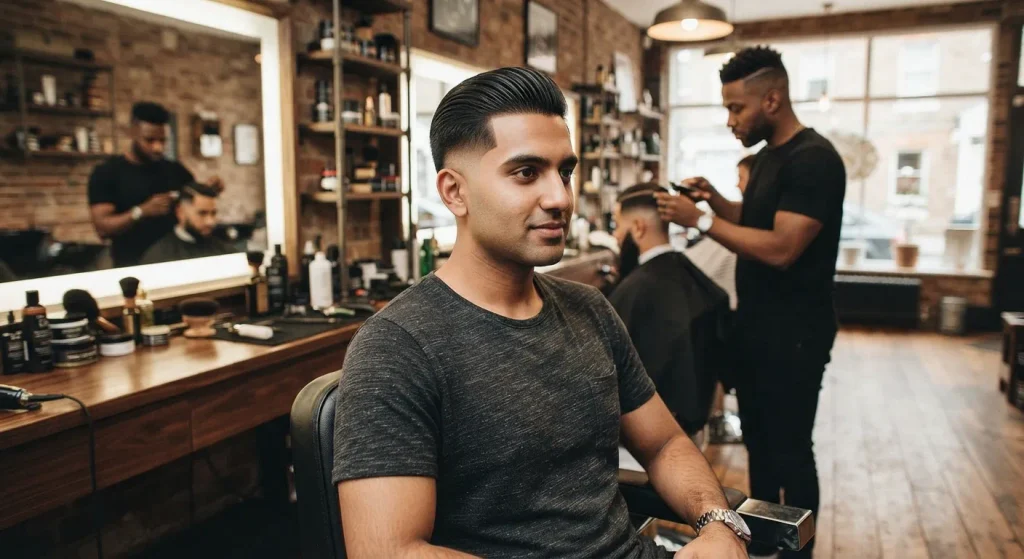
Length on top gets combed straight back for a polished finish, while the sides fade high underneath. This version reads the most “office appropriate” of the twelve. Say this: mention if you want enough length on top to hold the product without needing a blow dryer every morning.
6. High Taper Fade with Cornrows

Braids sit cleanly on top of a high, tight fade so the braid pattern is the visual focus instead of competing with longer sides. Straight or lightly wavy hair holds a crisper cornrow pattern longer than very coily hair does as it grows out. Say this: ask the barber to fade around the braids’ starting point rather than cutting through them.
7. High Taper Fade with Locs or Twists
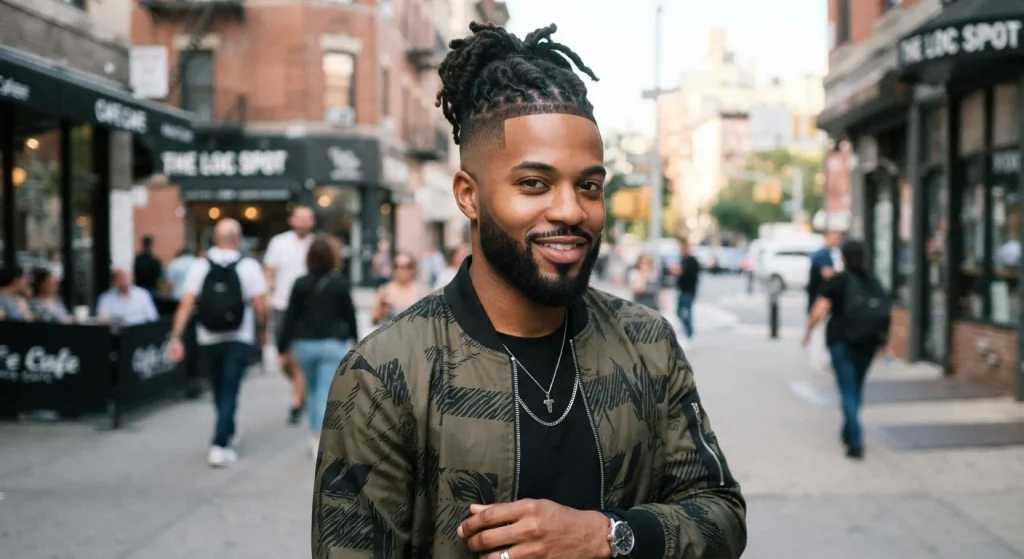
Short locs or twists get more definition when the sides are cut high and tight, since there’s nothing longer on the sides diluting the shape on top. Works for both short starter locs and more established ones. Say this: confirm how close to the loc line the fade should come, since going too close can expose new growth awkwardly.
8. Burst Taper Fade
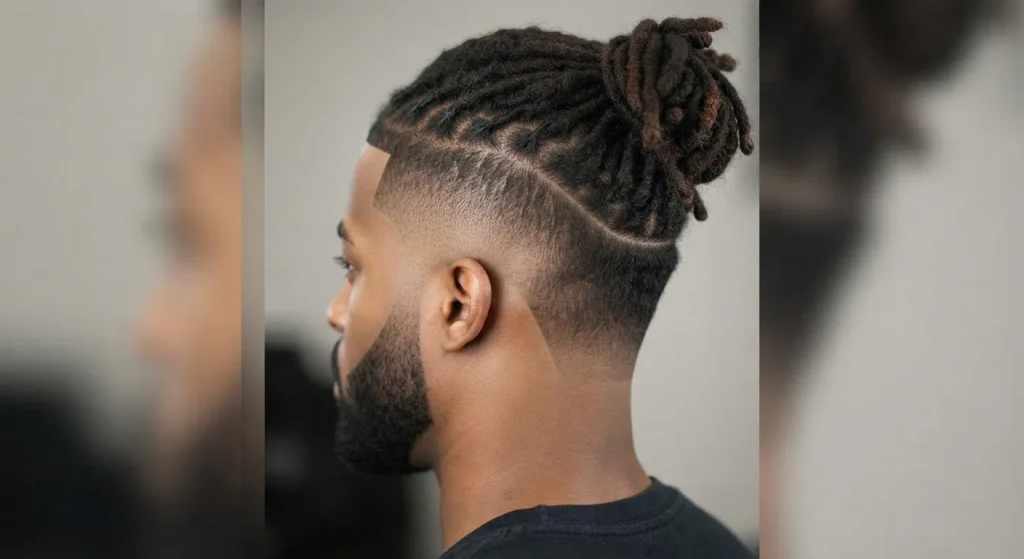
Instead of a straight fade line, the blend curves in a semicircle around the ear. It softens the transition and pairs especially well with a fringe or a curly top. Say this: this one lives or dies on the curve being symmetrical, so ask the barber to check both sides in the mirror before finishing.
9. Drop Taper Fade
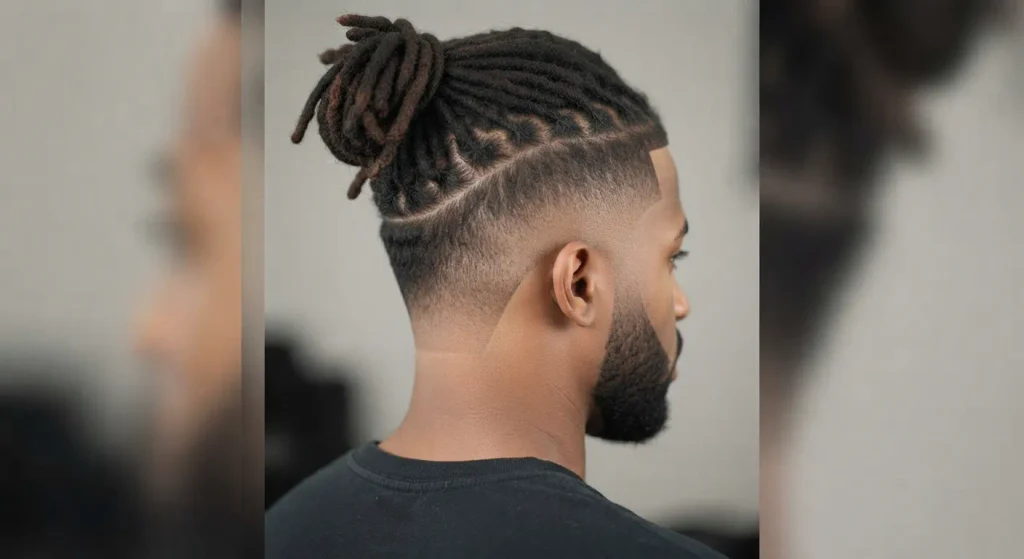
The fade line dips down behind the ear instead of staying level, following the natural curve of the head rather than a straight edge. It’s a subtle detail that changes how the whole cut reads without changing much length. Say this: this is a technique call, not a length call, so it’s worth asking specifically if your barber does drop fades regularly.
10. Taper Fade with Beard Blend
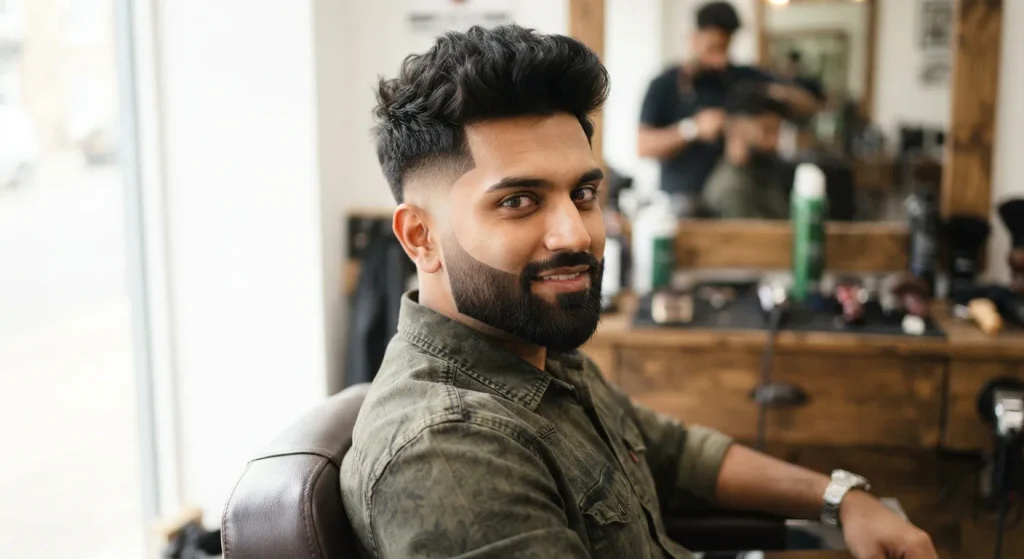
The fade tapers down into the beard line instead of leaving a hard stop at the jaw, which reads more deliberate and avoids a visible seam between hair and facial hair. Say this: ask for the beard and the fade to be blended in the same session, not touched up separately, or the transition point can end up mismatched.
11. Textured Crop Taper Fade
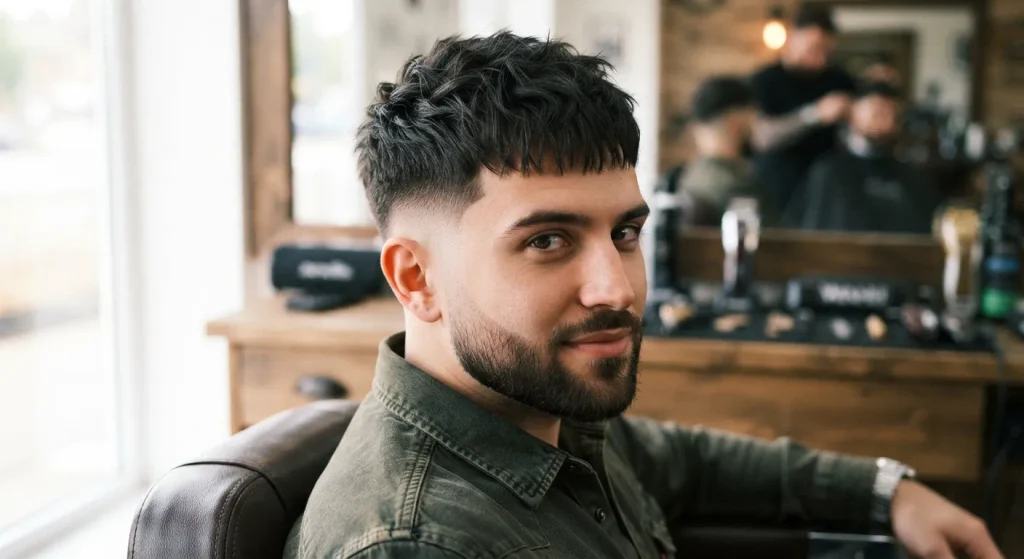
Short, choppy texture on top (French crop style) sits above a high, tight fade for a look that’s low maintenance but still sharp. Works best on straight to wavy hair where the texture holds a defined, slightly messy shape. Say this: specify whether you want a fringe left at the front, since that’s the main variable in how this style styles day to day.
12. Skin Taper Fade
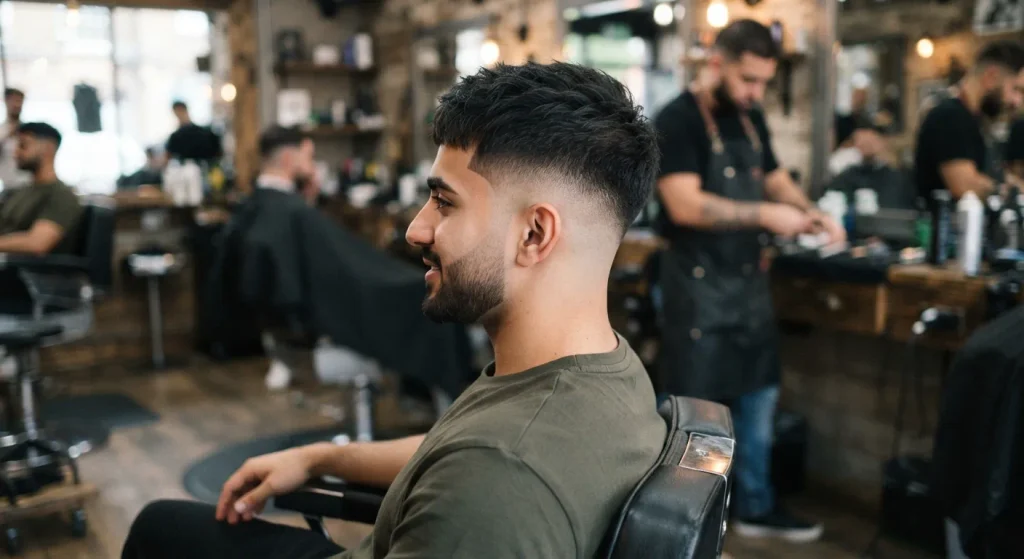
The sides fade all the way to bare skin near the hairline instead of stopping at a soft taper, giving the boldest contrast of the group. This is the version that needs the most upkeep. Say this: confirm you understand this needs a touch up every 1 to 2 weeks, so it’s a commitment, not just a look.
Matching It to Your Face Shape
Most guides skip this or handle it in one throwaway line. It matters more than people think, and it’s a two minute conversation with your barber that changes the whole result.
Round faces tend to look longer and sharper with more height in the fade; the eye gets pulled upward.
Square faces sometimes look better with something slightly less extreme. A very high, sharp taper can add to features that are already angular rather than softening them.
Oval faces can wear almost any version of this cut without issue.
Long faces might actually look more balanced with a lower or softer taper; extra height can stretch the face further than you want.
None of this is a hard rule. A good barber nudges the height up or down half an inch to soften or sharpen the effect based on your specific face. It’s worth raising during the consultation rather than assuming the version you saw in a photo will read the same on you.
What It Costs and How Often You’ll Be Back
Pricing tracks with what a standard male haircut costs in your area. This isn’t a specialty cut that carries a premium on its own. Where the price does creep up is with a full skin taper, since the extra detail work around the hairline (razor work, precise edging) takes more time in the chair.
How often you’re back depends on two things: how close the fade sits to skin, and how fast your hairline and temples grow back in, which, for a lot of Black male clients, happens faster than the rest of the head.
Softer version, no bare skin: stretches 3 to 4 weeks comfortably.
Fade taken to skin near the hairline: every 1 to 2 weeks to stay sharp.
Realistically, budget for 2 to 4 visits across your first eight weeks, depending on which version you go with.
A decent trimmer at home, even just for cleaning up the neckline and sideburns between visits, stretches that timeline out noticeably.
High Taper Fade vs. Everything Else
Quick reference, because this is where the terminology mix ups happen most:
Taper: shorter toward the bottom, never touches skin.
Fade: blends to bare scalp somewhere on the head.
Taper fade: both, gradual taper finishing in a tight fade near the hairline.
Low taper fade: subtle, starts near the ears, keeps the most length.
Mid taper fade: starts about halfway up the side.
High taper fade: starts above the temple, boldest contrast of the taper family.
Skin fade: can technically be low, mid, or high; the one constant is it always finishes at bare skin.
If you want something that reads as professional but still current, a mid to high taper that stops just short of full skin exposure is usually the safer call for office environments.
Talking to Your Barber So You Don’t Regret It
This is genuinely the part that determines whether you like the cut or not, more than the barber’s skill, honestly, because even a great barber can’t read your mind.
Bring a photo. It removes most of the ambiguity in one move, which is exactly why the looks above are worth saving rather than just reading about.
Beyond that, be specific about three things:
Where exactly the fade should start. Temple, top of the ear, wherever. Give a physical landmark, not just “high.”
Whether you want bare skin anywhere, or a softer taper with none at all.
How much length stays on top, in inches or finger widths if you can.
And if your hair is coily or has significant shrinkage, say so out loud, and use the word “shrinkage.” Barbers who don’t hear it sometimes cut the top shorter than you wanted once it dries and pulls up, not out of carelessness, just because they didn’t know how to compensate.
Keeping It Styled
The routine barely changes across textures. It’s the products that shift.
Towel dry first; don’t style soaking wet. Curl cream for coily and curly textures, something lighter for straight and wavy hair. A blow dryer on medium heat works for most people, and a diffuser attachment helps curly and coily types hold their pattern instead of stretching it flat.
Finish with clay for a matte look, pomade for shine and stronger hold, or curl cream again for the most natural, defined finish on textured hair.
Between Barber Visits
A basic trimmer at home handles neckline and sideburn upkeep. Go slow, use a small guard, and only touch what’s obviously grown out. Trying to redo the whole fade yourself usually ends badly; leave the blending to your barber.
For coily and curly hair, nighttime protection matters more than most people realize. A satin pillowcase or a durag cuts down on friction, which means less frizz and curls that hold their shape longer between washes.
Skip the razor on your own hairline unless you’ve done it before. An uneven line there is hard to fix without a full recut to hide it.
Frequently Asked Questions
Is a high taper fade good for Black male clients with coily hair?
Yes, usually. Barbers tend to leave extra length on top to account for shrinkage, so the curl pattern is still visible once it dries instead of vanishing.
How much does a high taper fade cost?
About the same as a regular male haircut in most shops. A full skin taper might run a little higher because of the extra detail work near the hairline.
How long does it last before I need another trim?
A softer version without bare skin can go 3 to 4 weeks. Anything showing skin near the hairline needs attention every 1 to 2 weeks to stay sharp.
Does it work with a receding hairline?
Often, yes. The short sides give structure that makes the top look fuller by comparison, and a barber can shift the fade height to draw attention away from the hairline.
Can I maintain it myself between visits?
Neckline and sideburns, sure. The fade itself is better left to a barber; uneven blending is genuinely difficult to fix on your own.
What’s the difference between this and a high top fade?
“High top” usually refers to a flatter, boxier shape on top, more of a throwback ’80s and ’90s style. A high taper fade is more flexible and works across curly, straight, or loc’d hair.
Does it work with braids or dreadlocks?
Yes. Cornrows, short dreads, and twists all pair well with it. The tight sides let whatever’s on top stand out.
What should I say if I have 4C hair and I’m worried about shrinkage?
Tell your barber directly: “My hair shrinks a lot when it dries, leave extra length on top.” That one sentence prevents most of the “cut too short” complaints.
Final Word
A High Taper Fade for Black Male clients love comes down to one thing: blending the sides high near the temples while keeping enough length on top for your natural texture to breathe. And it’s not picky about hair type curls, coils, waves, afros, twists, locs, cornrows, even a slicked-back style, it all works. But no two fades come out exactly the same.
Texture, density, shrinkage, face shape it all plays a part, and a lot comes down to the barber’s hand too. So don’t just walk in and vaguely say “give me a taper fade.” Bring a photo if you have one, tell them the height, the skin level, how much length you want up top. Saves you from walking out disappointed.
Maintenance for a High Taper Fade for Black Male style depends on how close you’re cutting to the skin. Go softer, and you can stretch it 3 to 4 weeks between cuts. Go skin-close, and you’re probably back every week or two. In between visits, wrap your hair at night, don’t overload it with product, and keep an eye on your neckline small things, but they keep the cut looking sharp longer.