
By M. Haroon · Published September 2026 · Last reviewed September 2026 ·
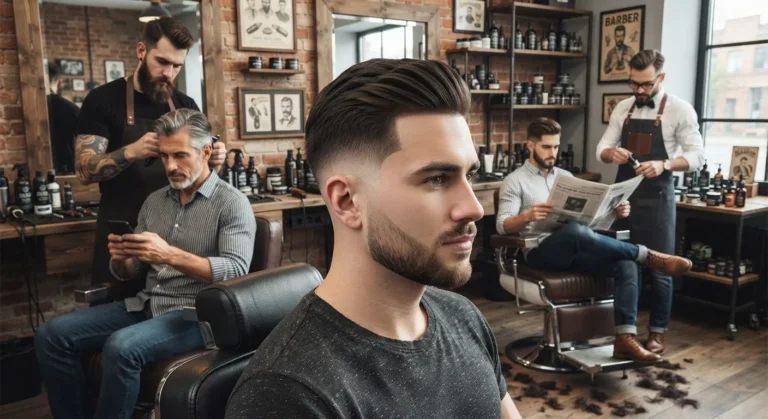
High taper fade is a men’s haircut where the sides and back start shortening high, around the temples, and blend down to a very short finish at the sideburns and nape. The upper sides keep some weight and the top stays long. You choose two things separately: how high it starts and how short it ends (shadow, zero or skin).
Key takeaways
- “High taper fade” has no official definition, so ask for details, not the name.
- Height and finish are two separate dials. Most bad haircuts come from mixing them up.
- Every fade grows about 3 mm a week. Skin looks sharper on day one, but it doesn’t grow slower.
- The upkeep, not the cut, is the real cost. Booking every two weeks costs about double booking every four.
- “Taper” and “fade” are not the same word. See the glossary below before you sit in the chair.
Taper vs. fade: the terms people mix up
Almost every competing guide skips this, and it’s the single most common mix-up in the chair.
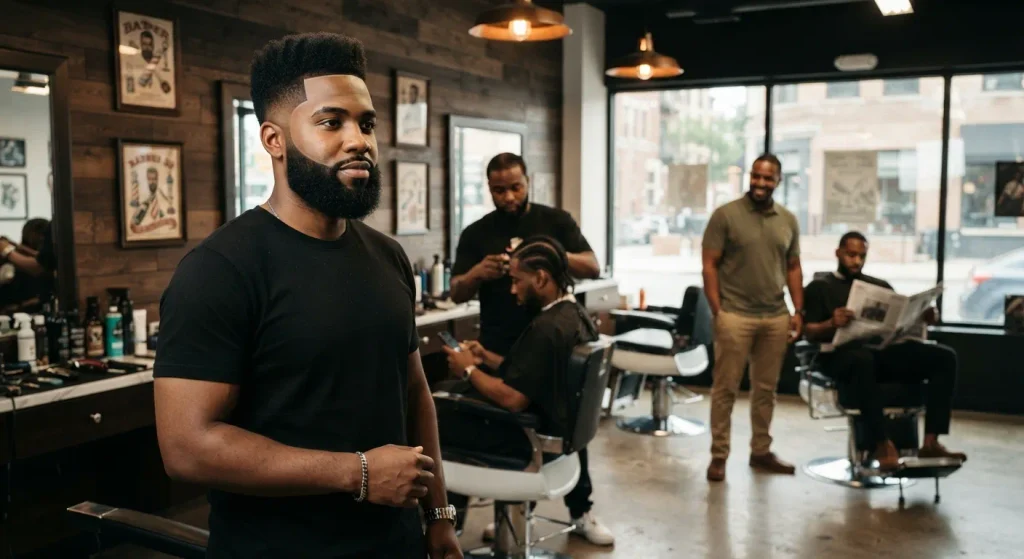
- Taper: hair shortens gradually but never has to reach bare skin. A classic taper can end at a soft #2 or #3 around the neckline.
- Fade: the blend continues all the way down to skin or near-skin at its shortest point.
- Taper fade: a hybrid, and the term this whole article is about. The shortest hair is concentrated around the sideburns, temples and nape, while the fade itself may or may not touch bare skin depending on the finish you choose (see the Dial 2 table below).
So a “high taper fade” isn’t automatically a skin fade. You can get the high, Tapered Shape with a soft shadow finish and never see scalp. That single sentence prevents more bad haircuts than any photo you could bring in.
What is a high taper fade?
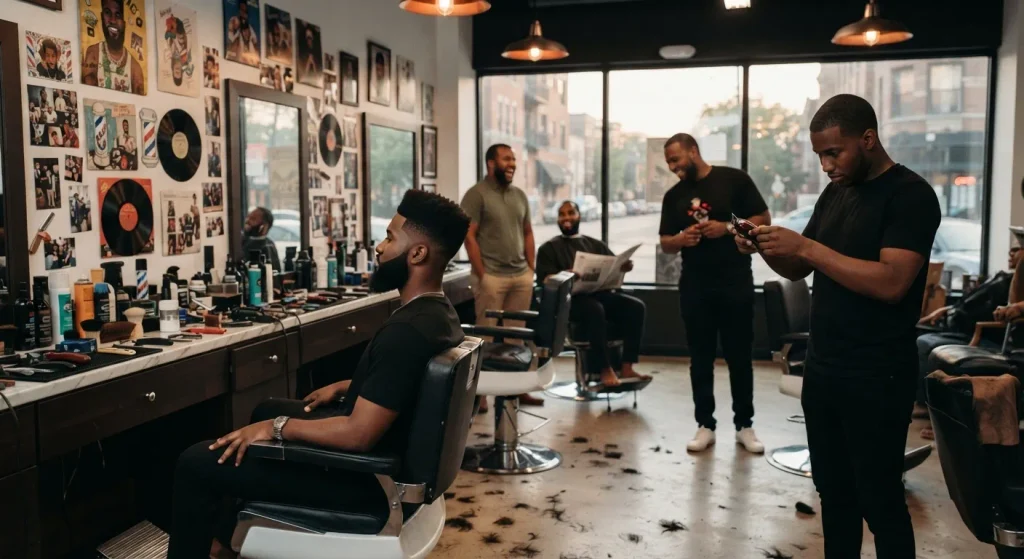
Think of your head in three zones:
- Fade zone: temples, sideburns and nape. The shortest hair lives here.
- Blend: the band above it where length climbs a little at a time. On a good cut, you can’t find a line.
- Top and upper sides: these keep their length and weight.
Barbers build the gradient with clipper guards and the taper lever, the small switch that changes how close the blade cuts between guard sizes. Finishing usually means clipper-over-comb work and a trimmer for the edges. The tool brand (Wahl, Andis, Oster, BaBylissPRO) matters far less than how well the barber blends.
Two dials: height and finish
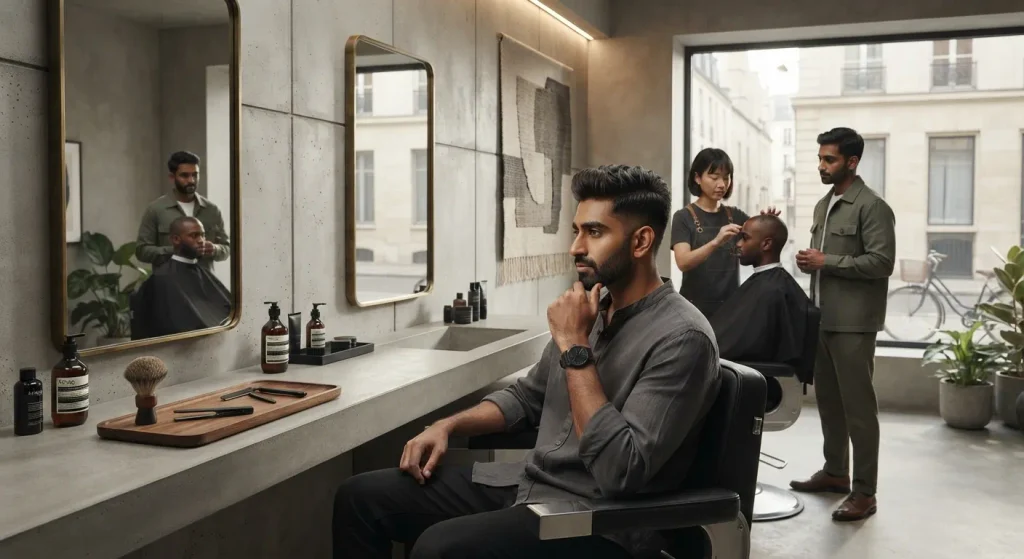
Dial 1: height. Where the fade starts. For a high taper, that’s around the temples, roughly two or three fingers above the ear.
Dial 2: finish. How short the shortest hair gets.
| Finish | Tool | Length left | Look |
| Skin | Foil shaver or razor | 0 mm | Bare and glossy |
| Zero | Clippers, no guard | Under 1 mm (varies by blade) | Very close, not glossy |
| Shadow, #1/2 | Wahl #1/2 guard | 1/16 in (1.5 mm) | Soft dark tone |
| Shadow, #1 | Wahl #1 guard | 1/8 in (3 mm) | Visible short hair |
| Soft, #2 | Wahl #2 guard | 1/4 in (6 mm) | Short, clearly hair |
Guard sizes come from Wahl’s own product listings: #1/2 is 1/16 in, #1 is 1/8 in, #1½ is 3/16 in (4.5 mm), #2 is 1/4 in, #3 is 3/8 in (10 mm) and #4 is 1/2 in (13 mm).
High taper vs. every other fade
| Detail | Low taper | Mid taper | High taper | High fade | Burst fade | Drop fade |
| Starts | Just above the ear | Temple level | Above the temples | High and wide across the side | Curves around the ear in a half-circle | Curves down behind the ear toward the nape |
| Contrast | Subtle | Balanced | Strong | Strongest | Strong, localized | Moderate to strong |
| Weight kept on sides | Most | Moderate | Some | Least | Some (shape depends on ear) | Some |
| Scalp visible | Least | Low | Moderate | Most | Moderate | Moderate |
| Typical visit gap | 3–4 weeks | 2–3 weeks | 2–3 weeks | 1–2 weeks | 1–2 weeks | 2–3 weeks |
| Best for | Office, conservative styles | Most people, most hair types | Sharp, modern looks | Bold statement looks | Curly/coily hair, round ear shapes | Longer top styles, mullets |
There’s also the shadow fade, which isn’t a height at all. It’s finished. Any of the fades above can be done as a shadow fade instead of a skin fade by stopping at a #1/2 guard rather than bare skin. And a bald fade (sometimes called a “skin fade”) simply means the fade’s shortest point touches bare skin, which a taper fade doesn’t have to do.
These are common conventions, not rules. Some barbers say a taper never reaches bare skin, so skin makes it fade. Others use “high taper fade” and “high fade” for the same order. The plain-English difference is that a high taper concentrates the shortest hair around the temples, sideburns and nape, while a high fade removes length across a much wider area.
Same words, four different haircuts
Say only “high taper fade” and you might get any of these:
| What the barber pictures | What you get | How to prevent it |
| Localized taper, #1 finish | Soft, tidy, moderate contrast | Say “keep weight on the upper sides” |
| Localized taper, skin finish | Sharp and glossy at the edges | Name your finish |
| Full high fade to skin | Bare sides, boldest look | Say “not a full high fade” |
| Very high, with a hard line-up | Sharp frame, exposed hairline | Say “natural hairline, no hard line-up” |
How it grows out (with the math)
MedlinePlus says healthy hair grows about half an inch a month. That’s about 12.7 mm a month, or roughly 3 mm a week. It’s average. Yours may be faster or slower.
The formula is simple: length ≈ starting length + 3 mm × weeks.
| Start | Week 0 | Week 1 | Week 2 | Week 3 | Week 4 |
| Skin (0 mm) | 0 | ~3 mm (#1) | ~6 mm (#2) | ~9 mm (about #3) | ~12 mm (about #4) |
| Shadow #1/2 (1.5 mm) | 1.5 | ~4.5 mm (#1½) | ~7.5 mm | ~10.5 mm (#3) | ~13.5 mm (#4) |
| #1 (3 mm) | 3 | ~6 mm (#2) | ~9 mm | ~12 mm | ~15 mm |
What this tells you:
- Skin and shadow grow at the same speed. The difference is 1.5 mm, and it stays 1.5 mm.
- What changes is contrast. Going from bare skin to stubble looks like a big jump. Going from soft shadow to a bit more shadow looks gentler. That’s why skin “goes off” fast, and why shadow feels lower-maintenance.
- Regrowth shows along straight edges (line-up, neckline) before it shows inside the blend. If only the edges are soft, ask for a neck and temple cleanup instead of a full reblend.
What upkeep really costs
The haircut price is small number. The real number is how often you book.
Formula: visits per year = 52 ÷ weeks between visits. Yearly cost = visits × (price + tip).
Example only, using a 40cutplusa20%tip(48). Replace with your local price.
| Booking every… | Visits a year | Yearly cost |
| 1 week | 52 | $2,496 |
| 2 weeks | 26 | $1,248 |
| 3 weeks | About 17 | $832 |
| 4 weeks | 13 | $624 |
Going from a two-week to a four-week rhythm halves the cost. If that matters to you, choose a shadow finish and a slightly lower taper. If you love a razor-sharp look, budget for it.
Which face shape suits a high taper fade?
A high taper draws the eye upward and adds visual height, so it interacts with your face shape more than a low taper does.
| Face shape | How a high taper reads | Adjustment to ask for |
| Round | Adds length and angles, one of the more flattering fades for this shape | Keep some height on top; avoid a very flat crop |
| Oval | Works with almost any height and finish | None needed, this is the easiest shape to fit |
| Square | Can sharpen an already strong jawline | Softer top texture balances the contrast |
| Long | A high, skin-finish version can stretch the face further | Consider a mid or low taper instead, or keep more width on the sides |
| Heart | Draws attention away from a wider forehead if the top has some volume | Keep the fade height moderate rather than very high |
Face shape is a starting point, not a rule. Head shape, hairline pattern and how your hair naturally sits matter just as much, which is why a photo and an in-person look from your barber beats guessing from a chart.
Which top works best?
Pick the top first, then match the taper to it.
| Hair type | Good tops | Why it works | Watch out for |
| Coily / afro-textured | Rounded afro, twist-out, defined curls, twists, locs | Tight sides frame the shape | Don’t over-thin the top. Agree height with your barber and braider |
| Curly | Curly top, blowout | Sides stay tidy, curls get room | Curls spring back shorter after cutting, so expect a guard longer |
| Wavy | Textured crop, messy fringe | Movement with little effort | Heavy product |
| Straight, fine | Side part, French crop, Caesar | Blend line shows, so choose a soft transition | On very fine hair, a high taper can lose its sharp contrast and start to look like an ordinary fade rather than a deliberate high one. If that’s a concern, ask to see it on a swatch of hair close to yours, or consider a low taper instead |
| Thick, coarse (including many Asian, South Asian and Middle Eastern men) | Quiff, pompadour, slick back | Removes side bulk | Dark hair shows regrowth fast against skin |
| Thinning / receding | Lower taper, shadow finish, soft hairline | Keeps attention off thin areas | A high, hard line-up can expose scalp |
Popular high taper fade pairings

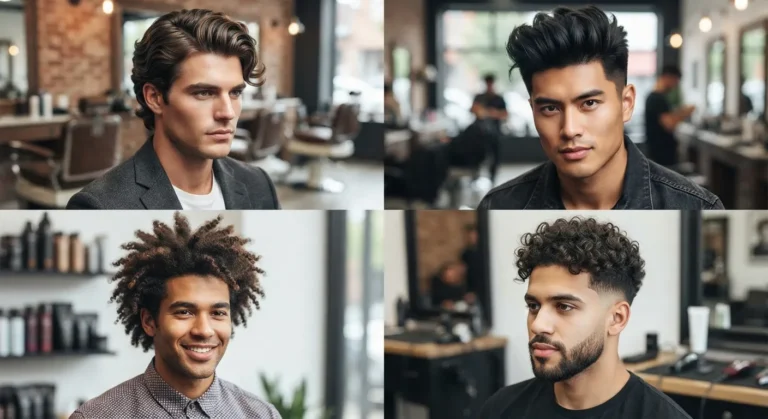
A few combinations come up again and again with barbers and in grooming coverage, each suited to a different hair type and effort level:
- High taper + textured crop: short, choppy texture on top with light matte product; low daily effort, works on straight-to-wavy hair.
- High taper + curly or twist-out top: leaves length for curl pattern to show while the sides stay controlled; expect the top to need a guard longer than you’d guess, since curls shrink after cutting.
- High taper + slick back or pompadour: best on thick or coarse hair where the fade removes bulk and the length on top gives you something to sweep back.
- High taper + French crop / Caesar: a low-effort, professional-leaning combination; the fringe stays short and forward, so the blend line needs to be soft rather than sharp.
- High taper + beard fade: the sideburn tapers straight into the beard with no visible gap; ask your barber to use the same guard, or one step longer, at the join.
- High taper + hair design: a razor-etched line or pattern sits in the blend zone; looks sharpest on day one and needs redoing almost every visit (see below).
High taper fade with a design. A razor design (a line or pattern) looks great on day one and blurs quickly. Expect to redo it every visit.
Cowlicks and crown whorls. They change how the blend lies. Point them out before the clippers start.
What to say at the barbershop
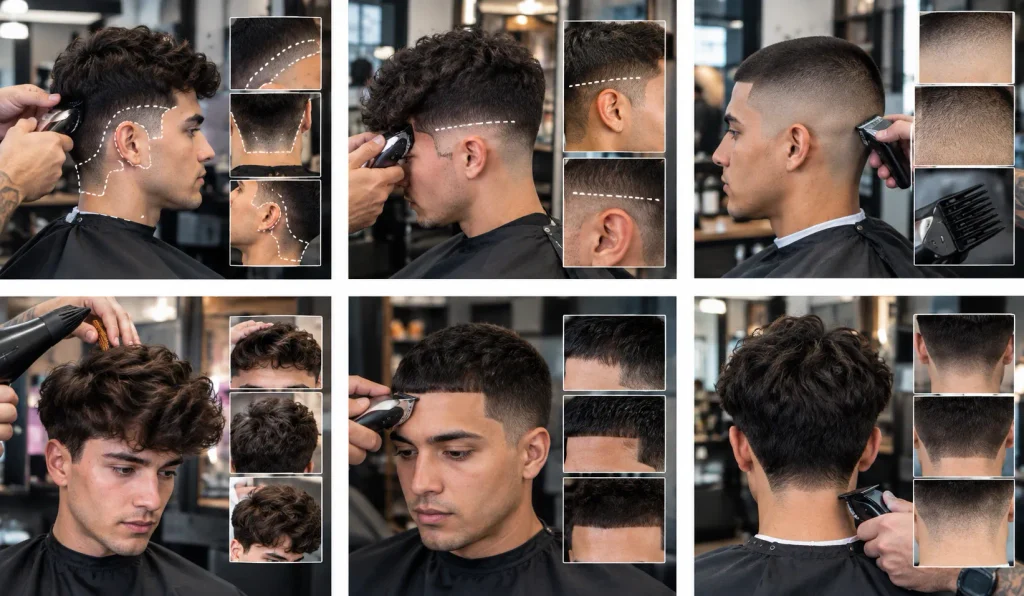
Six details beat any label:
- Coverage: just temples, sideburns and nape, or the whole side?
- Start height: compared with your temple and ear.
- Shortest length: skin, zero, or a guard number.
- Top: style and length.
- Hairline: natural, light cleanup, or sharp line-up.
- Neckline: tapered (soft) or squared (crisp).
Script to adapt: “I’d like a high taper focused on my temples and nape, keeping some weight on the upper sides, not a full high fade. Finish with a #1. Leave about three inches on top for a textured crop. Natural hairline, tapered neck. Here are three photos. Please adjust it to how my hair grows.”
Photos: bring front, side and back, with a clear view of the temple and neck. Then ask one question: “How do you define a high taper?”
Four checkpoints while it’s being cut:
- Before starting, does the barber repeat your finish back to you?
- Does the guideline sit where you agreed?
- Is the barber checking both sides from several angles?
- Before finishing, can you ask for the neckline to be softer or crisper?
Skin, bumps and sun
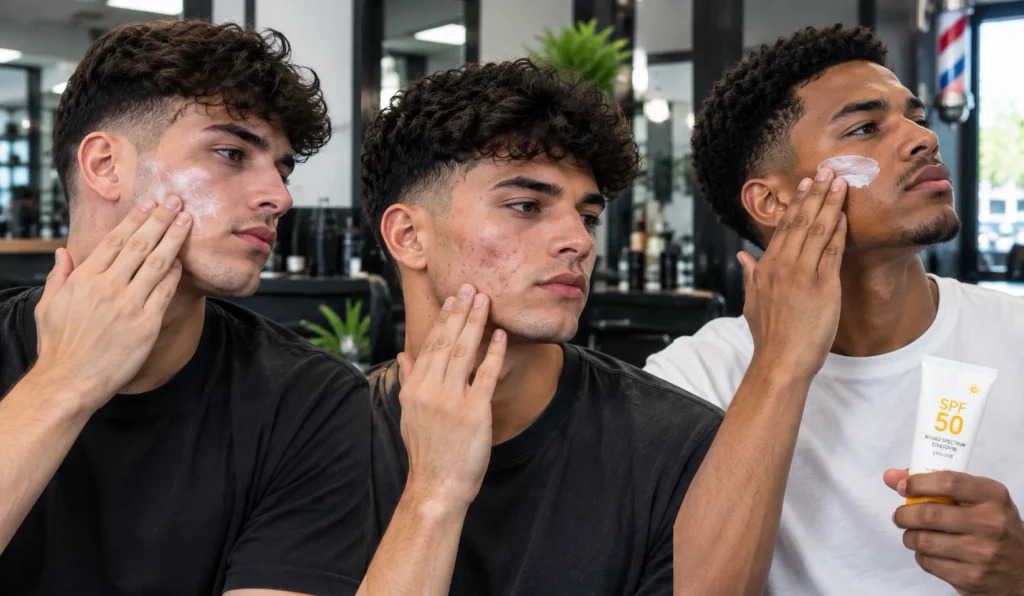
Razor bumps. Pseudofolliculitis barbae is more common in people with tightly curled hair. The American Academy of Family Physicians notes that stopping hair removal is the best prevention, and if you keep going, use clippers instead of a razor. That’s a good reason to choose a shadow finish over skin.
Bumps that stay. Acne keloidalis nuchae is a common condition often mistaken for acne or razor bumps on the back of the neck and scalp. The American Academy of Dermatology says it can cause raised scars and hair loss without treatment, and advises seeing a board-certified dermatologist when bumps appear. It’s most common in Black males, often starting between ages 14 and 25.
Sun. A close finish exposes skin that used to be under hair. Use a broad-spectrum sunscreen on the faded areas when you’re outdoors.
Hygiene. It’s fair to ask how tools are cleaned. Rules vary by state.
Can you do it yourself?
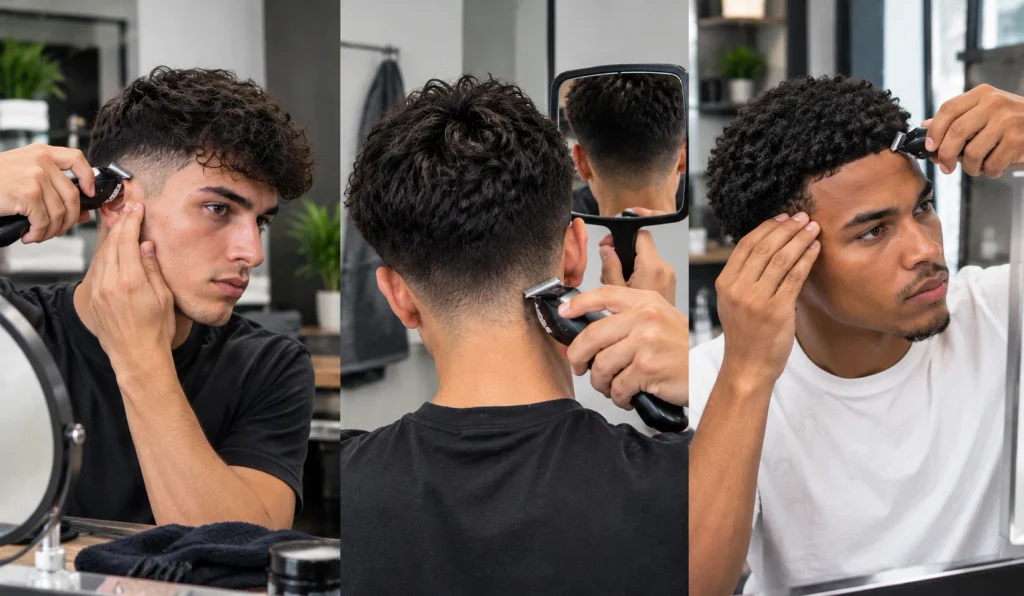
A full high taper is hard on your own head. You can’t see the back, and one bad pass forces a shorter cut. Keep home work to the neckline and stray hairs. If you try: clip the top out of the way, set a guideline with a #1/2 or #1, work up in short flicking strokes, move one guard size at a time, and check both sides in two mirrors.
If a high taper feels too bold
| If you want… | Try |
| More side weight, softer contrast | Low taper |
| A middle ground | Mid taper |
| No bare skin | Classic taper |
| The boldest look | High fade |
| A blend that curves behind the ear | Drop fade |
| A blend that curves around the ear | Burst fade |
Frequently Asked Questions
How high should a high taper fade start?
Around the temples, roughly two or three fingers above the ear. Your barber will adjust it to your head shape and hairline.
Is a high taper fade the same as a high fade?
Not always. A high taper concentrates the shortest hair on the temples, sideburns and nape. A high fade removes length across a wider area. Many barbers use the names loosely, so describe coverage and bring photos.
Does a high taper fade have to go down to the skin?
No. The finish can be a shadow, zero or a guard number.
How often should I get it cut?
Most people book every 2 to 3 weeks. Skin finishes look best at 1 to 2 weeks.
What guard number should I ask for?
No single number fits everyone. A #1 leaves 1/8 in and a #2 leaves 1/4 in. Pair it with your preferred height and coverage.
Is a high taper fade professional?
Usually. A natural hairline and a shadow finish look neat. Bare skin or bold designs may not suit strict dress codes, so check first.
Does it work with thin or receding hair?
Yes, with changes: a lower taper, a soft hairline and a shadow finish.
Does it work on curly or coily hair?
Yes. Leave enough length on top for the curls to form, and expect a guard longer for shrinkage.
Can I get it with a beard?
Yes. Ask for the sideburn to blend into the beard with no gap.
Which face shapes suit it?
Round and oval faces tend to suit a high taper well, since it adds height and works with the shape’s natural balance. Long faces usually do better with a mid or low taper, which adds width instead of extra height.
Is a taper fade the same thing as a fade?
No. A taper doesn’t have to reach bare skin; a fade, especially a skin fade, blends all the way down to it. A taper fade is a hybrid that concentrates the shortest hair around the sideburns and neckline.
Final word
A high taper fade isn’t one fixed haircut it comes down to two separate choices: how high the fade starts near the temples, and how short it finishes at the bottom (skin, zero, or a shadow guard). Most bad results happen when these two get mixed up, or when people treat “taper” and “fade” as the same thing, when they’re actually different. Hair grows at a fairly predictable rate of about 3mm per week, and upkeep cost matters more than the price of the haircut itself booking every two weeks roughly doubles your yearly spend compared to going every four weeks.
The right choice depends on your hair type, face shape, and lifestyle whether you’re going for a textured crop, a curly top, or a beard fade. Giving the barber clear instructions, showing reference photos, and naming your exact finish gets you far better results than just naming the haircut alone.