
MODERN HAIRCUT INSPIRATION
Taper Fade Guide: Men’s Haircuts & Modern Styles (2026)
Written by the M Haroon. We research and compare styles with input from licensed barbers before publishing. Content last reviewed: September 2026.
A taper fade only tells the truth two weeks after you leave the chair. Day one, almost every fade looks good the lines are crisp, the blend is fresh, and it’s easy to mistake “just cut” for “cut well.” The real test is what it looks like as it grows out. That’s the lens we use for everything on this site, from picking a fade height to matching it with your actual hair texture instead of whatever looked good in a reference photo.
Start with your hair type and your fade height below, and you’ll walk out of your next appointment with the exact cut you asked for, not a rough guess of it.
Fade Finder
Low, mid, high, skin, and burst fades compared by starting point, contrast level, and how each one wears on thick versus fine hair. If you already know a taper fade is the move but you’re not sure which one, this is where to start.
Style by Hair Type
Curly, coily, straight, and wavy hair all blend differently under the clippers. See which taper and fade combinations actually hold their shape on your texture instead of looking uneven within a week.
Ask-Your-Barber Scripts
The exact wording for guard numbers, starting height, and blend direction that gets you the cut you described, instead of the barber’s best guess at what you meant.
DISCOVER YOUR NEXT HAIRCUT, STYLE & LOOK
Most guys walk into the barbershop with a vague idea of the taper fade they want and walk out with a rough guess of it. Here you’ll find the exact fade height, texture, and finish to ask for, so what you picture is what you get.
FADE TYPES EXPLAINED
The Main Taper Fade Types, Explained
A taper fade comes in a few main directions: low taper fade, mid taper fade, high taper fade, skin fade, and burst fade. Each one changes how sharp the finished cut looks.
- A low taper fade starts near the ear and barely reads as a fade to anyone but you.
- A mid taper fade starts around temple height for noticeable contrast without going full skin.
- A high taper fade starts higher up for a sharper, more dramatic look.
- A skin fade blends all the way down to bare skin for maximum contrast.
- A burst fade curves around the ear instead of running in a straight line.
The guides here cover the details, blend height, neckline, how much to leave on top, so you’re not just showing your barber a photo and hoping for the best.
YOUR GUIDE TO BETTER HAIRCUTS & PERSONAL STYLE
Most guys don’t actually struggle to pick a haircut. They struggle to explain it. You know the look you want, but the second you sit in the chair, it comes out as “just make it look good” and that’s how you end up with a cut that’s fine, not the one you pictured. This site breaks fades down by the stuff that actually matters: where the blend starts, how high it goes, and what it should look like once it grows out a bit.
Hair type changes everything here. Fine hair fades clean almost no matter what. Thick hair needs a bit more length on top or it starts looking boxy. And if your Hair’s curly or coily, cutting it too short on top kills the pattern most barbers will tell you to leave at least two inches so it actually curls the way it’s supposed to. None of this is complicated once someone explains it, which is basically the whole point of this guide.
If you already know a taper fade is the move, there’s a handful of ways to go low, mid, high, skin, burst, or a taper with a fringe left up front. Each one changes how sharp or subtle the cut looks, and each one needs touching up on a slightly different schedule (usually every two to three weeks). The guides here go through the small details blend height, neckline, how much to leave on top so you’re not just showing your barber a photo and crossing your fingers.
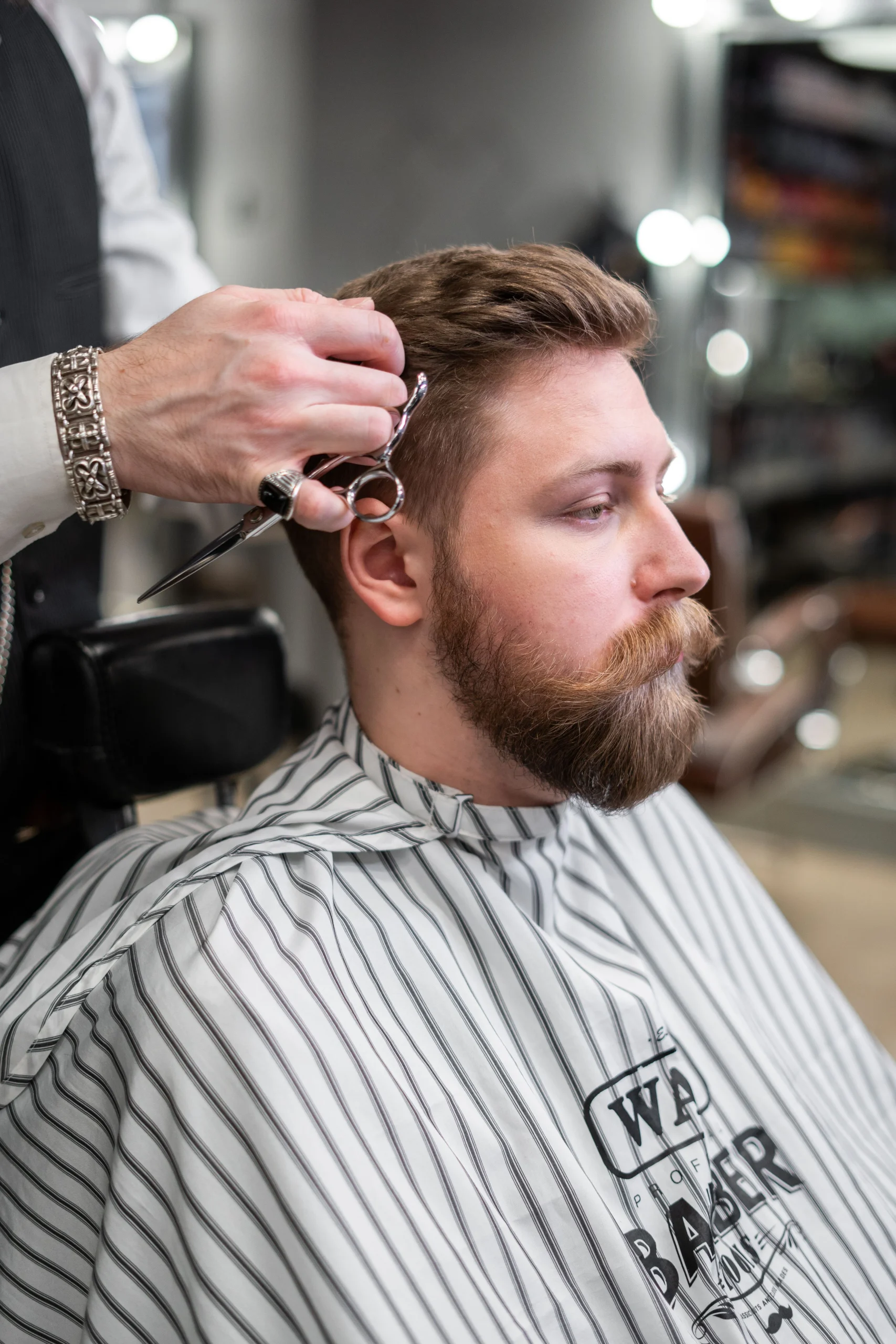
HAIRCUT STYLES
MODERN & CLASSIC CUTS

TAPER & FADE STYLES
CLEAN, MODERN & TRENDING LOOKS
BEARD & GROOMING
BEARD IDEAS & GROOMING TIPS
BEARD & GROOMING
FIND THE RIGHT BEARD STYLE FOR YOUR LOOK
A beard shaped to match the haircut reads like one decision. A beard just left to grow on its own next to a sharp fade? That reads like two separate decisions, and it shows. The fix is usually simple pick one length, pick one line, and actually stick with it instead of letting it drift.
Full beard, short boxed beard, stubble, van dyke, circle beard, or a beard fade whatever direction you’re leaning, the guides here break down the trim length, how to line up the cheeks and neck, and how often you’ll need to touch it up. Most defined shapes need some attention every week or two if you want the line to actually hold.


FIND THE RIGHT HAIRCUT FOR YOUR STYLE
Comparing three or four real options usually beats searching for one “perfect” cut. TaperStyles keeps taper fades, classic and modern hairstyles, beard pairings, and grooming guides in one place, filterable by hair type, face shape, and length, so you can see what’s realistic for your hair before you sit down.
Frequently Asked Questions
Conclusion
TaperStyles is built around one idea: a haircut’s real test isn’t day one, it’s two weeks later once it’s grown out a bit. That’s the lens for everything here, from picking a fade height to matching it with your actual hair texture instead of whatever looked good in a photo.
We cover the different fade types, low, mid, high, skin, and burst, and we don’t treat them the same across hair types either, since a burst fade on curly hair behaves nothing like one on straight hair. There’s a beard section too, matched up with haircuts instead of treated separately, plus the exact wording to hand your barber so you’re not just pointing and hoping. The FAQ above covers what people usually ask last: touch-up timing, curly-hair adjustments, and what “taper” even means next to “fade.”