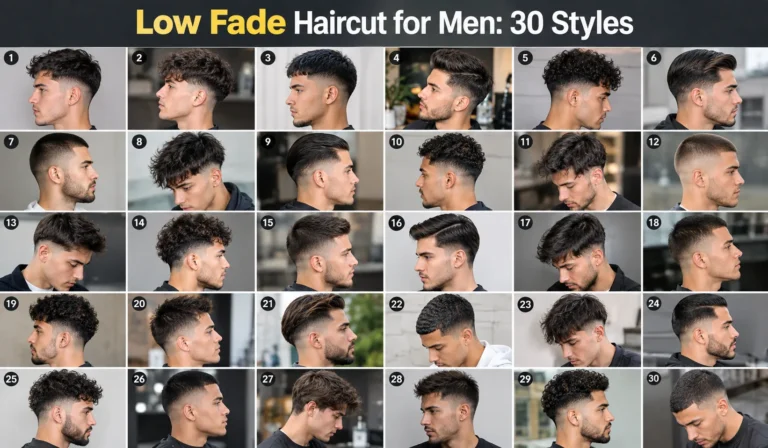
By M. Haroon, barber and men’s grooming specialist | Published: September 2026 | Updated: September 2026
Medium length hair for men is 3 to 6 inches (7.5 to 15 cm) on top. That is long enough to part, push back or let fall forward, and short enough to style in five minutes. Pick the cut by your hair type first (straight, wavy, curly, thick or fine). Use face shape and hairline to fine-tune it.
The most common problem in my chair is a photo that doesn’t match the head. A guy holds up a picture of soft, wavy, fine hair. His own hair is thick, straight and stands up by itself. Same haircut on paper, completely different result on the head. So this guide starts with the parts most articles skip: real measurements, hair type, and the exact words that get you the cut you want. Then you get 38 styles, a grow-out plan that doesn’t sugar-coat the awkward months, and the mistakes I fix most often.
Key takeaways
- Medium length means about 3 to 6 inches on top. Give your barber a number, not “a bit longer”.
- Hair type decides how a cut behaves. Face shape only adjusts the details.
- Hair grows roughly half an inch a month, so going from short to true medium takes about 6 to 10 months.
- Tell your barber four things: top length, side treatment, how much weight to remove, and where the part or fringe goes.
- Dry your hair fully before adding the product. Slightly damp hair loses its shape within the hour.
- Thick and coarse hair needs weight removed. Fine hair needs shape. Ask for opposite things.
What counts as medium length hair for men?
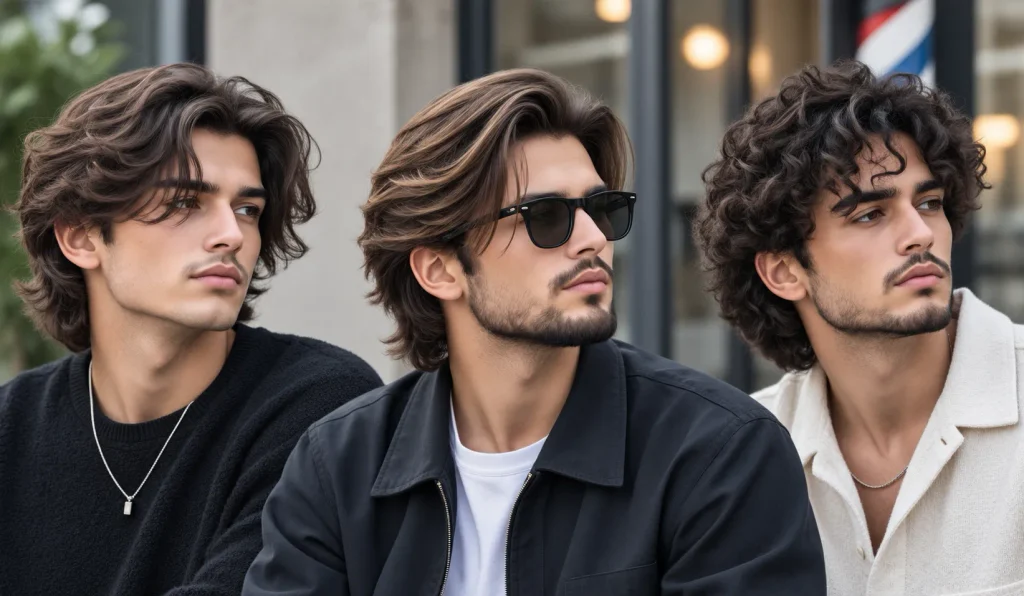
Barbers don’t all agree on one number, but most place medium between 3 and 6 inches on top. Some go up to 8 inches because they count shoulder-grazing styles. I use 6 as the upper limit. Past that, you’re usually tying it back, and that’s long hair.
| Range | Length on top | How it sits | Cuts that fit |
| Short-medium | 3 to 4 in (7.5 to 10 cm) | Covers the top of the ears, can stand up or sweep back | Side part, comb over, textured quiff |
| True medium | 4 to 5 in (10 to 13 cm) | Falls around the ears, reaches the neckline | Bro flow, curtains, shag, modern mullet |
| Long-medium | 5 to 6+ in (13 to 15+ cm) | Collar length, can be tucked or tied | Wolf cut, long brush back, man bun |
Clipper guard numbers, for the sides. Once you know these you can order the sides precisely.
| Guard | Length left | Typical use |
| #1 | 1/8 in (3 mm) | Tight fade or skin-close taper |
| #2 | 1/4 in (6 mm) | Standard low taper |
| #3 | 3/8 in (10 mm) | Soft taper, less contrast |
| #4 | 1/2 in (13 mm) | Very gentle taper |
Best medium length cuts by hair type
Hair type is the first decision. Get this wrong and no amount of styling saves the cut.
| Hair type | What works | Ask your barber for | Usually a bad idea |
| Straight | Side part, brush back, comb over, slick back | Clean, even cutting. Straight hair shows every uneven layer | Very choppy shags that need natural wave |
| Wavy | Bro flow, shag, mod cut, curtains, messy fringe | Light layers, little thinning | Heavy thinning (turns waves into frizz) |
| Curly | Tapered curls, broccoli cut, curly curtains | A dry cut, so you can see the true curl length | Blunt, one-length cuts (they pyramid) |
| Coily / afro | Tapered afro, twists with taper | Clean taper, length kept on top | Over-thinning, dry ends |
| Fine or thin | Textured quiff, layered side part, crop with length | Light layers, roots with lift | Heavy blunt cuts that lie flat |
| Thick or coarse | Layered brush back with taper, textured crop, two block | Point cutting, weight removed | Long, one-length cuts (helmet shape) |
If your hair is thick and straight, ignore cuts built on floppy, light hair. A low taper with layered length on top, a brush back or a side part with weight removed is the safer route. Many of the trendy “effortless flow” photos online are fine or wavy hair, and that result won’t transfer to a dense, straight head.
READ MORE : Mid Taper Fade Curly Hair: Style, Cost, and Care Guide
Hairline, crown and cowlicks: the details that change the cut
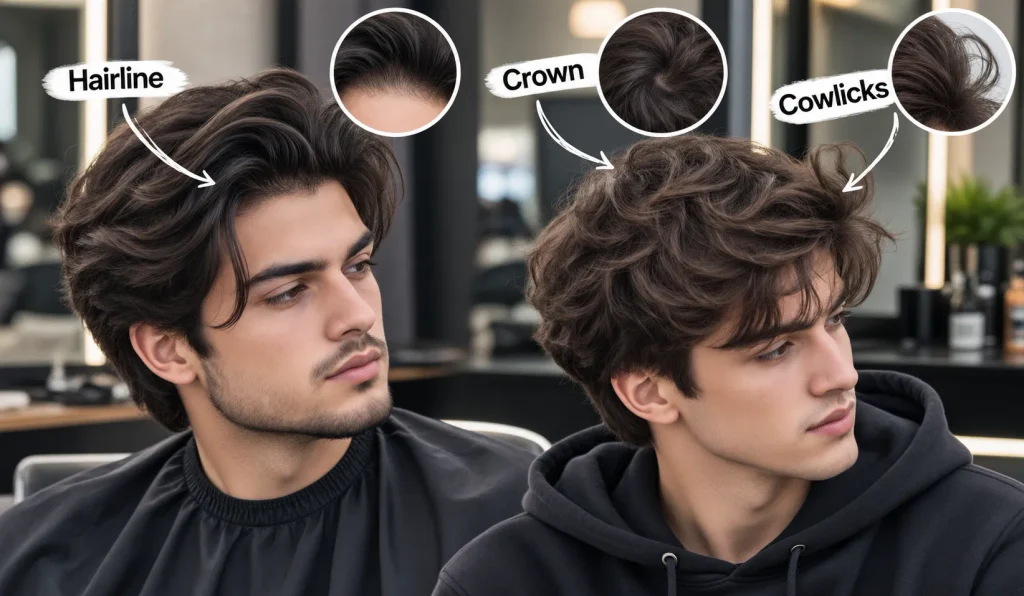
Most guides stop at face shape. In real life, hairline and growth patterns decide more.
Receding or high hairline. Skip slicked-back styles with very short sides. Go for a textured fringe, brush forward, side-swept top or a crop with length. Movement at the front draws attention away from the hairline.
Thinning at the crown. Layers add visible fullness, and a slightly longer top hides thin patches better than a short cut. Avoid hard parts that expose the scalp. If hair is falling out quickly or in patches, see a dermatologist rather than styling around it.
Cowlick at the front. Don’t fight it. Cut the fringe to go the way the cowlick pushes, or keep the hair long enough that its weight pulls the cowlick down.
Crown swirl. Medium hair over a crown swirl tends to stick up. Ask for a bit of length at the crown and blow-dry in the direction of the swirl.
Beard. A fade or taper on the sides connects a beard to the hair cleanly. Flow, brush back and messy textured tops pair well with stubble or a short beard. A very sharp, heavily faded cut can make a full beard look disconnected.
Face shape: a quick fine-tuning guide
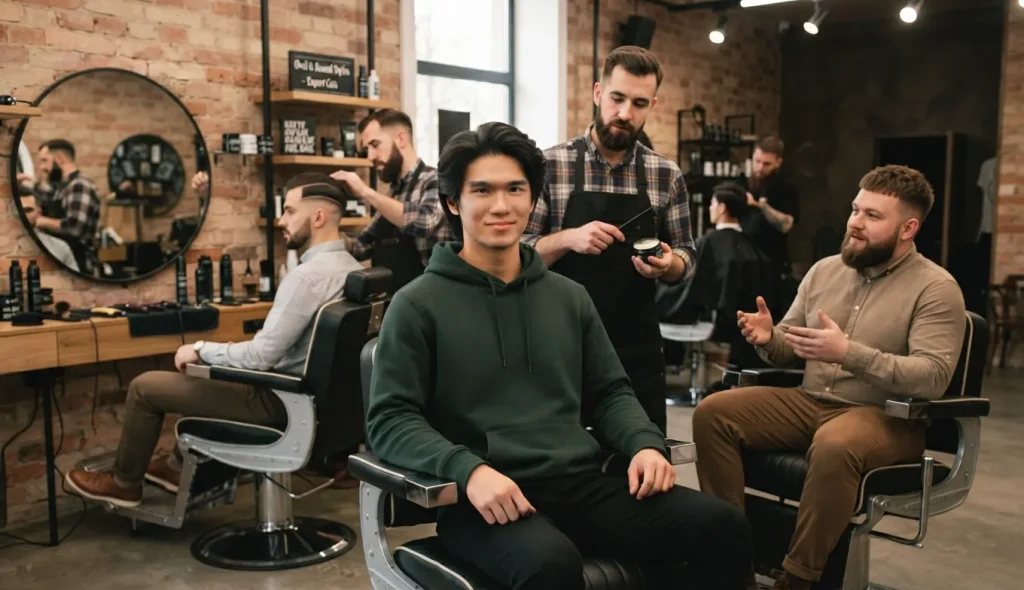
Face shape never rules a cut out. It changes which details help.
- Oval: suits nearly everything. Choose by hair type and styling time.
- Round: height on top with tapered sides makes the face look longer. Skip full rounded sides.
- Square: softer layers and a textured fringe soften strong angles. Avoid boxy, blunt lines.
- Oblong: a fringe and some width at the sides balances length. You don’t need extra height.
- Heart: side-swept fringe and a little fullness near the jaw. Too much height can widen the forehead.
- Diamond: textured fringe and volume at the forehead. Skip slicked-back styles with very short sides.
Not sure of your shape? Your barber can tell from the width of your forehead, cheekbones and jaw in a few seconds.
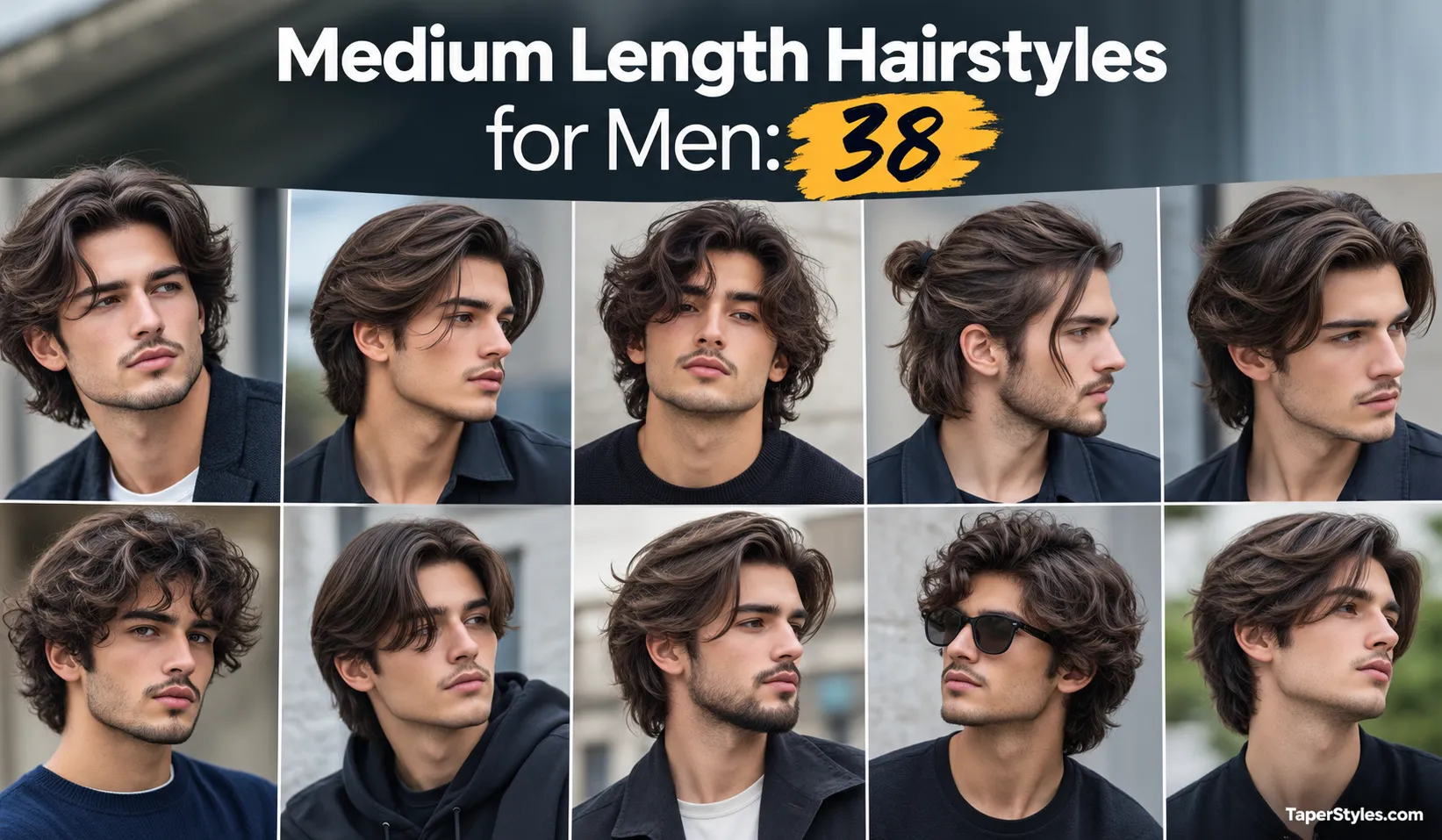
38 medium length hairstyles for men
Classic and professional
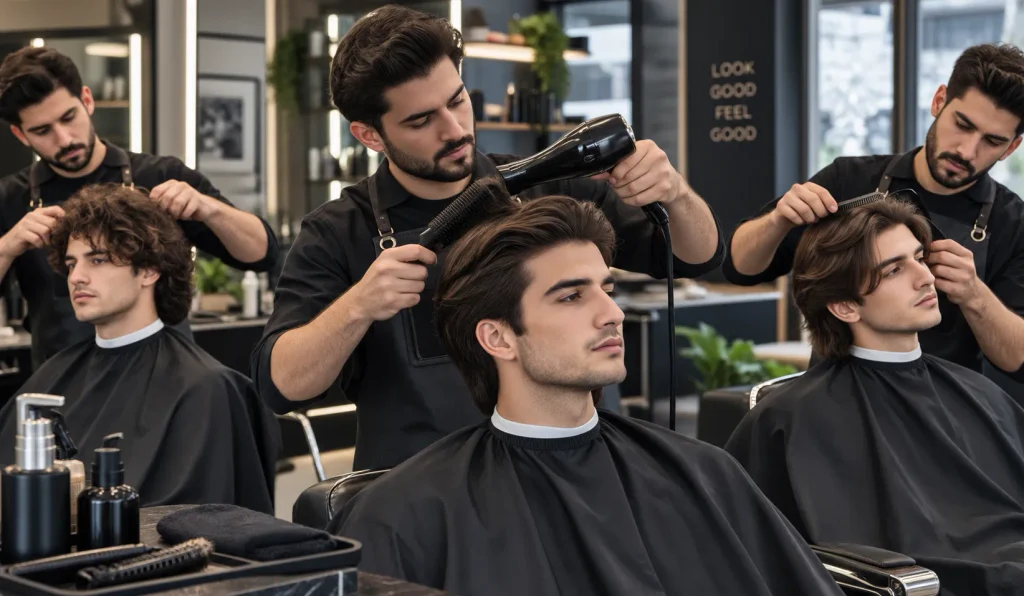
1. Side part with low taper. A defined part, hair swept over, sides tapered short. It works at a desk and at a wedding, which is why it survives every trend cycle. Best on straight to slightly wavy hair. Ask for: “About 4 inches on top, hard part on the left, low taper.”
2. Brush back. Hair pushed back off the forehead with light volume. It looks polished without needing shine, and it sits well with a beard. Best on medium to thick straight or wavy hair.
3. Long comb over. A longer top combed to one side over tapered sides. You keep length and still look sharp at a conservative workplace.
4. Textured pompadour. Height at the front, tight sides, matte finish. It needs a blow dryer and five to ten minutes, so pick it only if you like styling. Fine to medium hair holds it best.
5. Textured quiff. Height and choppy layers at the front. The matte version is far easier to wear daily than the shiny 1950s one, and it flatters round and oblong faces.
6. Textured slick back. Push back with your fingers instead of a comb, so the hairline isn’t plastered down. Works best on medium to thick straight or wavy hair.
7. Layered side sweep. Layers cut so the top moves across to one side. It softens a high forehead and takes very little product.
Low effort and natural
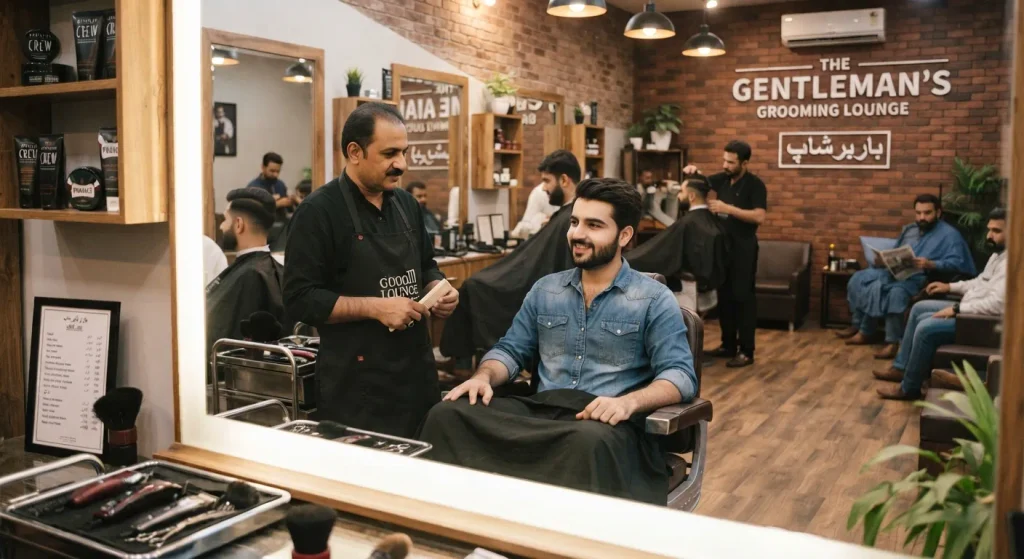
8. Bro flow. Hair falls back, often tucked behind the ears. No skill needed, but the ends must be healthy, so book trims. A good holding style during a grow-out.
9. Curtains. A centre or slightly off-centre part, hair falling to both sides. It adds width to oval and long faces. Ask for: “Long fringe, middle part, lighter sides so it doesn’t puff out.”
10. Messy fringe. Longer layers falling forward in an undone shape. Forgiving on days you skip styling. Good on wavy or thick hair.
11. Shag. Heavy layering all over with face-framing pieces. It needs natural texture to look full, so wavy to curly hair suits it best. Trim it every 6 to 8 weeks or it loses its shape.
12. Medium flow with layers. Even medium length pushed back with soft layers. A safe first step into longer hair on most face shapes.
13. Mod cut. A rounded 1960s shape with a longer, choppy fringe, often with a low taper. Suits thick straight or wavy hair, and long or oval faces.
14. Layered brush forward. Layers move hair across the forehead for a relaxed look. Best on straight or slightly wavy hair.
15. Surfer waves. Loose, wind-touched waves at medium length. Sea salt spray and air drying do most of the work.
16. Wavy middle part. A loose centre part with collar-touching waves. It works best when the hair is already wavy. On straight hair, expect a flatter version.
Fade and taper based
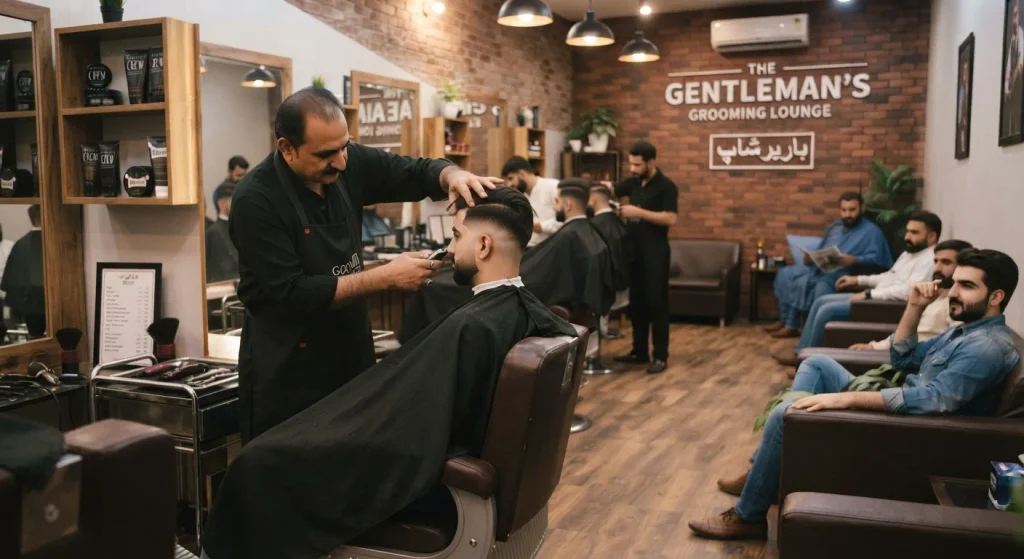
17. Blowout taper. Volume blown up and out on top, sides tapered clean. Best on wavy or curly hair. Needs a few minutes with a dryer.
18. Two blocks. Short sides and back with a longer, lightly layered top. The contrast gives the cut shape even while the top is between lengths, which makes it good for a grow-out.
19. Textured crop with length. Keep 3 to 4 inches on top with point cutting for choppiness. Handles thick hair very well.
20. Faux hawk or burst fade mohawk. Short sides with a raised centre. Looks tidy because of the clean fade. Straight, pliable hair or curls hold it best.
21. Comma hair. A Korean-inspired cut where the fringe curls inward in a soft C above the eyebrows. Works on straight to slightly wavy hair.
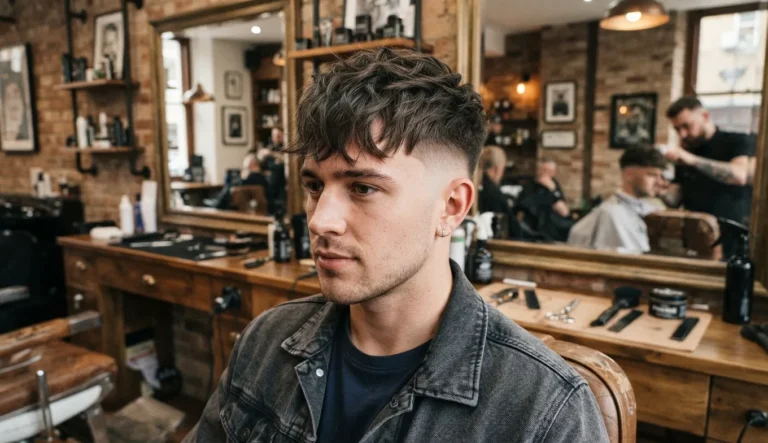
22. Undercut with medium top. Very short sides, longer top, with a blended or lightly disconnected line. It handles slicked back, side-swept and messy styles.
23. Disconnected undercut. A visible hard line between the sides and the top with no blending. Straight, pliable hair holds the shape best.
24. Long fringe with taper. A fringe that rests over the forehead with clean sides. Good on thick straight hair and angular faces.
Bold and statement
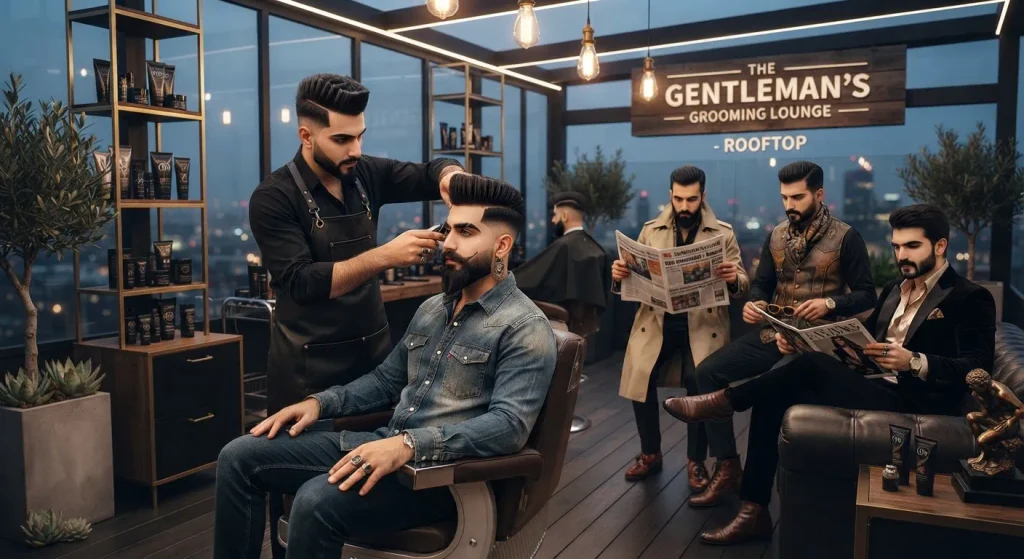
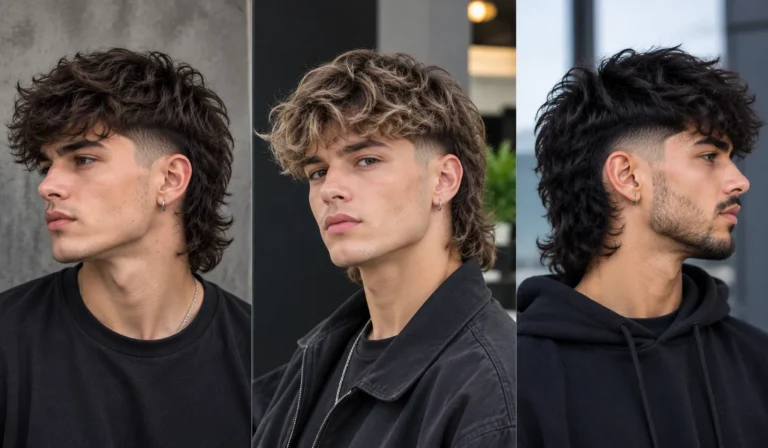
25. Modern mullet. Faded or tapered sides, textured top, longer back. The fade keeps it wearable in most settings. Best on wavy or textured hair.
26. Wolf cut. A blend of shag and mullet with heavy layering. Best on wavy to curly hair and on oval or diamond faces.
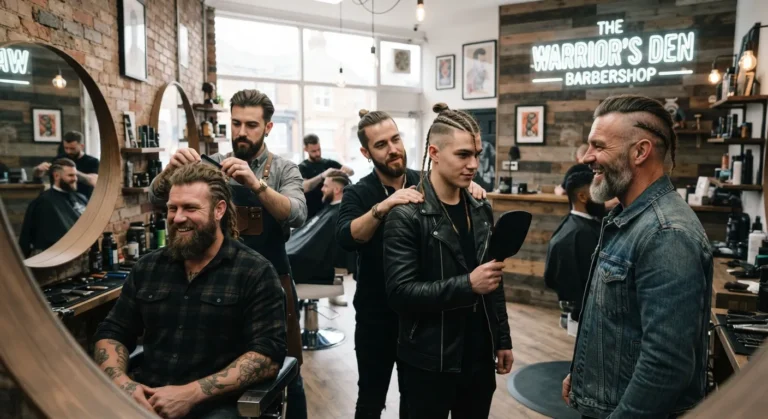
27. Warrior cut. Heavily textured, spiked layers on top with shorter sides. Controlled chaos, and it needs medium to thick hair to look right.
READ MORE : The Warrior Cut for Men: How to Get It, Style It and Keep It
28. Korean perm. Soft curls added to straight or fine hair for volume and movement. It’s a salon treatment, so budget for upkeep. Daily styling is very light.
29. Feathered layers. Layers trimmed at an angle so the ends look light. Works well on long-medium, straight, darker hair, often with a centre part.
30. Long spiky textured top. Layers lifted upward with clay or powder over faded sides. It’s loud, but the fade keeps it neat.
Curly and coily
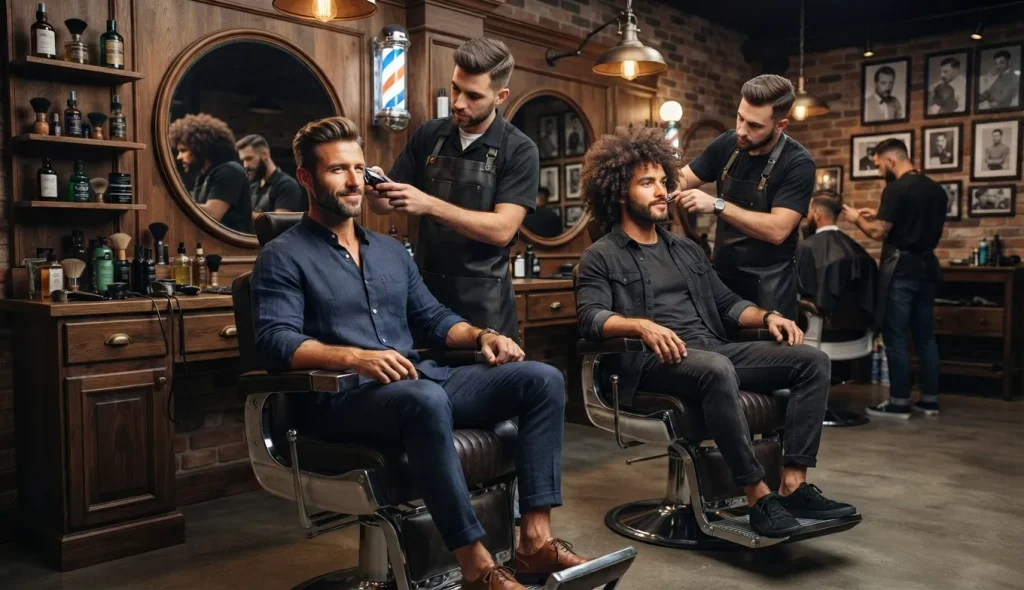
31. Tapered curls. Curls left long on top with a gentle taper at the sides. Ask for a dry cut and leave length on top.
32. Broccoli cut. A curly top that springs up and spreads, with faded sides. Low effort, and it looks better the healthier the curls are.
33. Curly curtains. A middle part with curls falling to each side. Needs curls that already hold their shape.
34. Tapered afro with a medium top. Volume on top with clean edges. Keep the ends moisturised.
35. Twists with taper. Twists or coils on top with faded sides. Protects the ends and holds shape well.
36. Messy curls. Loose curls with light layering and a soft taper. Finger-comb, don’t brush.
Tied back

37. Man bun or top knot. Works once hair reaches about the top of the shoulders. A fade or taper on the sides stops it looking unfinished.
38. Low ponytail. A simple option during a grow-out. Suits straight to wavy hair.
How to talk to your barber

“Just a trim” is the phrase that causes most bad Haircuts. To one barber it means half an inch off. To another it means cleaning the edges and leaving the length. Give a barber a number and a direction and the guessing stops.
The barber brief: Number, Sides, Weight, Part.
- Number: the length on top in inches or centimetres. “About four inches.”
- Sides: taper, fade or scissor cut, and a guard number if you know it.
- Weight: do you want bulk taken out (thick hair) or kept (fine hair)? Say “point cut it” or “keep it full”.
- Part: which way the fringe and part go. Forward, side-swept, brushed back or centre.
Copy-paste script: “Keep four inches on top, taper the sides down to a number two, add light layers, and take weight out of the back. I’ll style it with my fingers.”
| What you say | What a barber may hear |
| “Just a trim” | Anything from half an inch to a full reshape |
| “A bit shorter on the sides” | Any guard from #4 to a skin fade |
| “Keep it natural” | No layering at all |
| “Give me layers” | Any depth, from soft to heavy |
| “Like this photo” | The style, but not your hair type |
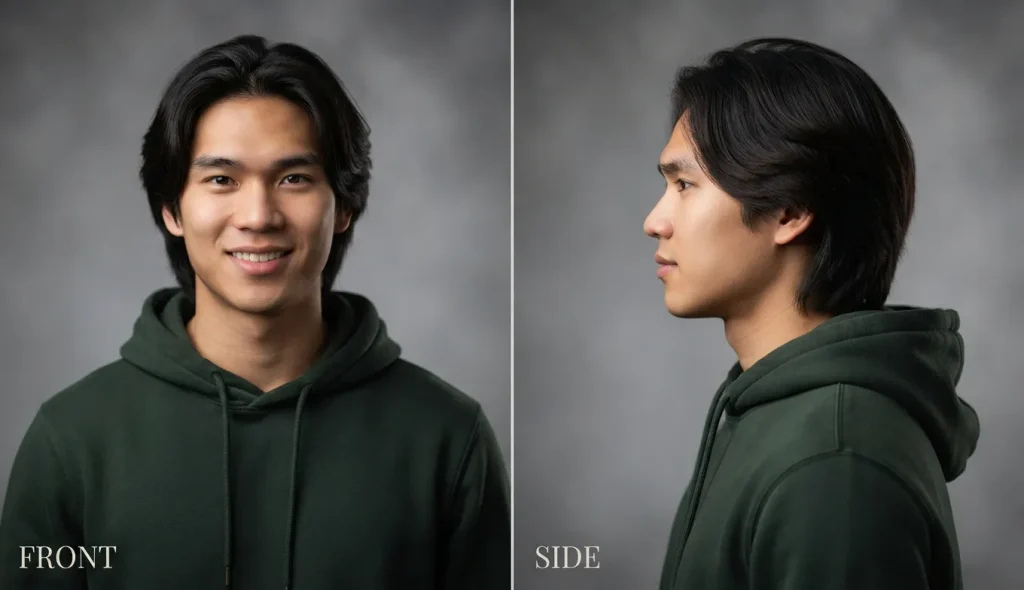
Bring two photos, one front and one side or back, of a man whose hair looks like yours. A great cut on someone else’s texture won’t turn into that cut on yours.
Terms worth knowing: A taper gets gradually shorter without a hard line. A fade blends down to the skin or very close to it. A disconnection is a sharp step between two lengths with no blending. Point cutting uses scissor tips to soften and thin the ends. Layering cuts sections to different lengths for movement. Thinning shears remove bulk without losing length.
How to grow your hair to medium length
Hair grows about half an inch (1.25 cm) a month on average. It varies with genetics, age and health. If you’re starting from about an inch on top, this is a realistic guide.
| Timeline | Length on top | What to expect |
| Months 1 to 2 | About 2 in | A longer short cut. Easy to manage |
| Months 3 to 4 | About 3 in | Short-medium. Hair starts to lie flat instead of standing up |
| Months 5 to 6 | About 4 in | The hardest stretch: too long for short styles, too short to flow |
| Months 7 to 8 | About 5 in | True medium. Flow, curtains, shag and quiff become possible |
| Months 9 to 10 | About 6 in | Long-medium. Wolf cut and tied-back styles are reachable |
The awkward stage usually sits between months 3 and 6, and it’s where most men quit. Your hair isn’t ruined. It’s mid-transition.
What helps most:
- Keep the sides short. A taper or fade gives the cut a shape while the top grows.
- Book a shaping trim every 4 to 6 weeks. Say “shape only, don’t take length off the top.”
- Start using clay or paste around month 3. Hair that is too long to stand up and too short to fall needs direction.
- Use a part. A centre or hard side part gives the hair a direction at in-between lengths.
- Pick your target style on day one. Show the photo at every visit so each cut moves you toward it.
Curly and wavy hair often looks like it’s growing slower, because curls shrink and hide length. The real progress only shows when the hair is heavy enough to hang.
How to style medium length hair

Air dry (about 5 minutes). Towel dry until damp, not dripping. Work in sea salt spray or a light cream. Scrunch waves and curls gently, or run your fingers through straight hair. Let it dry, then separate sections with your fingers.
Blow dry (10 to 15 minutes). Towel dry until barely damp. Apply heat protectant along the lengths and a volumising product at the roots. Dry with a vented or round brush, lifting from the roots. Once the hair is completely dry, add a small amount of clay, paste or pomade.
Complete dryness matters more than most men think. Hair that feels 80% dry often collapses within an hour, because leftover moisture weighs it down as it cools. Finish drying first, then add hold.
Products for medium length hair
| Product | Hold | Finish | Best for |
| Sea salt spray | Light | Matte, grainy | Wavy or curly hair, air drying |
| Styling cream | Light to medium | Soft, natural | Straight to wavy, everyday wear |
| Matte clay | Medium to strong | No shine | Thick hair, textured tops |
| Paste | Medium | Low shine, flexible | Messy and separated looks |
| Pomade | Medium to strong | Natural to glossy | Slick backs, side parts |
| Texture powder | Light | Dry, matte | Root lift on fine hair |
| Leave-in conditioner | None | Smooth | Frizz, curly and dry hair |
| Heat protectant | None | Invisible | Anyone using a blow dryer |
Start with a pea-sized amount and add more only if needed. Strong pomade on fine hair looks greasy, and light cream on thick hair may not hold at all.
How often to get a trim
| Style type | Touch-up | Full trim |
| Faded sides, medium top | Every 2 to 3 weeks (the fade) | Every 6 to 8 weeks |
| Tapered sides, medium top | Every 4 to 5 weeks | Every 6 to 8 weeks |
| Even medium length (flow, curtains, shag) | n/a | Every 6 to 8 weeks |
| Shoulder length or tied back | n/a | Every 8 to 12 weeks (ends only) |
Fades grow out faster than the length on top, which is why the sides need touching up first.
Everyday hair care
- Wash two to three times a week unless you sweat heavily. Daily washing can dry hair out.
- Condition the lengths and ends after each wash, not the roots. Add a weekly mask if hair is dry or curly.
- Use a clarifying shampoo every week or two if you use a lot of product.
- Use heat protectant every time you blow dry. The damage shows up months later as dry, brittle ends.
- Try a satin or silk pillowcase. Cotton adds friction that roughens the hair surface, especially at longer lengths.
- After workouts or in hot, humid weather, rinse with water rather than shampooing again, and tie longer hair back during heavy cardio.
- Protect from strong sun. Hair can fade, dry and become brittle at the ends. A hat or a leave-in with UV protection helps.
Common mistakes with medium length hair
- Skipping trims while growing out, which leads to split ends and a shapeless look.
- Using too much product. Extra product flattens texture.
- Styling damp hair.
- Bringing a photo of a different hair type.
- Asking for “a trim” without giving a number.
- Giving up at month 4 or 5, just before hair becomes styleable.
- Not moving the part as hair lengthens. A part that worked at 3 inches often looks wrong at 5.
- Fixing a bad cut at home. Layers are hard to repair with kitchen scissors. Go back to the barber.
Frequently Asked Questions
What is considered medium length hair for men?
Medium length hair for men is usually 3 to 6 inches (7.5 to 15 cm) on top. It can cover part of the ears and reach toward the collar. Some barbers stretch the range to 8 inches, but beyond 6 inches, you’re generally moving into longer hairstyles.
How long does it take to grow medium length hair?
Hair grows roughly half an inch a month on average, so going from a short cut of about 1 inch to true medium length can take around 6 to 10 months. Growth speed varies from person to person.
Are medium length hairstyles high maintenance?
They are usually moderately low to moderate maintenance. Expect a trim every 6 to 8 weeks and a simple styling routine. Faded or tapered sides may need a touch-up every 2 to 4 weeks.
What is the best medium length hairstyle for thick hair?
A layered cut with some weight removed can work well for thick hair. Options include a brush back with a taper, textured crop, or layered shag with point cutting. Ask your barber to remove excess bulk so the hair doesn’t become too heavy or bulky.
What is the best medium length hairstyle for fine or thin hair?
Light layers with a textured quiff or side part can add the appearance of volume. Avoid overly heavy or blunt cuts that can make fine hair lie flat against the scalp.
What is the best medium length hairstyle for a round face?
Styles with some height on top and shorter sides, such as a textured quiff or side part, can create the appearance of a longer face. Avoid overly rounded shapes that add width at the sides.
Can curly hair wear medium length?
Yes. Medium-length curls can look fuller and more defined because the extra length allows the curls to hang while still retaining their shape. Ask your barber whether a dry or curl-aware cutting method is better for your curl pattern, since curls can shrink considerably as they dry.
Can men with a receding hairline wear medium length?
Often, yes. A textured fringe, brush-forward style, or side-swept top can work well with a receding hairline. Slick-back styles with very short sides may make the hairline more noticeable.
What should I say to my barber for a medium length cut?
Give the length on top in inches or centimetres, explain how you want the sides handled (taper, fade, or scissor cut), mention how much weight to remove, and say where you want the part or fringe to sit. Bring two photos showing hair with a similar texture and density to yours.
How often should I wash medium length hair?
Many men do well washing their hair a few times a week, but the ideal schedule depends on scalp oiliness, hair texture, product use, exercise, and personal preference. Daily washing isn’t necessary for everyone and may leave some hair types feeling dry.
Can men with thinning hair wear medium length?
Often, yes. Textured or layered cuts can sometimes make thinning areas appear fuller and give you more styling options. If you’re losing hair quickly or noticing patchy hair loss, speak with a doctor or dermatologist.
You have not enough Humanizer words left. Upgrade your Surfer plan.
Final thoughts
The best medium length hairstyle is the one that suits your hair type, fits the time you’ll really spend on it, and is explained clearly to your barber. Choose one style from this list, write down your length and side treatment, and bring two photos of hair like yours. Then stay patient through the awkward stage, because that’s where most men give up.