By M. Haroon. Research-based haircut, taper fade, and grooming information, reviewed and updated regularly.
A mid taper fade buzz cut pairs a short, evenly buzzed top with a graduated fade that starts around the middle of the side of the head. It sits between a soft low fade and a sharp high fade. Most men choose it because it needs almost no daily styling, yet still looks deliberate. The guard on top usually runs from a number one to a number three.
The fade underneath drops toward the ear and neckline. This guide breaks down guard numbers, real style variations, what to say in the barber chair, how much the cut costs, and which risks to know about, so you walk in with a clear plan instead of a vague idea.
What Is a Mid Taper Fade Buzz Cut?
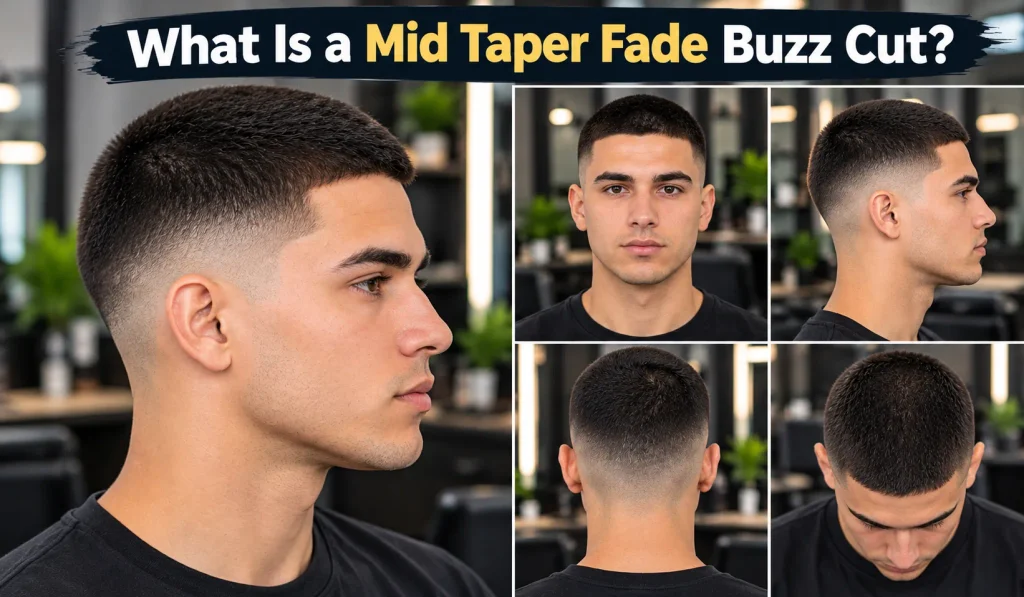
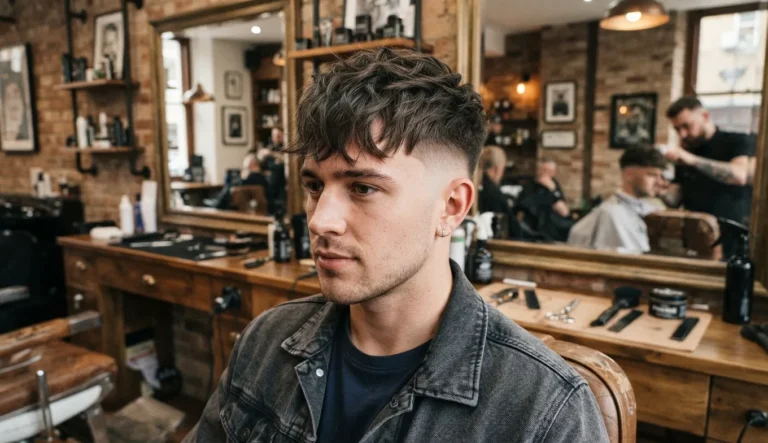
A mid taper fade buzz cut keeps the top short and even using one clipper guard. The sides and back drop in length starting near the middle of the ear. That drop is the fade. It turns a flat, single length buzz into a shaped haircut.
The word mid refers to height, not hair length. It marks where the fade begins on the side of the head. A low fade starts near the earlobe. A high fade starts closer to the temple. Mid sits between the two.
The term “mid” can mean slightly different things from one barber to another, so it helps to point out exactly where you want the fade to start. Some barbers begin the fade right around ear level, while others place it slightly higher. The exact starting point can also depend on your head shape, hairline, and the amount of contrast you want. Instead of relying on the word “mid” alone, point to the area on your own head during the appointment so you and your barber have the same idea of where the fade should begin.
Where the Mid Fade Actually Starts
Barbers do not always agree on where mid begins. Some start it right at ear level. Others start it slightly above. The exact spot depends on your head shape and your hairline. Pointing to the spot on your own head during the appointment works better than relying on the word mid alone.
What Makes It a Buzz Cut
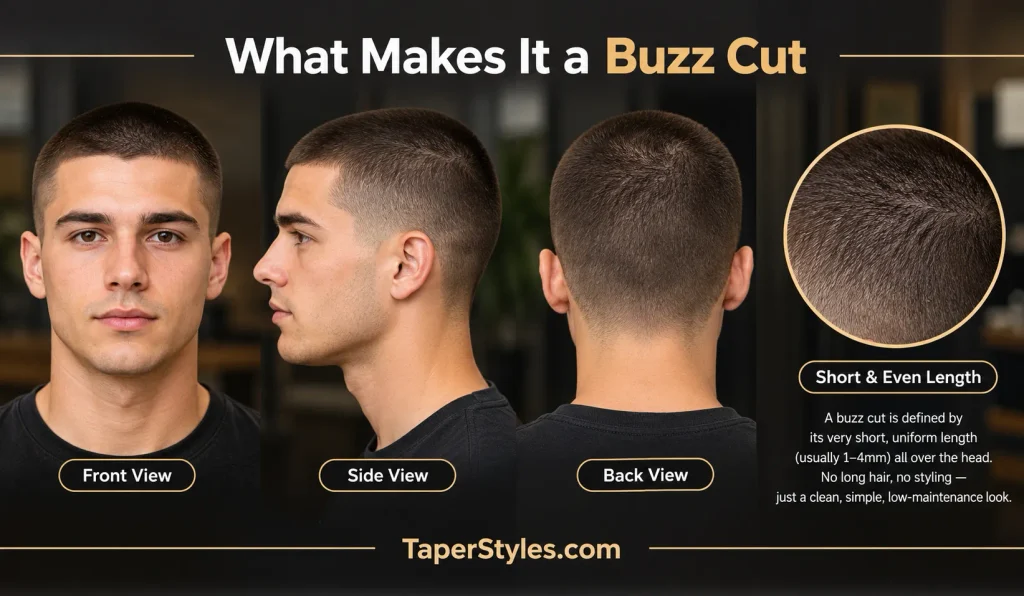
A buzz cut uses a clipper guard across the whole top, with no length left to comb or style. Add a fade around the edges and the cut gains shape without losing the low maintenance part. This differs from a crew cut, which leaves enough length on top for a comb.
Mid Taper vs Mid Fade
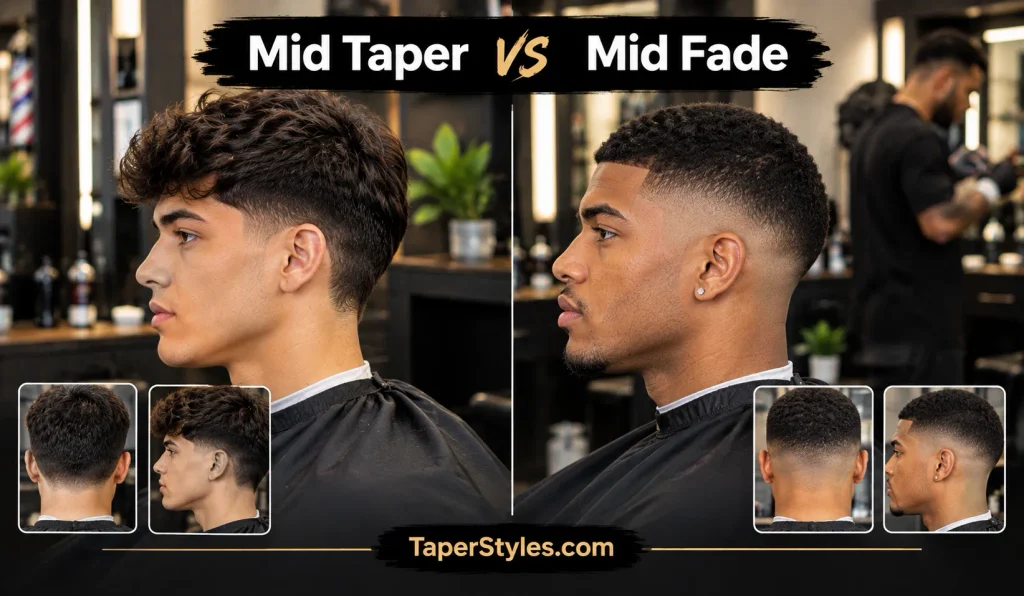
These two terms often get used as if they mean the same thing, and in casual conversation they usually do. The small difference sits at the bottom of the graduation. A taper tends to leave a light shadow of hair. A fade is more likely to run all the way to bare skin. If the finish matters to you, describe it in plain words instead of trusting either label to carry the full meaning.
Mid Taper Fade Buzz Cut vs Every Similar Cut
Several cuts look close to this one but differ in one or two details. Knowing the difference helps you avoid a haircut you did not actually want.
| Cut | Fade Start Point | Hair Kept on Sides | Contrast Level |
| Low taper buzz | Near the earlobe | Most | Soft |
| Mid taper buzz | Middle of the ear | Moderate | Balanced |
| High taper buzz | Near the temple | Least | Strong |
| Crew cut | Similar to mid, top left longer | Moderate | Balanced |
| Classic buzz cut | No fade at all | Uniform | None |
Taper vs Fade, the Real Difference
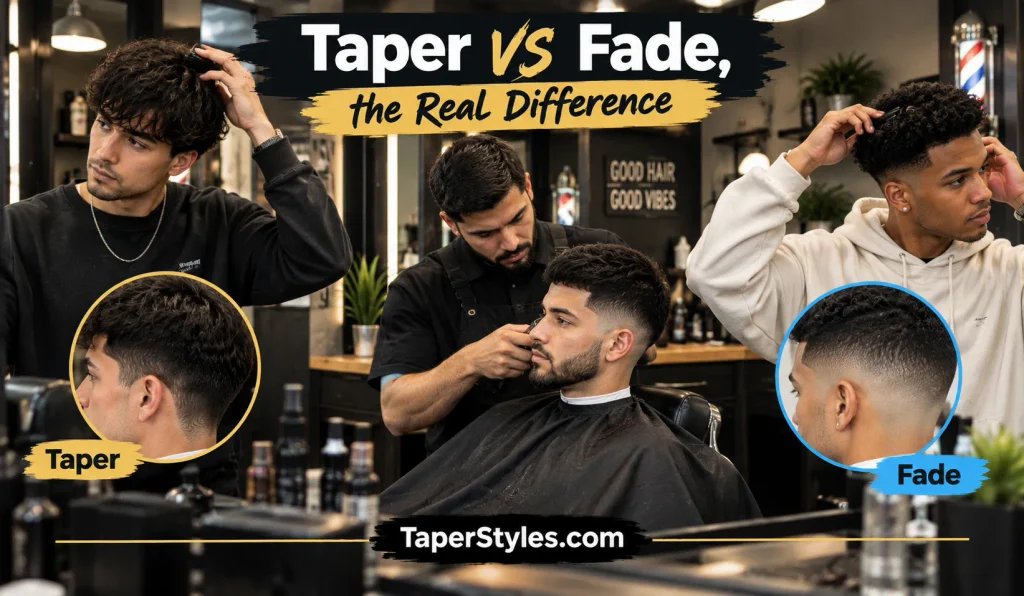
A taper leaves a gradual, natural drop in length with some hair remaining at the bottom. A fade pushes that drop all the way to skin, creating sharper contrast. Neither word is wrong when used loosely, but naming the bottom finish you want removes the guesswork.
READ MORE : Mid Taper Fade for Black Male: 22 Best Styles for 2026
Buzz Cut vs Crew Cut vs Induction Cut
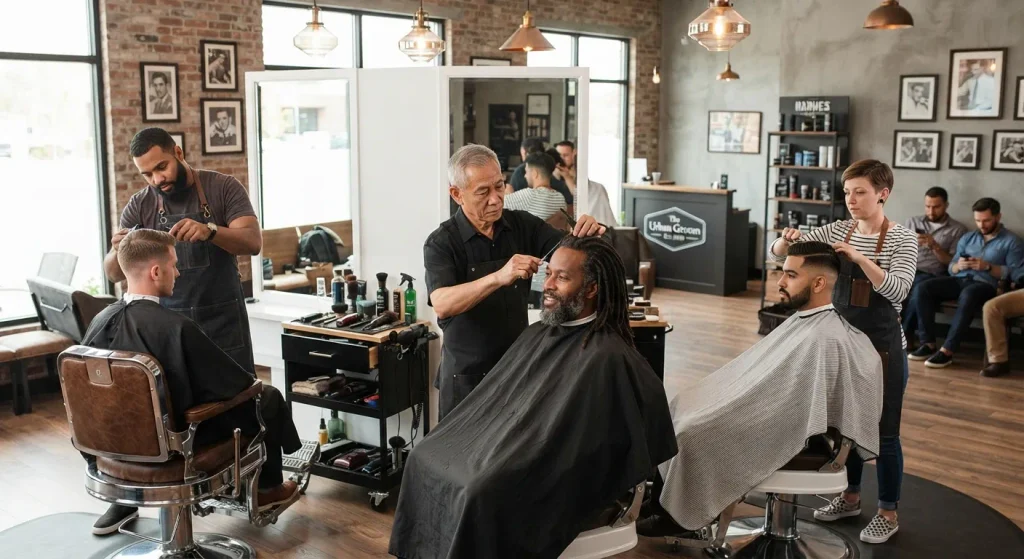
A classic buzz cut uses one guard everywhere with no fade. An induction cut is the shortest version, often a half guard or less, also with no fade. A crew cut adds a fade like this one but keeps three to four guard lengths of hair on top, enough to comb into shape. A mid taper fade buzz cut sits closer to the buzz cut side of that scale.
Will a Mid Taper Buzz Cut Suit You?
No single haircut suits every head the same way. Your result depends on face shape, hair texture, and how much contrast you want to maintain.
By Face Shape
- Round. A fade started slightly higher narrows the lower head and adds visual length.
- Square. Handles almost any fade height well, since strong jaw structure balances the sharp contrast.
- Oval. The most flexible shape for this cut. Low, mid, or high fades all work.
- Long. A softer, lower taper works better than a high contrast fade, since too much bare skin can stretch the face further.
- Diamond. A mid fade balances a narrow jaw and wider cheekbones without adding extra width at the temple.
- Triangle. A fade started a little lower keeps some width at the sides, which softens a narrower forehead.
By Hair Texture
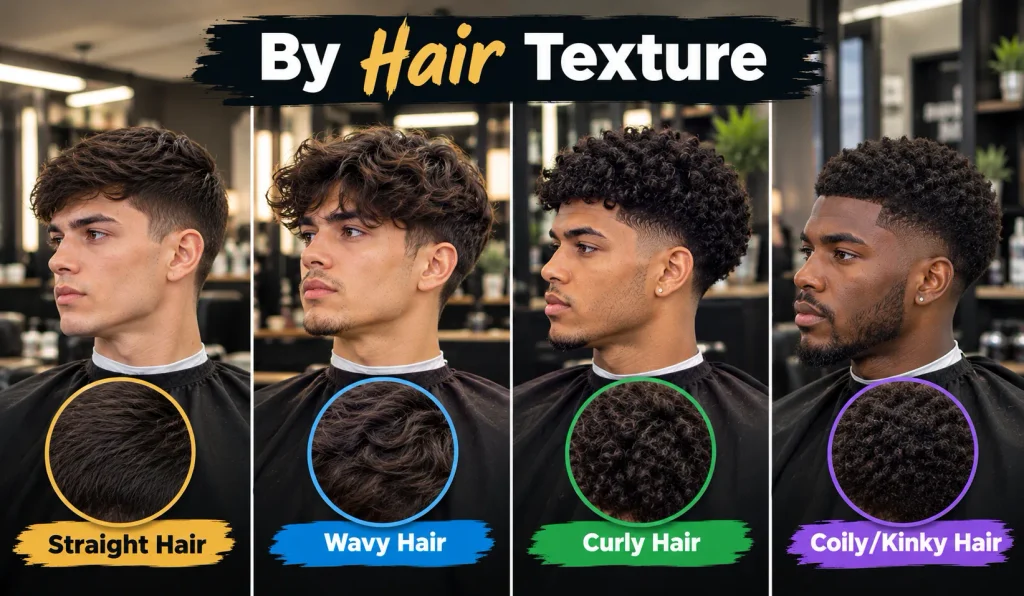
Straight, fine hair shows the fade line clearly, so a slightly softer blend often looks cleaner than a hard line. Curly or coily hair naturally blurs that same line, and curl shrinkage can pull length upward once cut, so the fade may need to start a touch higher to stay visible. Dense hair holds shape well at a short guard. Thin hair shows more scalp at the same setting, so going one guard longer usually helps.
Receding Hairline, Thinning Hair, and Cowlicks
Short hair reduces the length contrast that makes a receding hairline stand out, which is why many men dealing with hair loss choose this style. It is a trade, not a fix, since shorter hair also makes the hairline itself more visible. A cowlick usually lies flat at very short lengths, since there is not enough hair left to lift.
Guard Lengths and Clipper Numbers Explained
The top of a mid taper fade buzz cut is almost always cut with a number one, two, or three guard.
| Guard Number | Approximate Length | Look |
| 1 | 3 millimeters | Very short, scalp clearly visible |
| 2 | 6 millimeters | Classic buzz, balanced coverage |
| 3 | 10 millimeters | Longer buzz, texture starts to show |
| 4 | 13 millimeters | Crosses into crew cut territory |
Guard Numbers Across Clipper Brands
Guard numbering is close across brands, but small gaps exist. Wahl guards run from a number one at about 3 millimeters up through longer options in quarter inch steps. Andis and Oster follow a similar scale, though a few of their mid range guards sit a fraction of a millimeter off from Wahl’s. This rarely matters for a barber using their own set, but it matters if you buy clippers for home use and want to match a length your barber already used. Check the guard’s exact measurement in millimeters rather than trusting the number alone across brands.
How the Fade Itself Should Finish

The fade does not need to reach bare skin. It can end at skin, at a close shadow, or at a slightly longer length that still shows contrast. Each choice changes how often you need a touch up and how much scalp stays exposed. A skin close fade grows out fastest and needs the most frequent visits.
Mid Taper Fade Buzz Cut Variations
Most of the visible difference between versions of this cut comes down to two choices: top length and how the edges are finished.
- Classic guard two buzz. The most common version. Balanced length, minimal upkeep, works on most hair types.
- Burr cut style. Uses a guard one on top for the sharpest, most uniform look with almost no contrast between top and fade.
- Textured buzz. A guard three or four on top leaves room for wave or curl pattern to show through.
- High and tight version. The fade climbs higher, closer to the temple, while the top stays very short. This creates the sharpest contrast of the group.
- Skin fade version. The fade drops all the way to bare skin at the bottom, maximizing contrast against the buzzed top.
- Bearded version. The fade connects into the sideburns and beard line, so the haircut and facial hair read as one shape.
- Sharp line up version. A crisp, defined edge along the hairline and temples, cut with a trimmer or razor. Looks cleanest in the first week and needs the most frequent touch ups.
READ MORE : Mid Taper Fade Guide: Styles & Face Shapes (2026)
How to Ask Your Barber for This Cut
Naming the haircut alone leaves too much open to interpretation. Barbers use the word mid slightly differently from shop to shop. Covering five details before the clippers start removes most of that risk.
- Top guard number or a measured length.
- Where on the side of your head the fade should start.
- Whether the bottom finishes at skin, at a shadow, or with some length left.
- A natural hairline or a sharp, defined line up.
- A reference photo showing the side and back of the head.
Ready to Use Barber Scripts
Balanced version. “A number two on top, fade starting around the middle of my ear, blending to a short shadow instead of full skin, with a natural hairline.”
Softer version. “A number three on top, fade starting a little lower near my earlobe, keeping some length at the bottom instead of going to skin.”
Sharper version. “A number two on top, fade starting higher near my temple, going down to skin, with a clean line up.”
Add one line to any script: “Adjust it if you think something else suits my hair better.” A good barber will use that opening.
DIY at Home vs Professional Barber
Buzzing the top with a single guard is simple enough to do yourself. Producing a smooth, even fade is a separate skill that takes practice. A shaky attempt often pushes the fade higher than planned or leaves a visible line instead of a blend.
Step by Step for a Basic Home Buzz
Start with the top using your chosen guard, moving against the direction hair grows for even coverage. Move to the sides next, starting with a longer guard near the fade point. Work down in steps, dropping one guard size at a time, blending each pass into the last. Finish with a light comb over the fade line to soften any harsh edges.
Common Mistakes to Avoid
Skipping guard sizes creates a visible line instead of a smooth blend. Always step down gradually. Rushing the back of the head is another common issue, since it is the hardest area to see directly. A handheld mirror or a second mirror behind you helps catch mistakes before they happen.
Cost and Time Comparison
| Barber Visit | DIY at Home | |
| Typical cost | 20 to 40 dollars per visit | One time clipper cost, 30 to 80 dollars |
| Time needed | 15 to 30 minutes | 10 to 20 minutes |
| Edge precision | Sharper, more consistent | Takes practice |
| Best for | Sharp line ups, special occasions | Routine touch ups between visits |
Maintenance and Regrowth Timeline
Hair grows at roughly a third of a millimeter each day, or about half an inch a month. Run that against the guard chart and a skin close fade returns to roughly a number one length within about nine days. A softer, less aggressive fade holds its shape longer.
Most men refresh this cut every two to three weeks. Skin close fades and sharp line ups need attention sooner. Softer, natural tapers can stretch closer to the three week mark. Watch the shape in the mirror rather than counting days, since hair growth speed varies from person to person.
Between visits, wash the scalp regularly, since short hair leaves more skin exposed and less hair to soak up oil. Trim stray neckline hairs carefully if you are comfortable doing it, staying below the line your barber has already set. Leave the fade itself alone between visits, since a shaky at home correction usually creates more work at the next appointment.
Risks and Who Should Be Cautious
A very short, skin close cut trades hair coverage for lower styling effort. That trade comes with a few things worth knowing.
Frequent close shaving at the back of the neck and scalp can trigger a condition called acne keloidalis nuchae, according to the American Academy of Dermatology. This condition causes inflamed bumps and, in some cases, permanent hair loss in the affected area. It appears more often in men with coarse, curly hair and darker skin tones. If you already deal with bumps in this area, a fade that stops at a guard length rather than bare skin is usually the safer choice, and a dermatologist can offer proper guidance.
A very short cut also leaves more scalp exposed to sun. The American Academy of Dermatology recommends a broad spectrum sunscreen of at least SPF 30 on any exposed skin, including a freshly buzzed scalp.
What to Get Instead
If the contrast or the maintenance schedule gives you pause, a few nearby options solve for different priorities.
- Low taper buzz. Softer contrast and a more forgiving grow out, since the fade covers less area.
- One length buzz. No fade at all. The simplest cut to manage yourself.
- Mid fade buzz. Similar height to a mid taper, but taken all the way to skin for stronger contrast.
- Crew cut. More length left on top, with some styling flexibility, at the cost of needing product.
Frequently Asked Questions
What does mid mean in a mid taper buzz cut?
It describes where the fade starts on the side of the head, roughly level with the middle of the ear. It says nothing about the length of hair on top.
Is a mid taper the same as a mid fade?
They are close enough that many barbers use the terms interchangeably. The small difference is in the bottom finish. A taper often leaves a light shadow, while a fade tends to run to bare skin.
How much does a mid taper fade buzz cut cost?
A barber visit typically runs between 20 and 40 dollars, depending on location and shop. A basic clipper set for home use costs between 30 and 80 dollars as a one time purchase.
How often does this cut need a touch up?
Most men book a refresh every two to three weeks. Skin close fades and sharp line ups need attention closer to the two week mark.
Does this cut work with curly or coily hair?
Yes. The fade often needs to start slightly higher, since curl shrinkage pulls the visible length upward once the hair is cut.
Is it a good option for a receding hairline?
It can reduce the length contrast that makes thinning stand out, but it also makes the hairline itself more visible. It is a trade rather than a fix.
Can you cut this style yourself?
The top is easy to buzz at home. The fade is harder to get right without practice. Many men handle the top themselves and see a barber for the fade and line up.
Which face shapes suit a mid taper fade buzz cut best?
Oval and square faces handle it most easily. Round and diamond faces benefit from a fade starting a bit higher, and long or triangle faces often look better with a softer, lower fade.
Final words
A mid taper fade buzz cut pairs a short, evenly buzzed top with a fade that starts around the middle of the ear. Guard choice runs from a one to a three, and the fade can end at skin, a shadow, or a slightly longer length. Face shape, hair texture, and how much contrast you want all shape the final result, and naming these details to your barber matters more than the label “mid” alone.
Upkeep sits around every two to three weeks. A skin close fade grows out fastest, so it needs more frequent visits. Close shaving carries some skin risk worth knowing, and sunscreen helps protect a newly exposed scalp.