By M. Haroon, Licensed Barber Published: September 2026
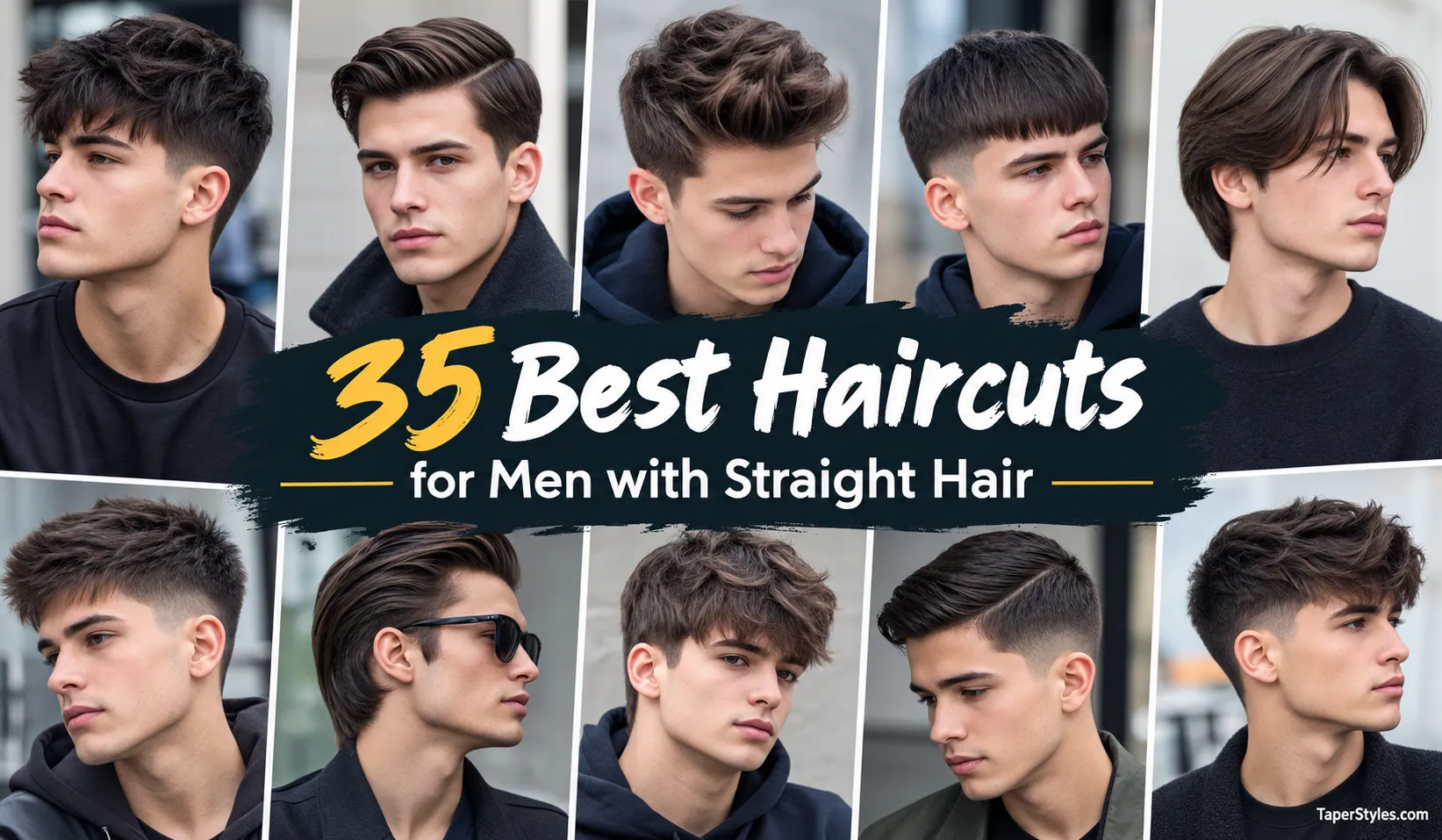
Straight hair grows from a round follicle, which gives it shine but not much grip, so it falls flat without help. The cuts that work best add structure instead of fighting the fall: textured crops, French crops, crew cuts, and any cut paired with a fade. Below is a full breakdown by length, density, face shape, and fade type, plus how to style and maintain each one.
Why Straight Hair Behaves the Way It Does
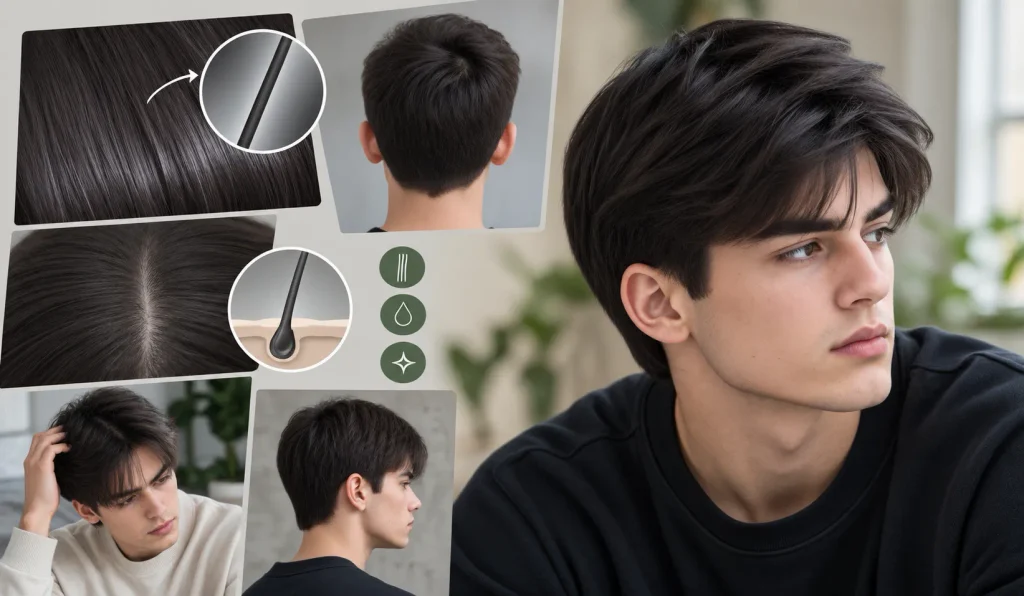
Straight hair grows from a round hair follicle. Wavy and curly hair grows from oval or flattened follicles, which is what makes the strand bend as it grows. A round follicle produces a strand with no twist, so it drops straight down under its own weight instead of curling back on itself.
That same roundness is why straight hair looks shinier than other hair types. Light reflects more evenly off a smooth, round strand than a curved one. The tradeoff is volume: straight strands do not grip each other the way curly or coily hair does, so without help they lie flat against the scalp. Natural oil also travels down a straight strand faster than it does down a curved one, which is why straight hair can look unwashed by afternoon even after a clean morning wash.
READ MORE : Mid Taper Fade Curly Hair: Style, Cost, and Care Guide
This explains the two complaints barbers hear most from straight haired clients. The cut looks great walking out of the chair and flat by 2 p.m., and hair looks oily sooner than it should. Both trace back to the same fix: a cut that builds in texture, layering, or contrast through a fade, rather than one that depends on the hair holding its own shape.
Find Your Cut by Hair Density First
Density changes which cuts actually work on you, more than face shape does in most barbers’ experience.
| Density | Best Starting Cuts | Cuts to Avoid |
| Fine or thin | Crew cut, French crop, Caesar cut, textured crop | Long one length layers; they separate and show gaps |
| Thick or coarse | Textured crop, disconnected undercut, layered taper, Two Block | Blunt, unlayered tops; they sit heavy like a helmet |
| Thinning or receding | Caesar cut, buzz cut, French crop, Edgar cut | Slicked back styles; they expose the hairline instead of softening it |
Short Haircuts for Straight Hair
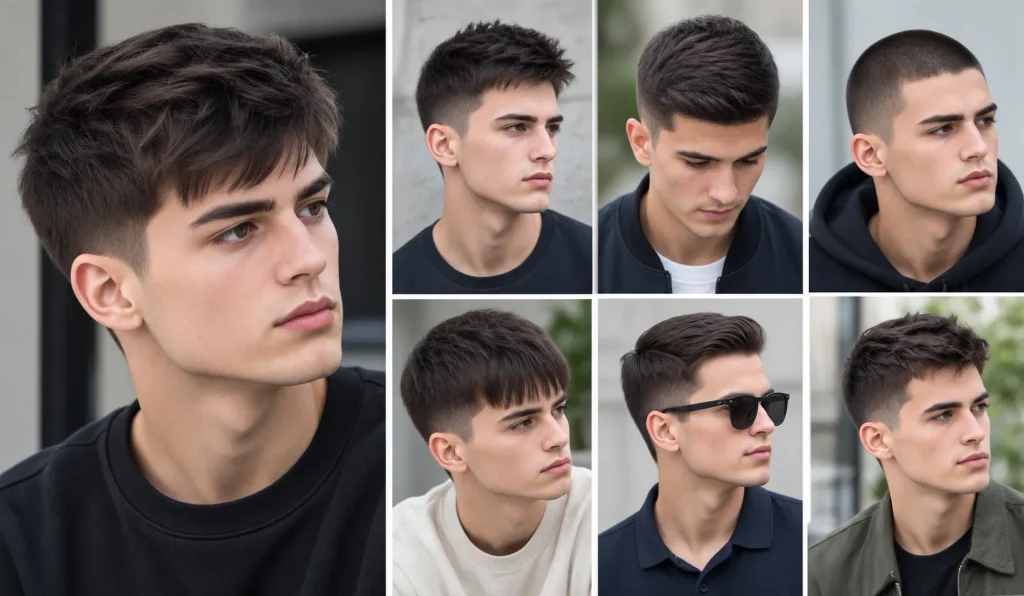
Short cuts show off clean lines especially well on straight hair, since there is no curl pattern to soften a fade edge the way there is on curly or coily hair.
Crew cut. Short sides, slightly longer top. The lowest maintenance option on this list, and it works on almost any face shape or density.
Buzz cut.
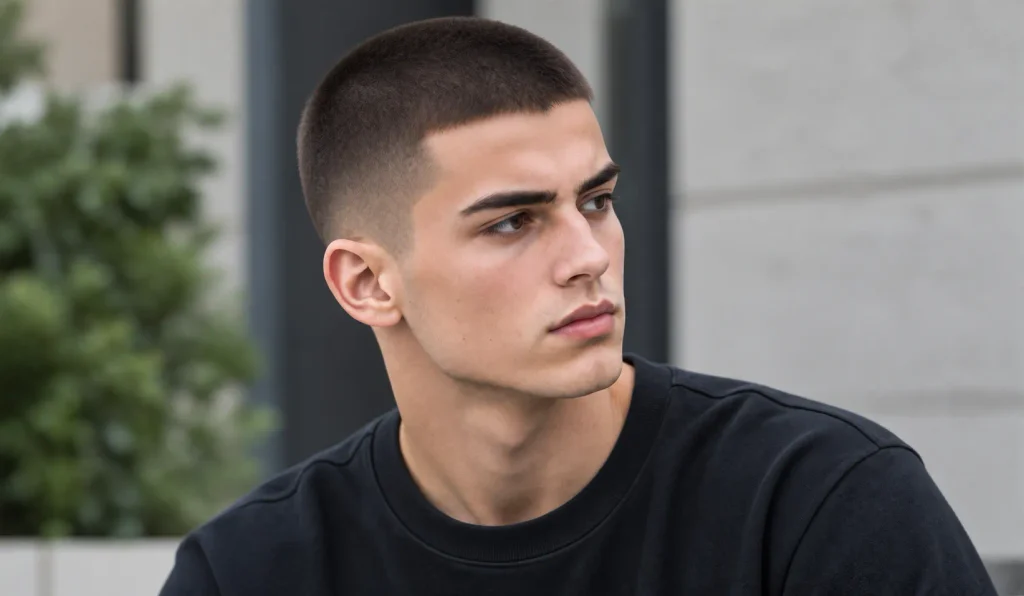
Clippers at one guard length all over. Straight hair looks unusually clean in a buzz cut because there is no flat spot left to expose.
French crop. A short fringe brushed forward with faded or tapered sides. The forward fringe hides a higher hairline, which is why it is a go to for early hairline recession.
Caesar cut.
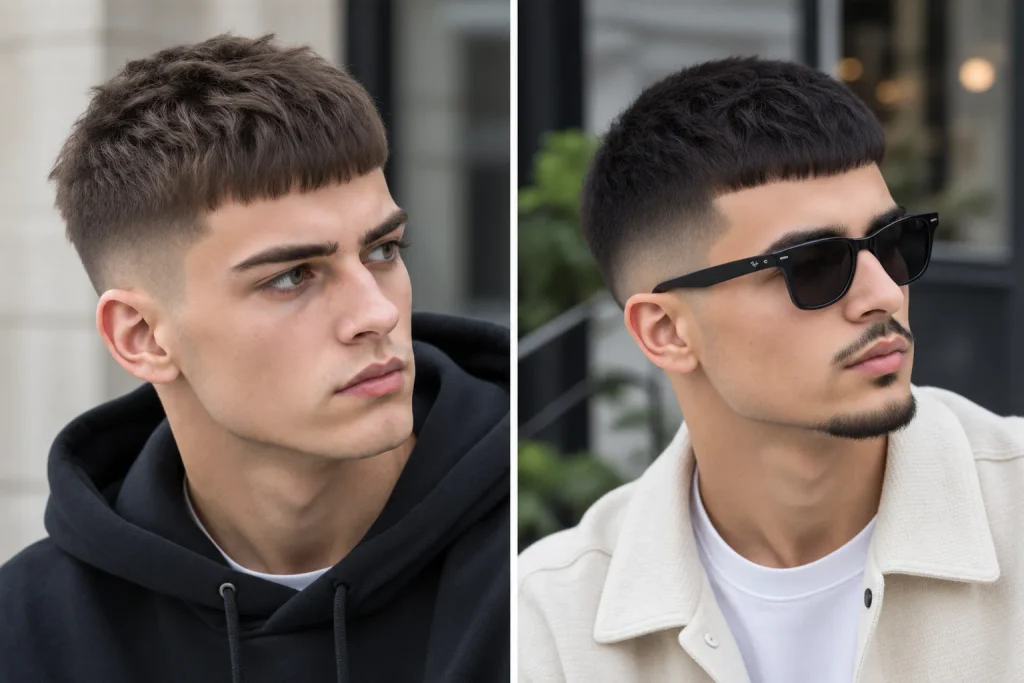
Even length on top with a short, straight fringe. A practical pick for thinning hair, since it keeps length short and even rather than drawing attention to bare patches.
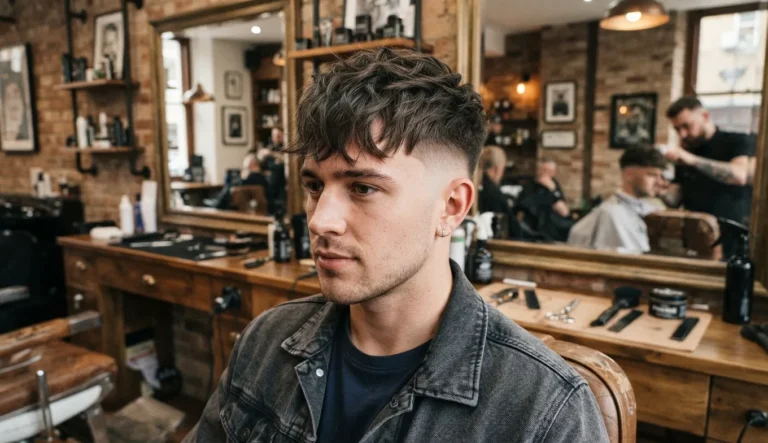
Textured crop. Choppy layers on top, faded sides. Currently the most requested cut for straight hair because the texture breaks up flatness without needing heavy product.
Ivy League cut. A longer crew cut with enough length on top for a light side part. Common in corporate settings for its polished, low effort finish.
Two Blocks.
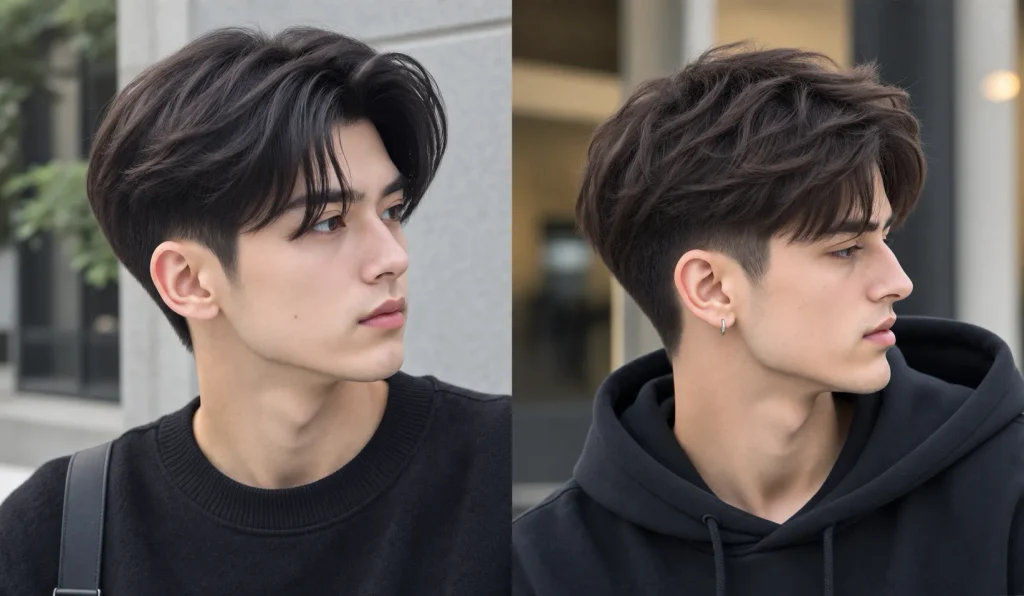
Korean style cut with short, tight sides and a noticeably longer top that sits disconnected from the sides. Straight hair suits this well because the longer top falls cleanly without curling or frizzing at the disconnect line.
READ MORE : Low Taper Fade for Straight Hair: The Complete Guide 2026
Edgar cut.
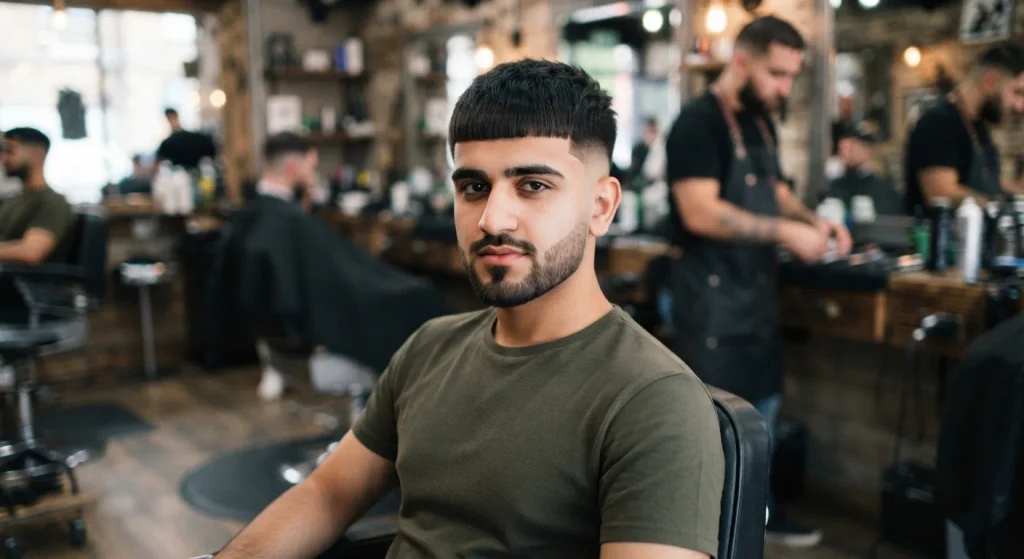
A blunt, straight across fringe with tight, faded sides. Needs genuinely straight hair to look right; the fringe line only reads as sharp when the hair has no natural wave pulling it out of place.
Bowl cut (modern). A rounded fringe wrapping the head with tight sides. A bold, retro leaning option that has come back through streetwear culture.
Comb over.
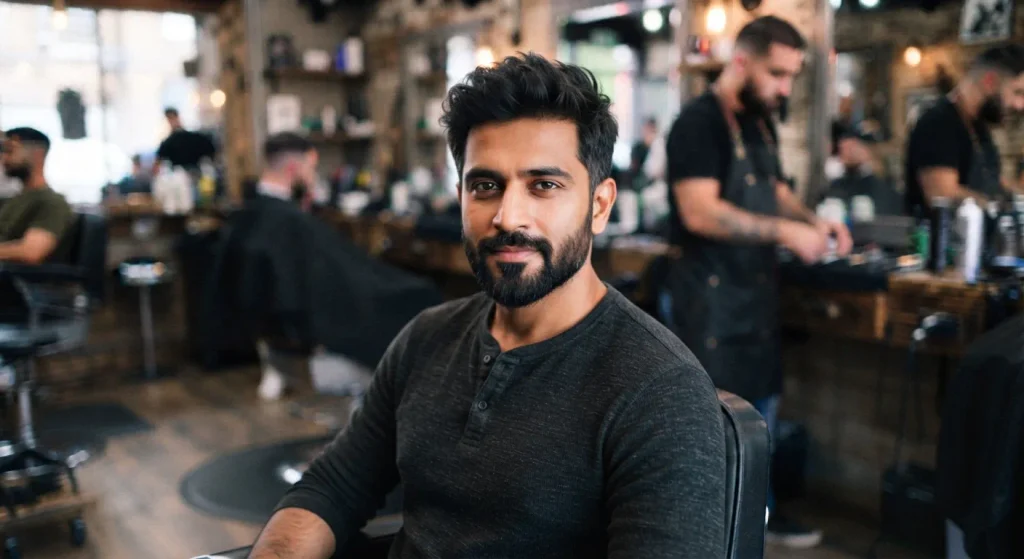
Longer top brushed to one side over short sides. Works cleanly on straight hair because the strand holds the combed direction without extra product fighting a curl pattern.
Spiky hair. Short sides with a slightly longer top styled upward into defined spikes. Straight hair takes to this shape easily because the strand holds a strong hold product without curling back down on itself the way wavy hair tends to.
Mohawk.
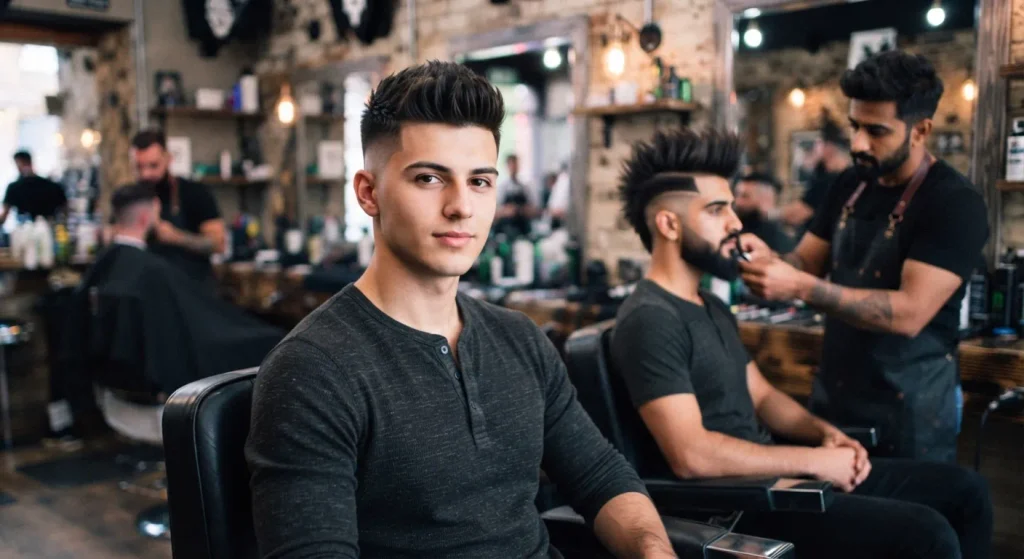
Sides faded tight to the skin, with a center strip left longer and styled upward or back. On straight hair the center strip reads sharp and defined rather than fuzzy, since there is no curl pattern softening the edges of the strip.
Medium Length Haircuts for Straight Hair
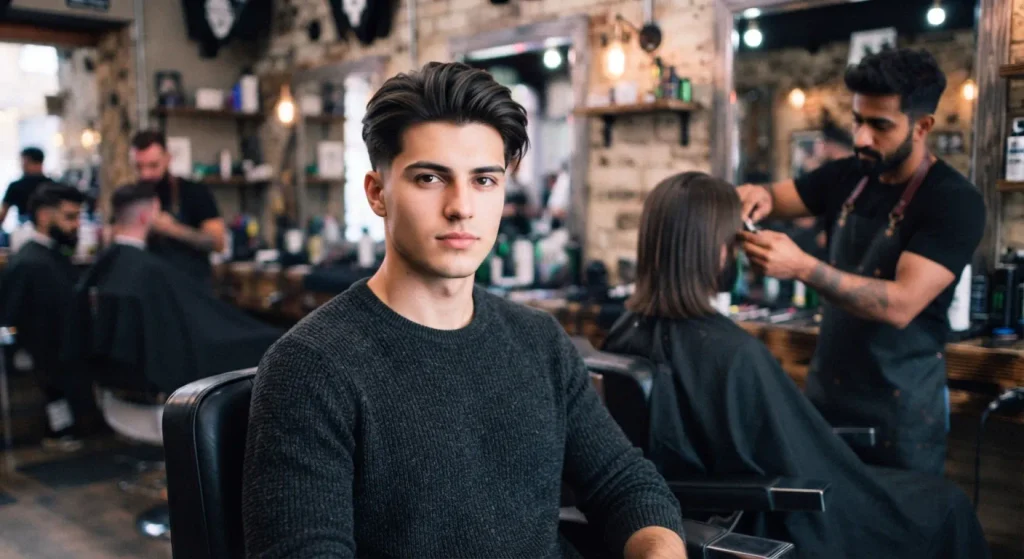
Medium length gives straight hair room to move, but it needs styling help to avoid going flat by afternoon.
Textured quiff. Volume at the front, tapered sides. Needs a blow dry with root lift to hold shape through the day. This is not a wash and go cut.
Curtain bangs. Center part, fringe swept to both sides. Straight hair falls into this shape with almost no effort, which is part of why it has stayed popular for several years running.
Disconnected undercut.
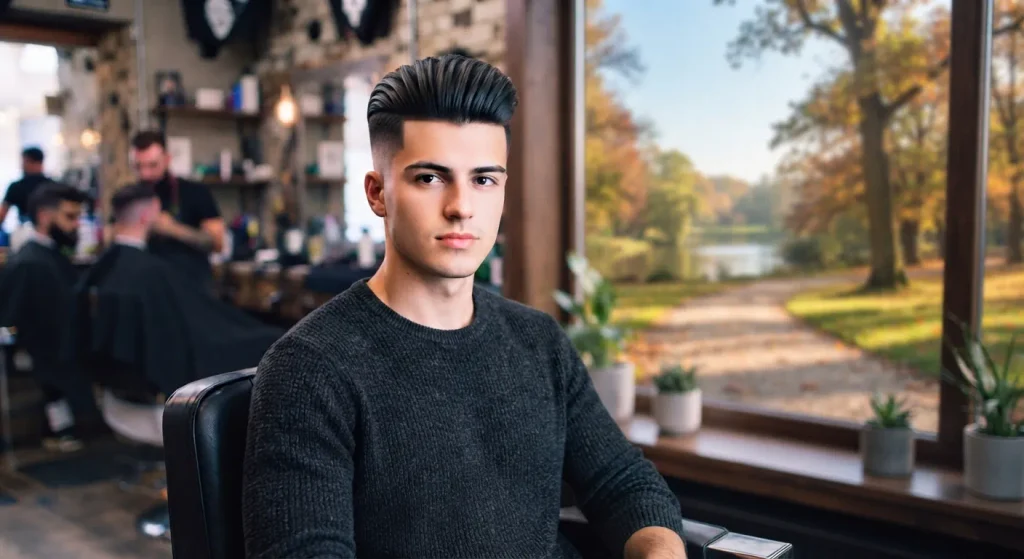
A hard break between a long top and very short sides. The contrast gives straight hair definition it would not have on its own.
Side part with a low taper. A classic, defined part with a soft taper instead of a hard fade line. Ages better as it grows out than a sharper fade does.
Slick back.

Top combed straight back, sides tapered or faded. Straight hair holds a slick back cleanly because there is no wave fighting the direction.
Pompadour. Big volume up front, swept back and up, tapered sides. Needs a round brush and a strong hold product. This is a styling dependent cut, not a set and forget one.
Faux hawk. Short tapered sides with a longer center strip. A toned down mohawk that reads as edgy without full commitment.
Modern mullet.
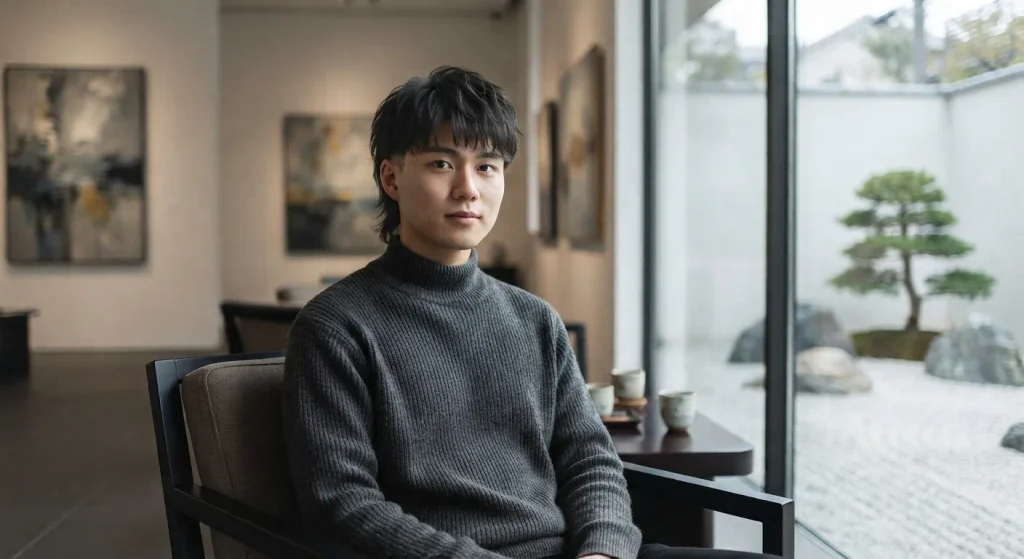
Short sides and top, longer back. Works best on straight hair with some natural body; fully flat, fine hair can make the back section look thin rather than shaped.
Hard part. A shaved line cut into a side part for extra definition. Pairs well with straight hair because the line stays crisp without curl regrowth blurring it between trims.
Textured undercut.
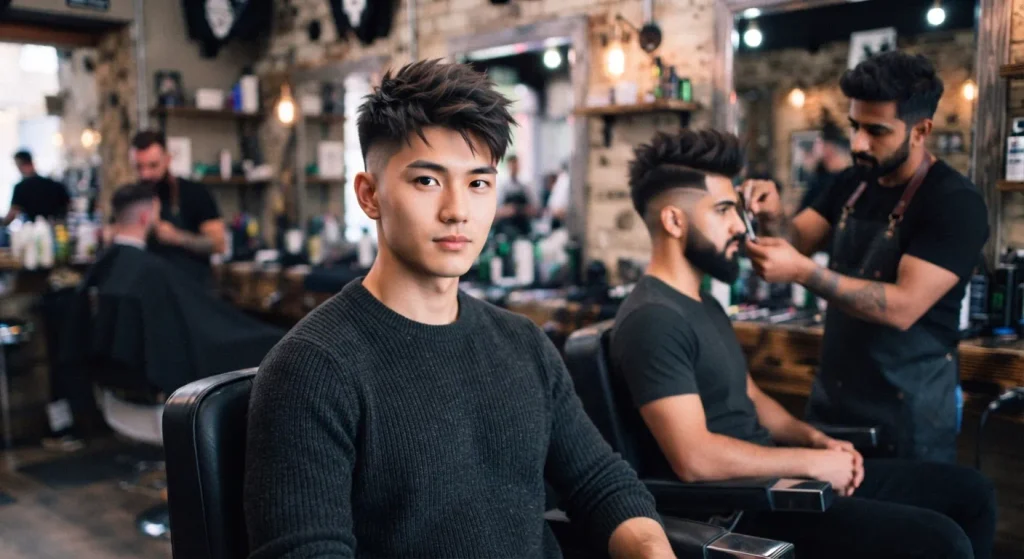
A longer, choppy top paired with a shaved or heavily faded undercut on the sides. On straight hair the top needs deliberate texturizing scissors work, since a blunt, unlayered top will sit heavy against the sharp undercut instead of moving with it.
Middle part.

Hair divided evenly down the center, with both sides left long enough to frame the face. Straight hair suits a middle part better than curly hair does, since the strand falls flat and even on both sides instead of puffing unevenly.
Shag haircut.
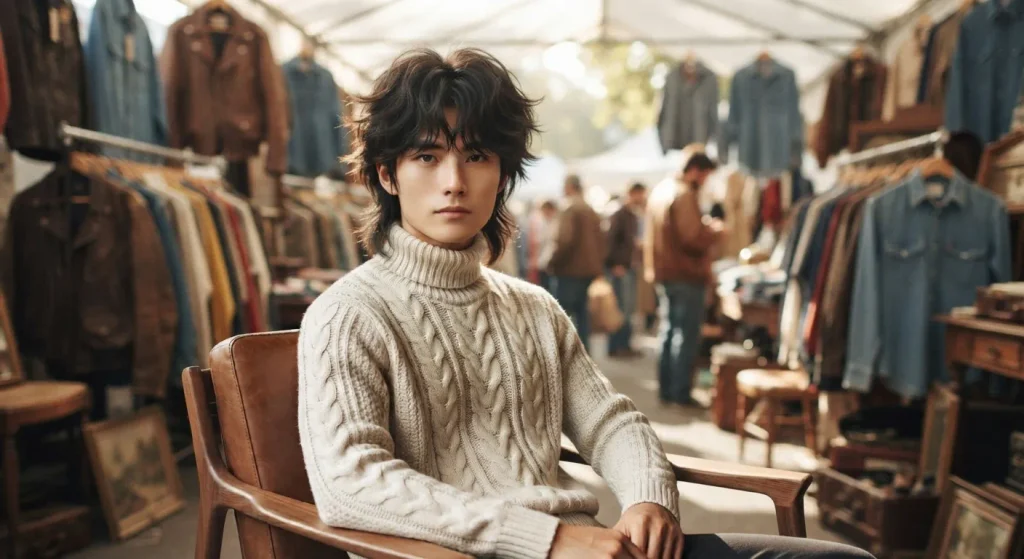
Heavily layered cut with a soft, textured fringe and choppy ends throughout. On straight hair the layers need to be cut deliberately choppy, since there is no natural curl to create the separation the shag depends on.
Long Haircuts for Straight Hair
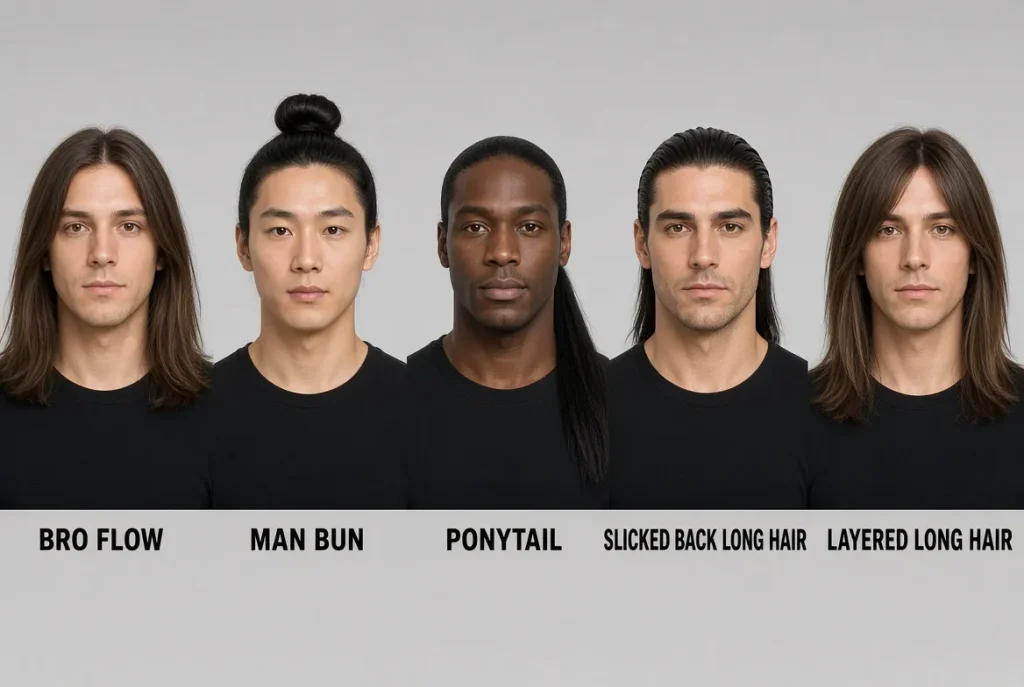
Long straight hair depends more on strand health than on the cut itself. Split ends and dryness show up clearly since there is no curl pattern to hide them.
Bro flow. Hair pushed back or tucked behind the ears, falling naturally. Needs regular trims, since straight ends fray more visibly than curly ones.
Man bun. Hair tied back at the crown. A practical way to control length while growing out from a shorter cut.
Ponytail. Gathered and tied at the back. Works cleanly on straight hair because it lies flat against the head instead of puffing at the crown.
Slicked back long hair. Combed straight back with a light hold product. Best on medium to thick density; fine straight hair can look thin when pulled fully back.
Layered long hair. Soft layers cut through the length to prevent the one dimensional, curtain like look that fully blunt long straight hair can fall into.
Surfer hair.
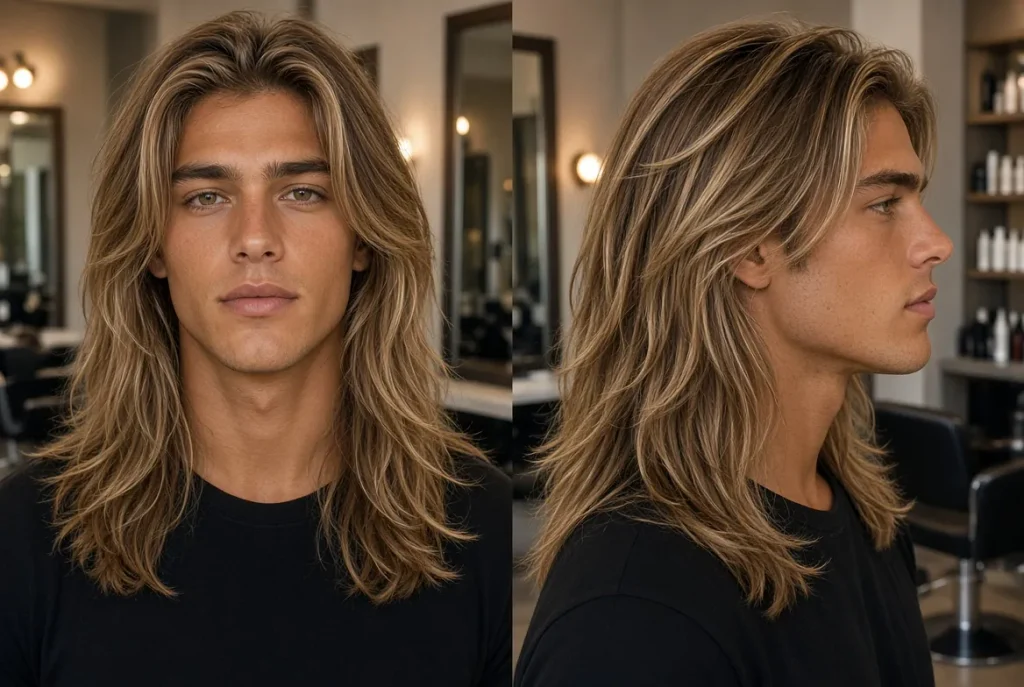
Longer layers left loose and slightly undone, usually styled with a light texturizing product rather than heat tools. Straight hair needs a texturizing spray or salt spray here to fake the movement that naturally wavy hair gets for free.
Half up half down.

The top section is gathered and tied back while the rest is left loose. Works well once straight hair passes shoulder length, since the tied section holds cleanly without the flyaways that curlier hair produces at the crown.
Fringe Styles for Straight Hair
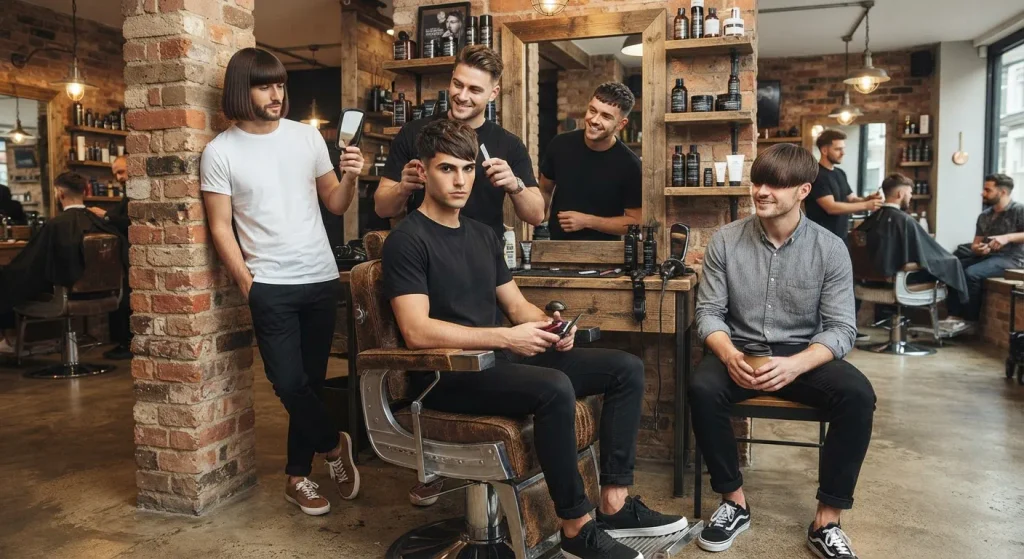
Fringes read differently on straight hair than on curly or wavy hair, since a straight fringe falls in one clean plane instead of curling at the ends. This makes fringe shape and weight especially important to get right.
Textured fringe. Choppy, piece-y ends brushed forward across the forehead. The most common fringe pairing for straight hair because the choppiness prevents the fringe from looking like a single flat block.
Angled fringe. Cut on a diagonal slant rather than straight across. Works especially well with straight hair since the strand holds the angled line cleanly without curling the tips out of place.
Messy fringe. Deliberately uneven, finger styled fringe with no fixed line. Needs a matte texture product to hold the undone look, since straight hair will otherwise relax back into a flatter shape within a few hours.
Blunt fringe. A straight, even cut line sitting just above the brows, with no layering through the fringe itself. Straight hair is the best hair type for this cut, since the fringe needs a completely flat, unbroken line that curl or wave would immediately disrupt.
Fades and Tapers: The Detail That Changes Everything
A fade is not a haircut on its own. It is a finishing detail that pairs with almost any cut above. Straight hair shows a fade line with more precision than curly hair does, because there is no curl pattern to blur the edge.
| Fade Type | Where It Starts | Best For |
| Temple fade | Only at the temples | Conservative workplaces, lightest touch |
| Low fade | Near the ears | Professional settings, subtle contrast |
| Mid fade | At the temple | More contrast without looking extreme |
| High fade | Higher up the head | Sharp, draws attention to the top |
| Skin fade | Fades to bare skin | Sharpest look, needs trims every 2 to 3 weeks |
| Drop fade | Curves down behind the ear | Rounder head shapes, modern styling |
| Burst fade | Curves in an arc around the ear only | Shorter, sportier cuts; keeps length at the neckline |
A fade grows out faster than a taper because the shortest hair at the bottom reaches visible length sooner. If low maintenance matters more than sharp contrast, ask for a taper instead of a fade.
Matching a Haircut to Your Face Shape
| Face Shape | What Helps | Good Cuts |
| Round | Height on top, less width at the sides | Textured quiff, pompadour, high fade |
| Square | Softer lines around the jaw | Side part, French crop, curtain bangs |
| Long | Width, not more height | Crew cut, fringe styles, side swept top |
| Oval | Most cuts work | Textured crop, disconnected undercut |
| Diamond or Heart | Balance at the jaw, less width at the temples | Side part, textured fringe |
Round faces gain structure from height, since a flat top visually adds length. Long faces need the opposite; a fringe or side sweep adds width instead. Oval faces have the fewest restrictions, which is why barbers often call it the easiest shape to cut for.
How to Style Straight Hair, Step by Step
- Wash with a clarifying shampoo once or twice a week to clear the oil buildup that makes straight hair look flat sooner than it should.
- Apply product to damp hair, not dry. Cream for fine hair, clay for thick hair. Heavy oils will weigh straight hair down within hours.
- Blow dry with root lift. Point the dryer down from above while lifting sections with your fingers or a brush. This single step does more for volume than any product will.
- Finish only once hair is fully dry. Products applied to damp hair and left there will not hold. Dry fully first, then add a small amount to finish.
Skipping the blow dry is the single most common mistake. Straight hair air dries flat because there is no curl to create natural lift. A few minutes with a dryer changes the entire shape of the cut.
Talking to Your Barber
Straight hair shows small cutting differences more clearly than curly hair does, so precision matters when describing what you want. Bring a reference photo rather than describing the cut in words. Barbers see a dozen different interpretations of “textured crop” every week, and a photo removes the guesswork.
State three things clearly: the guard number on the sides, the length on top in inches, and whether you want a fade or a taper. These three details prevent most miscommunication in the chair.
Maintenance by Cut Type
| Cut Type | Trim Every |
| Skin fade or high fade | 2 to 3 weeks |
| Low or mid fade | 3 to 4 weeks |
| Textured crop or crew cut | 4 to 6 weeks |
| Long styles | 6 to 8 weeks |
Choosing Products Without Overbuying
Straight hair does not need a large product shelf. It needs the right category for your density.
- Clay: matte hold, no shine, best for thick hair.
- Pomade: shine and control, best for side parts and slick backs.
- Cream: light hold for fine hair without weighing it down.
- Sea salt spray: adds texture to hair that has gone too smooth or flat.
- Texture powder: fast root lift before a night out.
Use less than you think you need. Straight hair shows excess product more obviously than curly hair does, since there is no curl pattern to absorb it.
Frequently Asked Questions
Which haircut is best for straight hair?
A textured crop or crew cut suits most men with straight hair. Both add shape without fighting the hair’s natural fall.
Does straight hair hold a fade well?
Yes. Straight hair shows the fade line with sharper contrast than curly hair, which is why fades tend to look cleaner on it.
Why does my straight hair go flat by midday?
Oil travels down straight strands faster than curly ones. Root lift from blow drying and a lightweight product both slow this down.
Do layers help straight hair?
Yes. Layers break up the one dimensional look straight hair can have and add movement without changing the overall length much.
How often should straight hair be trimmed?
Every 2 to 4 weeks for fades, and every 6 to 8 weeks for longer, low maintenance styles.
Can men with straight hair get an undercut?
Yes. Straight hair actually shows the contrast between the long and short sections more sharply than curly hair, since there is no wave softening the disconnect line.
What is the difference between a fade and a taper on straight hair?
A fade blends all the way to bare skin at some point. A taper blends more gradually and never goes fully bare. Tapers grow out slower and need fewer trims.
Does a mohawk work on straight hair?
Yes. Straight hair holds a mohawk’s center strip in a clean, defined line since there is no curl pattern softening the edges, though it needs a strong hold product to keep the strip upright through the day.
Is a shag haircut good for straight hair?
Yes, as long as the layers are cut choppy rather than blended. Straight hair has no natural curl to create separation, so the layering itself has to do that work.
Final Words
Straight hair grows from a round follicle, giving it natural shine but almost zero grip which is why it collapses fast and looks oily sooner than other hair types. The fix isn’t fighting that, it’s working with it. Cuts like textured crops, French crops, and crew cuts build in structure through layering, texture, or fades.
Start with hair density before picking a cut, then factor in face shape together these decide whether a cut holds up or falls apart. This guide covers 35 cuts, fade types, styling steps, barber communication tips, and maintenance schedules. Blow-drying with root lift beats any product for keeping hair from going flat.