By M. Haroon | Barbering & Men’s Grooming Writer | Updated September 2026·
Burst taper fade combines a soft taper on the sides and neckline with a curved “burst” that wraps around the ear instead of running in a straight line. It leaves more hair behind the ear than a standard fade, which is why it pairs so well with mullets, curls, and afros. Plan a touch-up every 2–3 weeks for a sharp curve, or stretch to 4 weeks if you prefer it soft.
What a Burst Taper Fade Actually Is
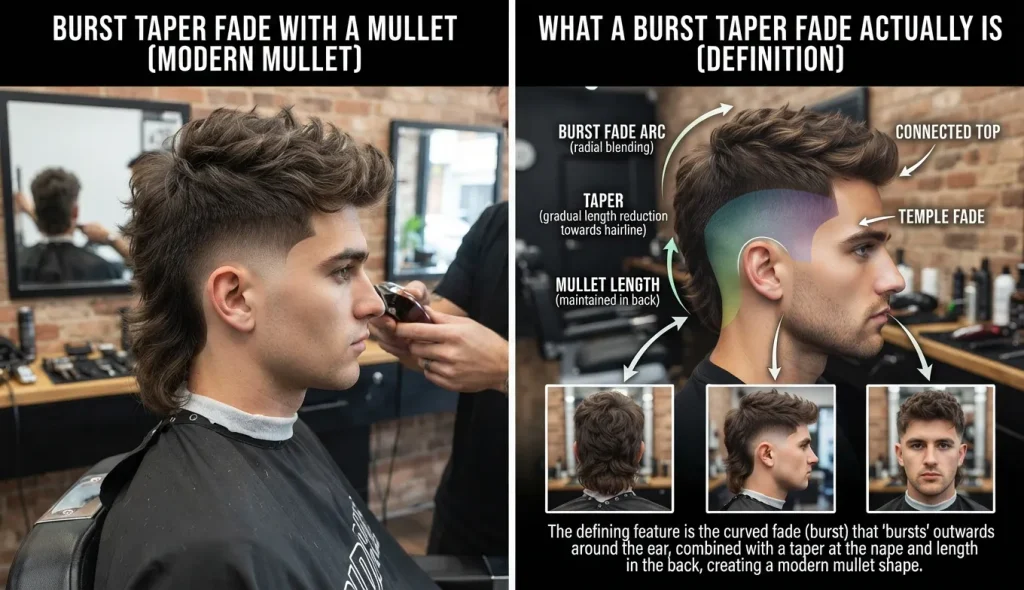
Say “fade” to ten different barbers and you’ll get ten different haircuts. The burst taper fade exists specifically to solve that confusion, but only if you know how to ask for it correctly.
The cut has three separate components working together:
- The taper: the gradual, blended reduction in hair length toward the sideburns and neckline. It’s subtle, not dramatic.
- The burst: the curved fade line that arcs around the ear like a half moon, tightest at the ear and widening outward, rather than cutting straight down the side of the head.
- The preserved length: the hair left behind the ear and at the nape, which is what separates this cut from a standard fade that runs uninterrupted around the entire back of the head.
READ MORE : Blowout Taper Textured Fringe: The Complete Barber’s Guide
That third point is the whole reason the style exists. A regular fade removes bulk evenly all the way around. A burst leaves weight at the back, which adds fullness to a flat crown and gives curls, an afro, or a mullet something to sit on top of without looking disconnected from the sides.
Where the burst fade curve comes from
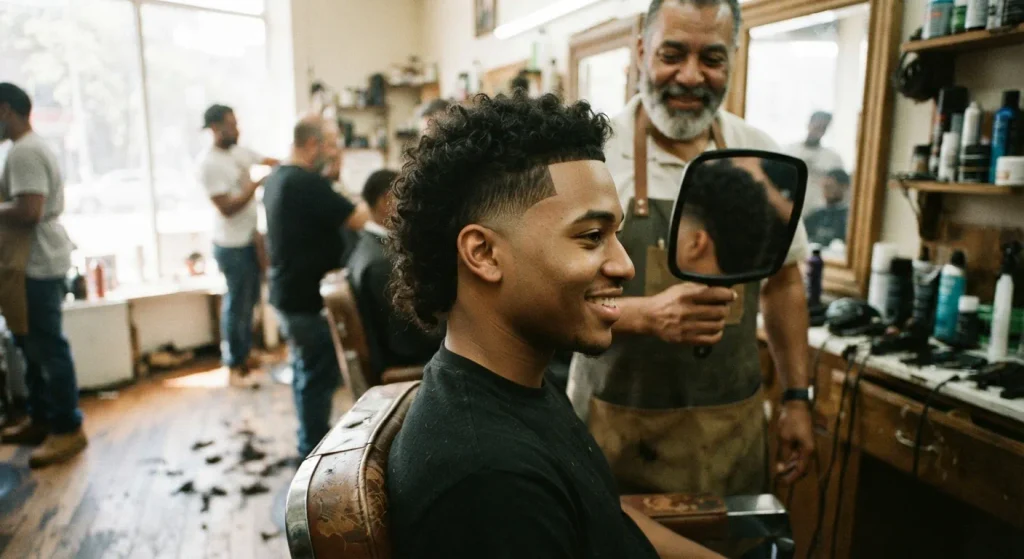
The technique traces back to Black barbershop culture and has been part of barbering vocabulary for decades, gaining broader mainstream visibility over the last decade. Many barbers credit Usher’s longtime barber, Curtis Smith, with popularizing the curved shape. It’s occasionally still called the “South of France” cut for that reason, though exact origin dates are disputed and should be treated as barbershop folklore rather than documented history.
Burst Fade vs. Taper vs. Drop Fade vs. Low Fade: The Table Everyone Needs
| Cut | Shape | Skin contrast | Back of head | Best paired with |
| Taper | Straight, gradual, rarely reaches skin | Low | Follows neckline naturally | Office, classic, conservative styles |
| Burst fade | Curves around the ear | Medium to high | Stays longer, preserved | Mullets, afros, curls, mohawks |
| Drop fade | Curves down behind the ear toward the nape | Medium to high | Short at nape | Short to medium tops |
| Low fade | Straight, starts near the ear | Medium | Short | Almost any top style |
| Skin fade | Any shape, cut to bare skin | High | Depends on base cut | Sharp, high contrast looks |
The one distinction that matters most: a burst wraps around the ear and keeps back length; a drop fade slopes down behind the ear and removes it. If you want fullness at the back, ask for a burst. If you want a shorter, sloped neckline, ask for a drop.
Low, Mid, and High Burst: Pick Your Contrast Level
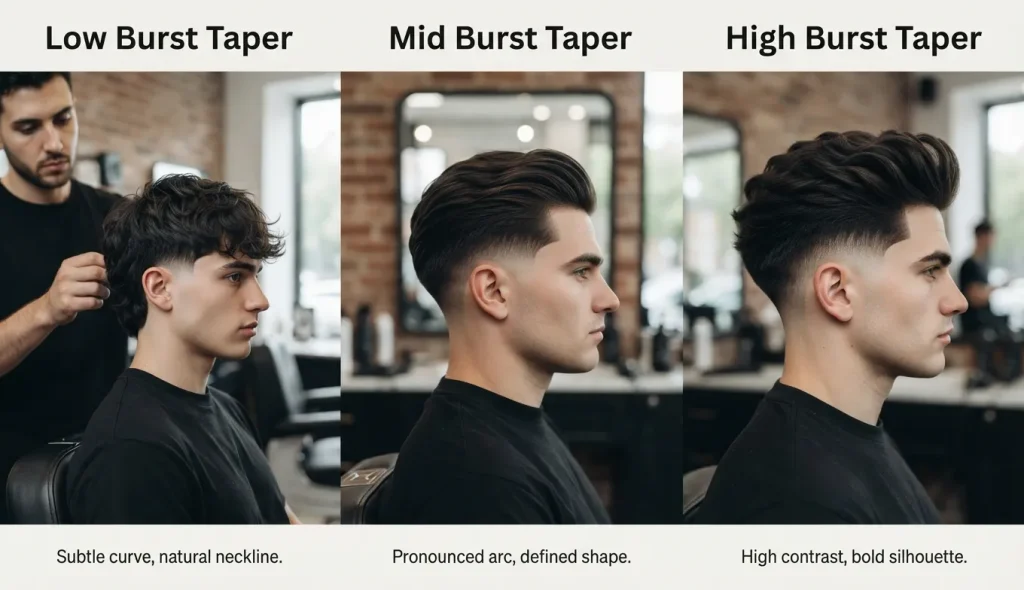
- Low burst starts roughly half an inch above the ear. Softest, most office friendly version. Good starting point if you’re unsure.
- A mid burst starts between the ear and temple. Clearer contrast, works with most top lengths.
- A high burst starts near the temple. Maximum skin exposure, boldest statement.
Rule of thumb barbers use: a fuller, voluminous top balances better with a lower fade; a short top reads more naturally with a higher one. You can always go higher at your next visit. Hair doesn’t grow back overnight, so starting conservative is the reversible choice.
Best Burst Taper Fade Styles to Ask For
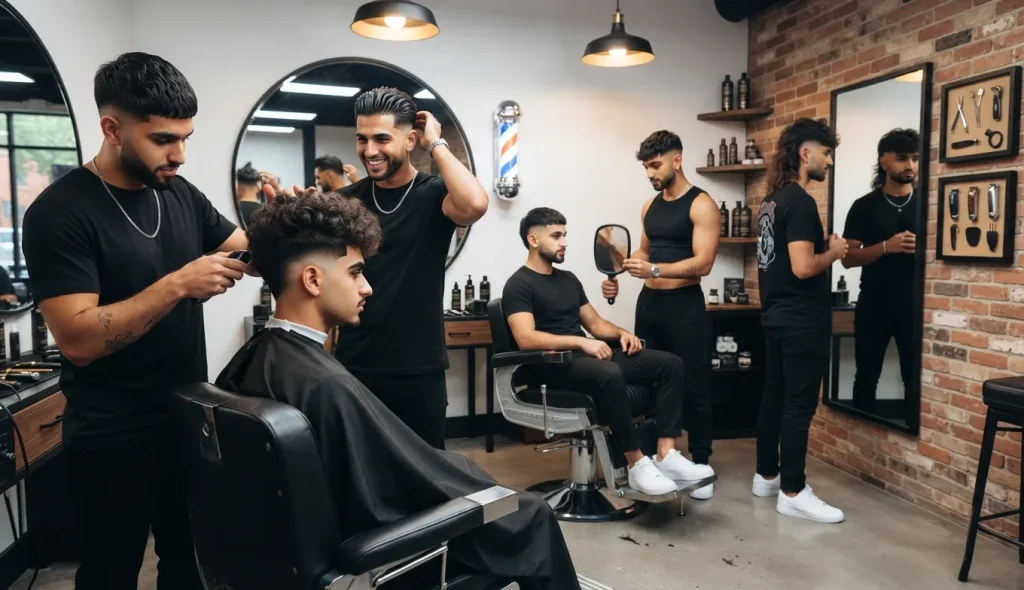
The burst stays constant in every version below. Only the top changes.
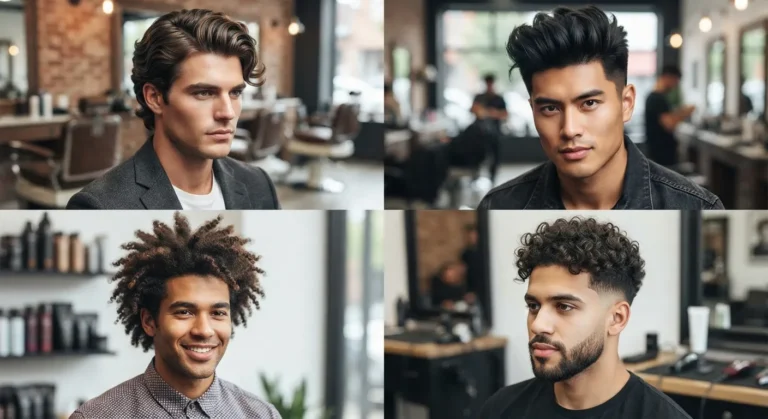
Textured crop. One to two inches, cut in with scissors or clipper over comb for a messy, lived in finish. Works on straight and wavy hair, styled with matte clay.
French crop. A short, blunt fringe across the forehead, near zero daily styling, pairs cleanly with a mid burst.
Curly top. Curls left full length while the burst shapes the sides. Many curl specialists cut curly hair dry to see true shrinkage and pattern before cutting.
Afro or coily. A rounded afro or tight coils sit above a burst with clean temple and neckline lines. The fade reads clearly against dense texture.
Quiff or pompadour. Needs three to four inches on top, blow dried up and shaped with texture powder or paste.
Slick back or side part. Light pomade, neat and work appropriate, pairs best with a low burst to keep contrast subtle.
360 waves. A low burst keeps sides tidy without competing with the wave pattern on top.
Burst fade mullet. Real length kept at the back and nape while the burst frames the sides cleanly. Bring a photo showing exactly how long you want the back.
READ MORE : Low Taper Fade Modern Mullet Haircut: The Complete 2026 Guide
Mohawk or faux hawk. A center strip blow dried upward with clay. The curved burst prevents the sides from reading flat next to the raised strip.
With a beard or line up. Ask your barber to blend the fade directly into the beard line so the two connect, plus a light line up along the hairline for extra sharpness between cuts.
Who Actually Suits a Burst Taper Fade
By hair type
| Hair type | Fit | Barber note |
| Straight | Good | Shows the curve clearly, needs a precise cut, any wobble is visible |
| Wavy | Excellent | The waves move naturally with the curve, easiest texture to work with |
| Curly | Excellent | The rounded shape follows the curl pattern instead of fighting it |
| Coily | Good | Keep the burst low if skin is prone to razor bumps |
The American Academy of Dermatology notes that tightly coiled hair can grow back into the skin after very close shaving, a condition called pseudofolliculitis barbae. If this affects you, ask for a guard on the clippers rather than a razor finish.
By face shape
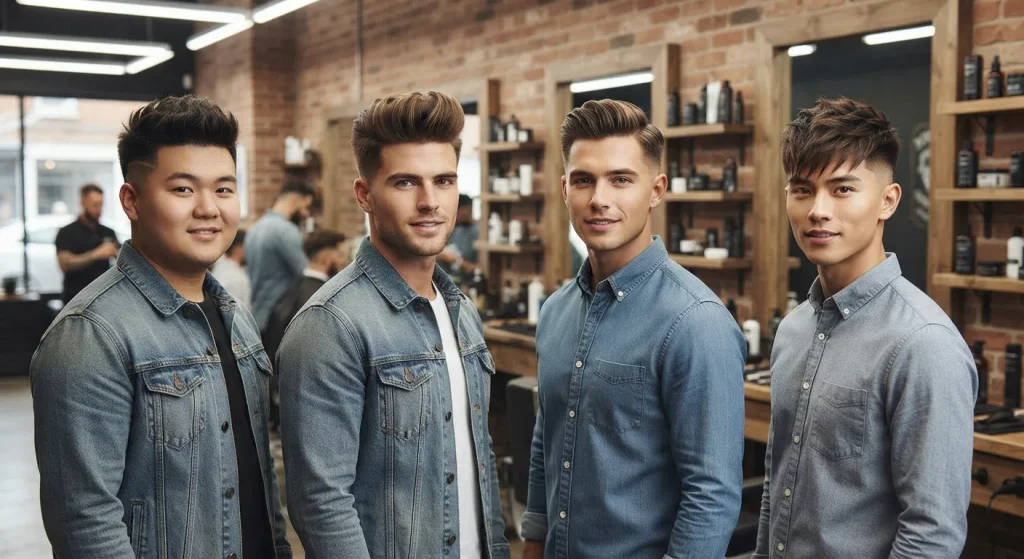
- Round. Volume and height on top do the real work here, not the fade itself. A mid burst adds slightly more vertical lift than a low one.
- Square. A curved fade softens a strong jawline more than a hard, straight fade line would.
- Oval. The safe shape. Almost any burst height and top style works.
- Heart. Some volume on top plus a low fade balances a narrower chin against a wider forehead.
- Long. A textured top that isn’t too tall keeps proportions balanced.
Head shape, ears, and glasses
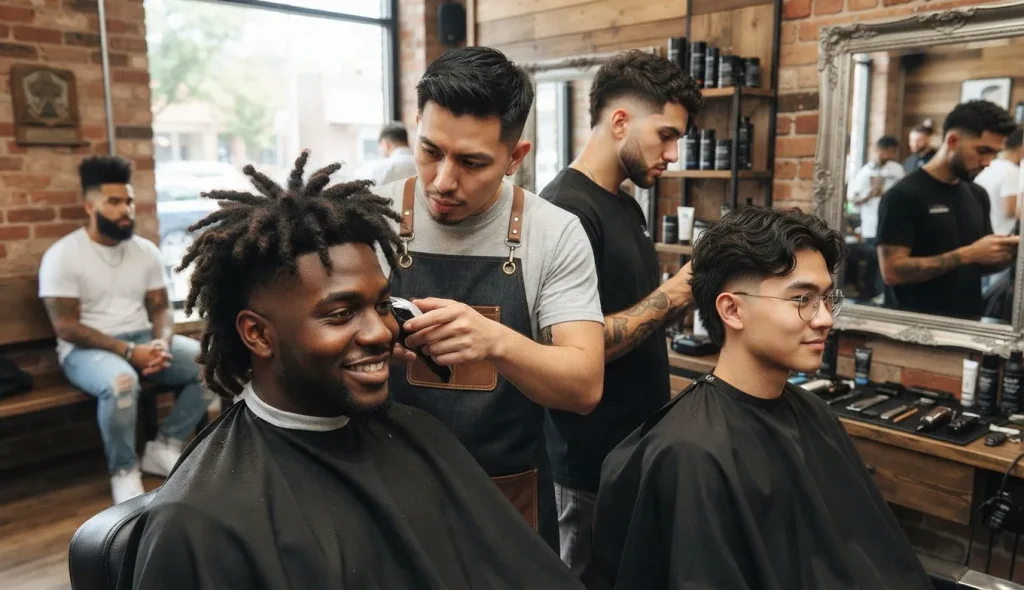
A flat back of the head benefits from the length a burst preserves. If you wear glasses daily, mention it; the curve shouldn’t cross directly where the arms sit. If your ears stand out, a lower burst leaves more surrounding hair to soften them.
Thinning hair or a receding hairline
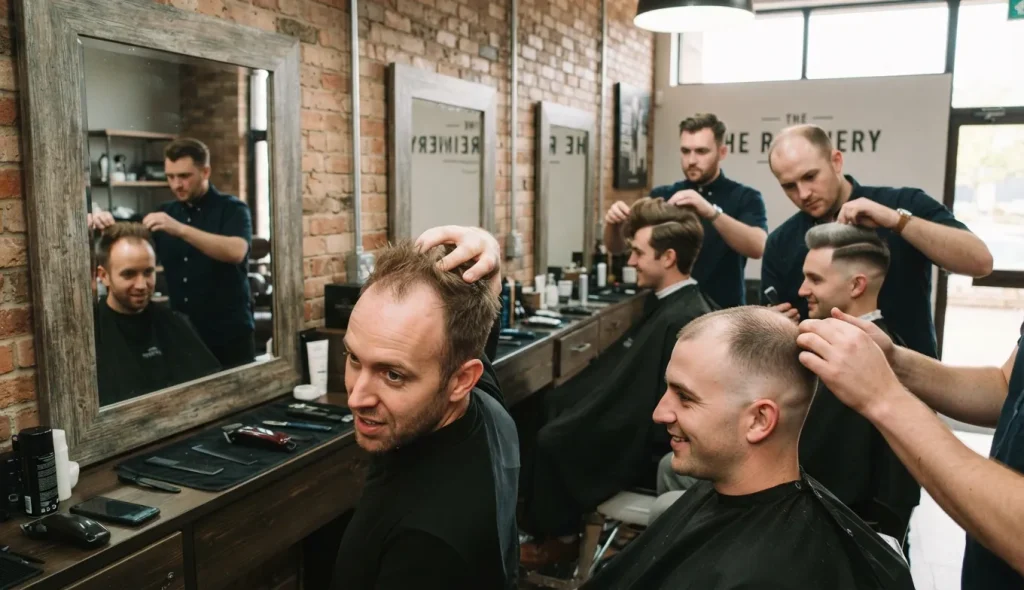
Most barbers recommend keeping the top shorter and textured rather than attempting a comb over, which draws more attention to thinning areas. A low burst keeps contrast gentle, and a light line up along the Hairline can make a receding shape look deliberate rather than accidental.
Exactly What to Tell Your Barber (Copy This Script)
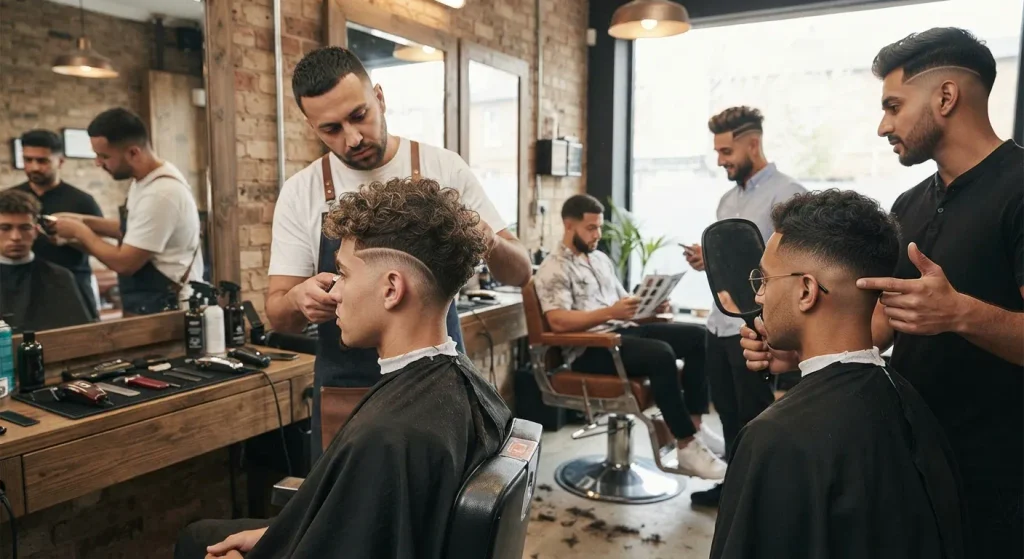
Vague requests get vague results. Saying “fade” alone very often gets you a plain, straight fade instead of a burst. Give four specifics: shape, height, back length, top length.
“I’d like a low burst fade, the kind that curves around my ear, not a straight line. Start it just above the ear and blend into the neckline. Keep length at the back. Leave about two inches on top, textured.”
Add “with a taper, no skin” if you want it softer, or “taken down to skin” if you want more contrast.
Bring three photos: one from the side (shows the curve), one from the back (shows how the burst meets the nape), one from the front (shows the top). Mention your hair type; curly and straight hair get cut with different techniques.
Barbershop glossary worth knowing
| Term | Meaning |
| Guard number | #1 is about 1/8 inch, #2 about 1/4 inch, #3 about 3/8 inch (varies slightly by clipper brand) |
| Skin or zero gap | Clippers taken down to bare skin |
| Blend | The smooth transition between two lengths |
| Line up | A crisp, defined edge along the hairline |
| Nape | The back of the neck where hair ends |
| Temple | The area beside the forehead, above the ear |
Red flags at the chair
- Barber doesn’t ask how high you want the fade
- Barber won’t look at your reference photos
- The curve starts looking straight instead of arced
- Back hair is being cut away when you asked to keep it
Speak up in the first few minutes. It’s far easier to correct early than after the cut is finished.
How Much Does a Burst Taper Fade Cost?
Pricing depends heavily on your city, the shop’s positioning, and the barber’s experience. Burst fades take more time and technical skill than a plain fade because the curve has to stay smooth and consistent from start to finish, so many shops price them at a premium over a standard fade or taper.
As a general range across US and Canadian barbershops, expect anywhere from $25 to $40 at a standard barbershop up to $50 to $80+ at a premium or specialist shop, with add ons (beard blending, a line up, or a razor design) pushing the price higher. Always confirm the price before sitting down, and check the barber’s Instagram specifically for side and back photos of curved fades. If their portfolio only shows straight fades, that’s a signal to look elsewhere for this particular cut.
Can You Cut a Burst Taper Fade at Home?
You can attempt it, but this is a harder cut than a standard fade. The curve and blend take real practice. Most people get better long term results leaving the arc itself to a barber and only doing neckline touch ups at home between visits.
Tools you’ll need:
- Clippers with guards #1 to #4
- A T blade trimmer for edges
- A cutting comb
- Two mirrors (so you can actually see the back of your head)
- A spray bottle of water
Step by step:
- Start on clean, dry hair.
- Set the sides with a longer guard (a #4) first.
- Switch to a #3 and work in curved sweeps around the ear. Don’t go straight down.
- Switch to a #2 for the area closest to the ear, following the same curve.
- Flick the clippers away from the head at the end of each stroke to soften the line.
- Blend between guard lengths with a comb until no hard lines remain.
- Clean the neckline with the trimmer, following your natural hairline rather than cutting a hard geometric edge.
- Check both sides in the mirrors and correct any asymmetry.
Common home mistakes: cutting too short at the very start (you can’t add hair back), leaving hard lines between guard changes, and shaping one ear noticeably better than the other. If the curve looks off, get a barber to correct it before it grows out further.
Styling Products by Hair Type
| Hair type or goal | Product | Why |
| Short, textured top | Matte clay | Hold with zero shine |
| Fine or straight hair | Texture powder | Adds grip and root lift |
| Curly hair | Light curl cream | Defines curl pattern, controls frizz |
| Wavy hair | Sea salt spray | Adds body and natural movement |
| Slick or side parted | Light pomade | Smooth, controlled finish |
Most barbers recommend styling this cut slightly dry and textured rather than glossy. Heavy, high shine products tend to make a burst fade look stiff instead of sharp. Routine: damp hair, a pea sized amount of product worked through with fingers (not a comb) for a natural finish, under two minutes total.
How Fast It Grows Out (and When to Book Your Next Cut)
Hair grows roughly half an inch a month on average, or about an eighth of an inch a week, according to the American Academy of Dermatology. This means a fade starting at a #1 guard (an eighth of an inch) can visibly soften within a single week.
| Time after the cut | What you’ll see |
| Week 1 | Sharp curve, clean edges |
| Week 2 | Edges soften, neckline fills in |
| Week 3 | The curve starts to blur |
| Week 4 | Reads as a grown out fade |
| Week 5 to 6 | Most of the defined shape is gone |
Practical touch up window: every 2 to 3 weeks for a crisp curve, stretching to 4 weeks for a softer, more forgiving look. Between visits, clean the neckline yourself with a trimmer and a close guard, following your natural hairline, and trim sideburns in small increments, since uneven sideburns undo an otherwise clean cut.
Mistakes That Ruin the Cut
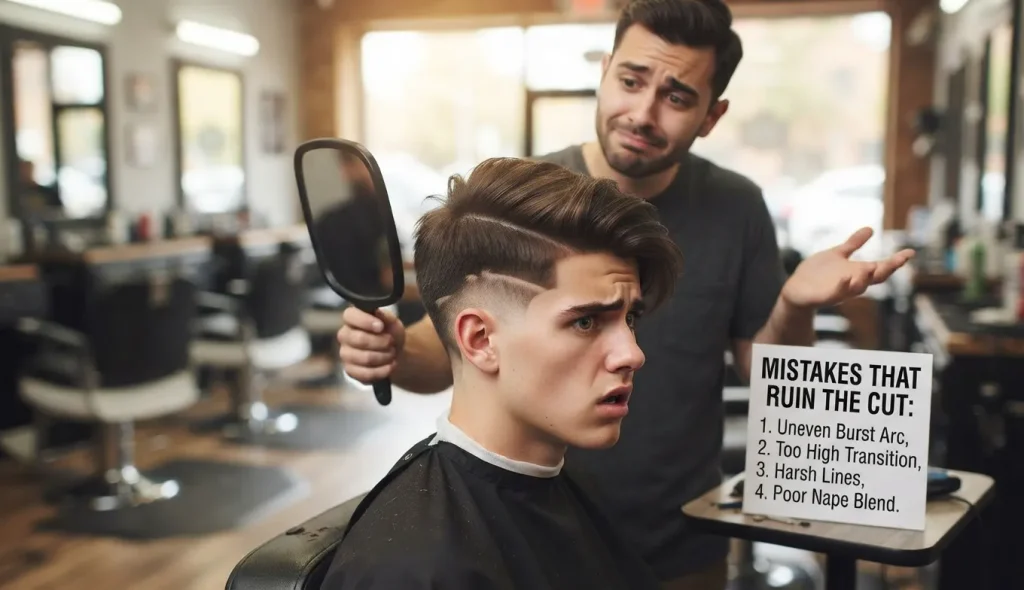
- The fade creeps up. A low burst quietly becomes mid or high over several visits. Confirm the height every single time.
- Too much hair removed around the ear. The curve needs enough hair left to actually hold its shape. Over cut it and it collapses into an ordinary fade.
- Poor blending at the back. Shows up a week later as a visible line where the burst meets the longer hair.
- No reference photo. Verbal descriptions alone leave too much open to interpretation.
- Ignoring hair type. Curly and straight hair are cut with different techniques for the same curve.
- Heavy, glossy product. Makes the top look stiff and hides the texture the cut is designed to show off.
Is It Appropriate for School, Work, or Sports?
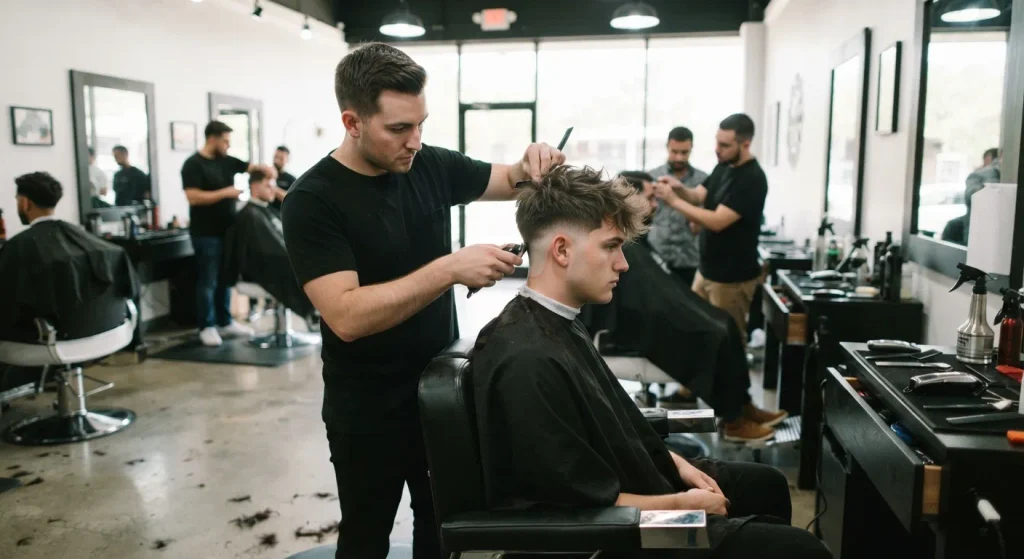
A low burst with a short to medium top fits most dress codes and office environments comfortably. The curve adds detail without reading as loud. Check your specific school or workplace policy before going higher or to skin.
Kids can wear this cut too; a low burst with a short top keeps upkeep manageable through weeks of regular play.
For sports, a high or skin burst feels cooler under a helmet or cap, though the preserved back length may flare under headwear, so bring a hat to your appointment if you wear one daily.
Frequently Asked Questions
Is a burst fade the same as a taper fade?
No. A taper is a gradual blend with minimal skin exposure. A burst fade is specifically the curved shape around the ear. This cut combines both techniques into one.
What’s the difference between a burst fade and a drop fade?
A drop fade curves down behind the ear toward the nape, removing length there. A burst fade curves around the ear and stops near the side of the neck, keeping length at the back.
Does a burst fade work on curly hair?
Yes, arguably better than on any other texture. The rounded shape follows the natural curl pattern instead of clashing with it, and curls also hide regrowth well, letting you stretch time between cuts.
Is a burst fade good for round faces?
It can be, but the real balancing effect comes from volume and height on top, not the fade shape itself. A mid burst gives slightly more vertical lift than a low one if you want a stronger effect.
How often do I need a touch up?
Every 2 to 4 weeks. Tighter, higher contrast versions need visits closer to the 2 to 3 week mark; softer, lower versions can stretch toward 4.
Is it high maintenance?
Moderate. It needs regular barber visits to keep the curve defined, but daily styling itself takes about two minutes.
What exactly do I tell my barber?
Say “burst fade,” specify the height (low, mid, or high), ask for length to be kept at the back, and give a length for the top. Bring photos from the side, back, and front.
Final Words
Burst taper fade rewards precision over guesswork. The cut itself is simple to describe in three parts, taper, burst, preserved length, but getting it right at the chair depends entirely on how clearly you communicate those three things and how much reference material you bring along.
Treat the script and photos in this guide as your checklist, choose your fade height based on how much contrast you actually want to maintain, and build in a realistic touch up schedule before you commit to a higher or tighter version. Get those basics right and the burst taper fade stays one of the most versatile cuts you can walk into any barbershop and ask for, regardless of your hair type or face shape.