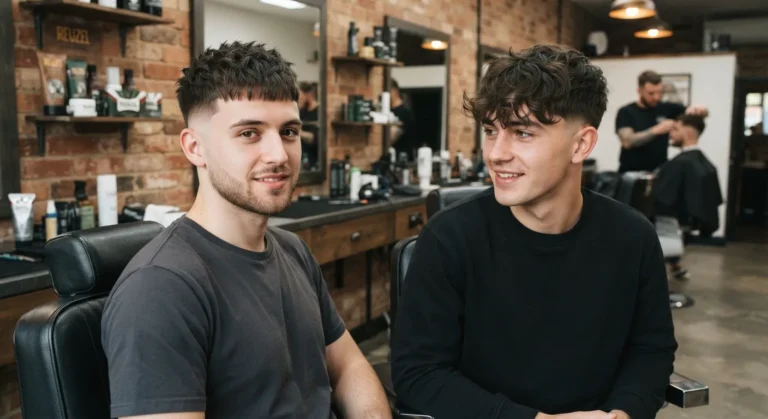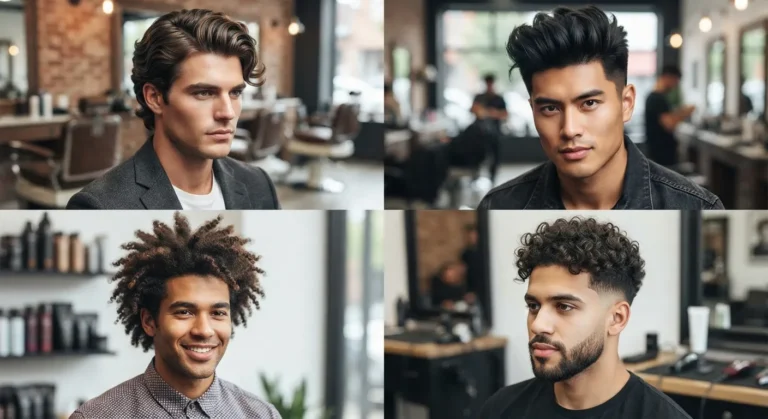
By the M Haroon— Research-based haircut, taper fade, and grooming information, reviewed and updated regularly.
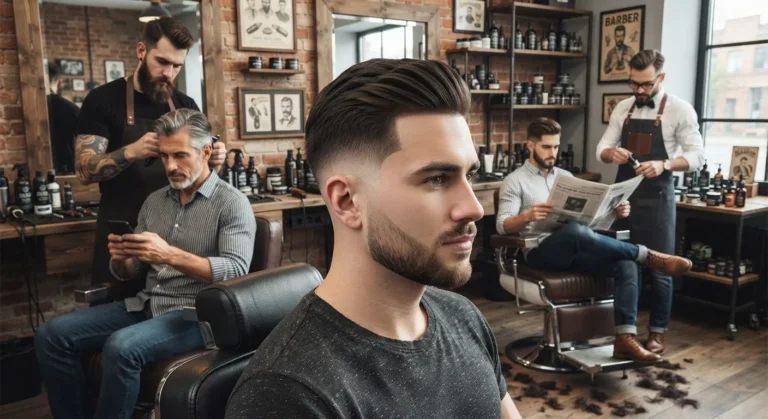
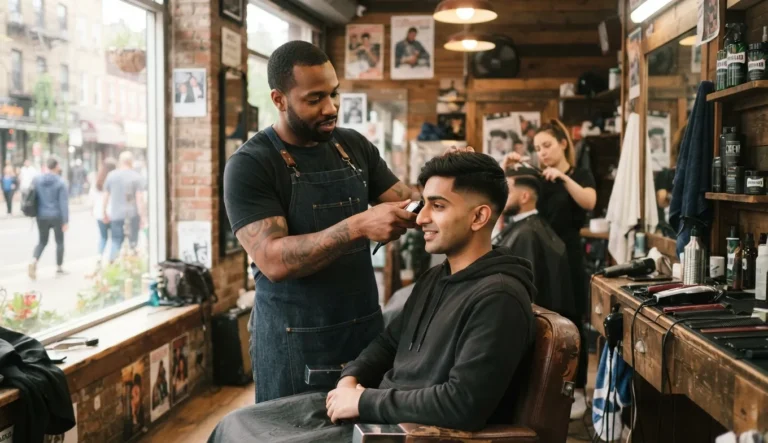
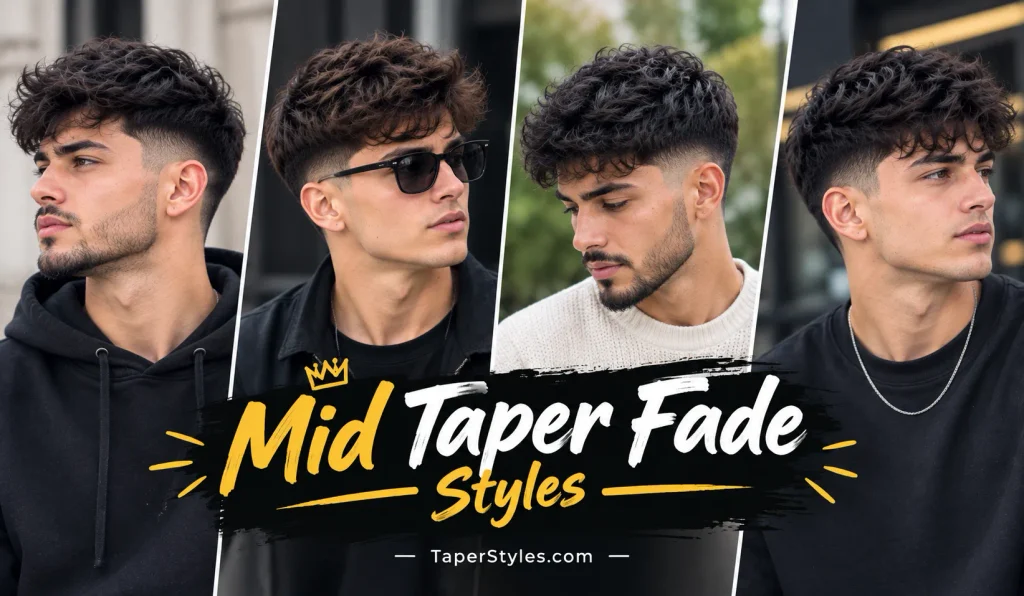
Ask ten guys what a “mid taper fade” means and you’ll probably get ten different haircuts. That’s the honest truth of it. The fade starts around your mid temple, not down by the ear, not up near the crown, and that’s really all the name promises. Everything else, how short it goes at the bottom, how much hair you keep above the ears, what you’re doing on top, that’s on you to describe.
The good news is this cut works with almost anyone’s hair. Curly, straight, wavy, thick, even coily 4C hair, it all takes a mid taper to fade well once the barber knows what they’re working with. You can run it with a textured crop, a full curly top, a slicked back comb over, or tie it into a beard for a cleaner finish. This guide covers all of it: how to actually explain the cut you want, what it should cost, and how to keep it looking right until your next visit.
What Is a Mid Taper Fade?
I’ve cut a few thousand mid taper fades by now, and one thing never changes. Most clients who leave unhappy aren’t unhappy because the barber messed up, they’re unhappy because the words they used and the picture in their head never actually matched.That’s really what this guide is about. Not just explaining what a mid taper fade is, but showing you how to walk into a shop and walk out with the exact cut you had in mind.
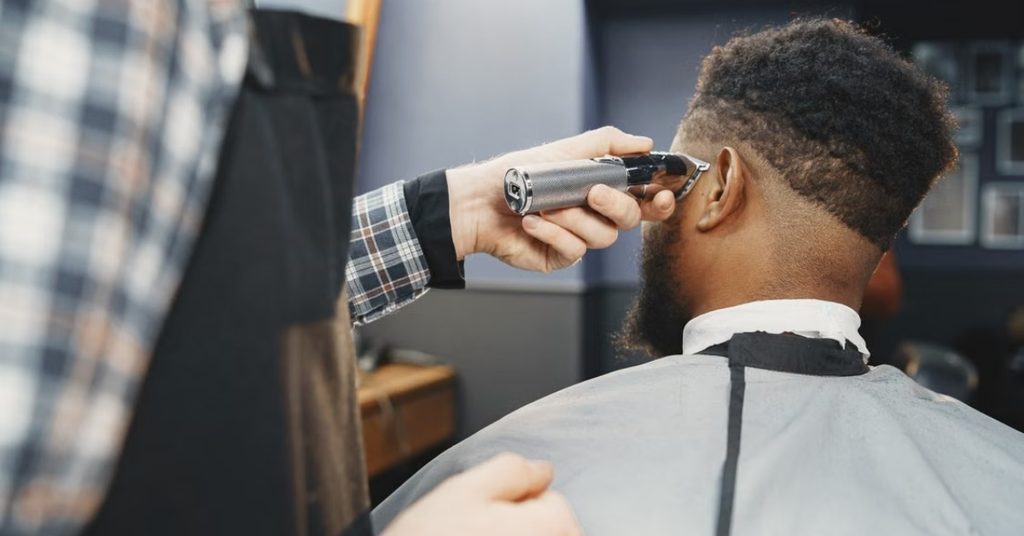
Strip away the jargon and it’s simple. It’s a haircut where the graduation, the gradual shortening of hair, starts around the middle of the head, roughly at temple height, rather than low near the ear or high toward the crown. That’s the “mid” part.
Here’s where people get tripped up. The name only tells you where the fade starts. It says nothing about:
- How short it gets at the bottom (shadow, short, or skin)
- How much hair stays full above the ears
- What’s happening on top
I’ve had clients show me a photo labeled “mid taper fade,” and I still had to ask three or four questions before I even touched the clippers because depending on the lighting and the angle, that same photo could actually mean five completely different finishes.
Why the Mid Taper Fade Is So Popular Right Now
I’ve been doing this over ten years now, watched plenty of trends come through the shop and fade right back out, but the mid taper’s stuck around longer than most. Reason’s pretty simple: it doesn’t box you into anything. A skin fade’s basically a commitment, you’re in that chair every two weeks or it looks off. A low fade’s so low-key most people won’t even register it as a haircut. Mid taper lands right in the middle, which is why it works on a teenager, a new dad, and a guy who’s got to look put-together for client meetings, all at the same time. Photographs well, Grows out Without Turning into a Mess, and honestly goes with whatever you’re doing on top.
Pros and Cons of a Mid Taper Fade
| Pros | Cons |
| Works with nearly every hair type | Needs a touch-up every two to three weeks |
| Suits most face shapes with small top adjustments | Needs a barber who can actually blend, not just buzz |
| Easier to maintain than a skin fade | Less dramatic than a high or skin fade |
| Reads as professional or casual depending on the top | Grows out a bit faster than a low fade |
Mid Taper vs. Mid Fade vs. Everything Else
This confuses more people than anything else I get asked about, so let’s clear it up properly.
| Style | Where It Starts | What It Feels Like |
| Low taper | Near the ear | Subtle, barely there contrast |
| Mid taper | Mid temple | Balanced, noticeable but not loud |
| High taper | Upper temple | Sharper contrast |
| Mid fade | Broader mid section, down to skin | More scalp shows through |
| Skin fade | Anywhere, down to skin | Maximum contrast |
| Burst fade | Curves around the ear | Distinctive, rounded shape |
| Drop fade | Dips lower toward the back | Curved, flowing line |
Choosing a Top Style That Works With Your Hair
This is the part most guides skip, and it’s the part that decides whether you still like your haircut a month from now.
Curly or coily hair. Look, don’t let anyone convince you to cut the top short just because you want tight sides. I’ve fixed this exact mistake so many times I’ve lost count. Here’s the thing about curls: they need length or they simply won’t curl right. Go too short and the shape’s gone, plus shrinkage makes everything look shorter than it already is. What actually works better, and honestly needs less upkeep than most people think, is a tapered perimeter with more length left on top, whether that’s a curly top, a clean afro line, or twists. My advice: don’t go below 2.5 to 3 inches up top. Curls pull up a lot once they dry, more than people expect.
READ MORE : Mid Taper Fade Curly Hair: Style, Cost, and Care Guide
Straight hair. You’ve got the most “what you see is what you get” texture out there, which honestly cuts both ways. Every uneven line is gonna show, no hiding it. A side part, slick back, or crop can look really sharp on straight hair, but make sure you specifically ask for a smooth blend. Straight hair has nowhere for a rushed fade to hide.
Wavy hair. You can go either direction. Let the waves do their thing with minimal product, or add texture for more defined movement. This is one of the easier textures to style day to day, and it holds a fade shape longer than straight hair does.
Thick hair. This is where the taper’s actually earning its keep, it’s cutting down bulk you probably didn’t even realize you wanted gone. Just be specific about how much weight to leave above the ears, because if the taper’s too aggressive on thick hair, the top can end up looking totally disconnected from the sides.
Fine or thin hair. Go easier on the shortest point. Too short on thin hair shows scalp fast, and that’s rarely the look people want. A softer shadow finish usually ages better than a hard skin line, and a touch more length on top helps create the illusion of density.
4C and afro textured hair. This is the one texture where I tell clients to specifically ask for a barber who’s comfortable with density. A gradual mid taper channels the volume instead of fighting it, but rushed blending on tightly coiled hair shows every mistake.
20 Mid Taper Fade Variations Worth Knowing
You don’t need to memorize all of these. Just find the two or three closest to what you want, and use the details below to describe them accurately in the chair.
1. Mid Taper with Textured Crop
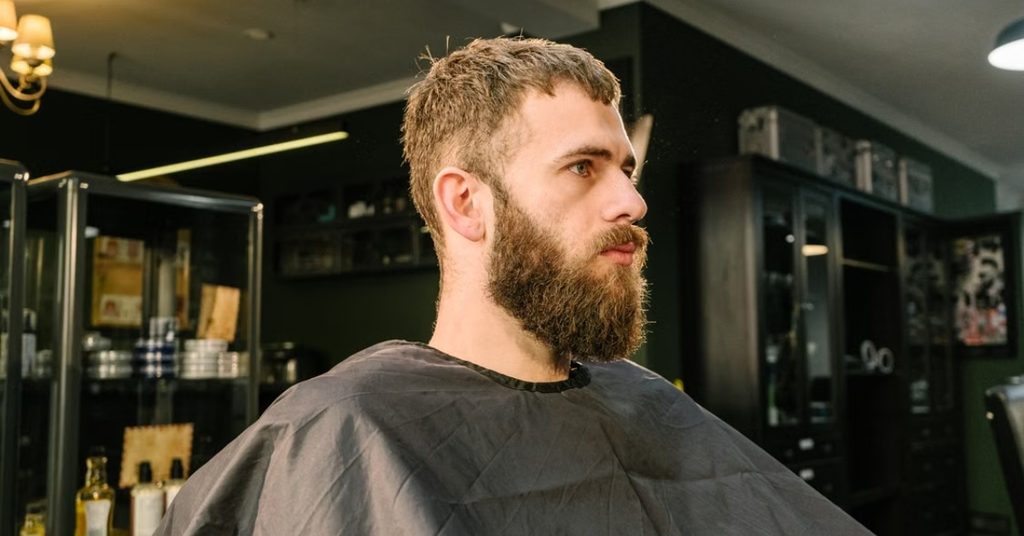
Short, choppy top, matte finish this is probably the lowest-effort cut on this list, but somehow it still looks like you tried. Crop keeps the top clean, mid taper handles everything on the sides. Best on straight to wavy hair. And if you’ve got an oval or square face, this one’s gonna suit you especially well.
2. Mid Taper with Curly Top
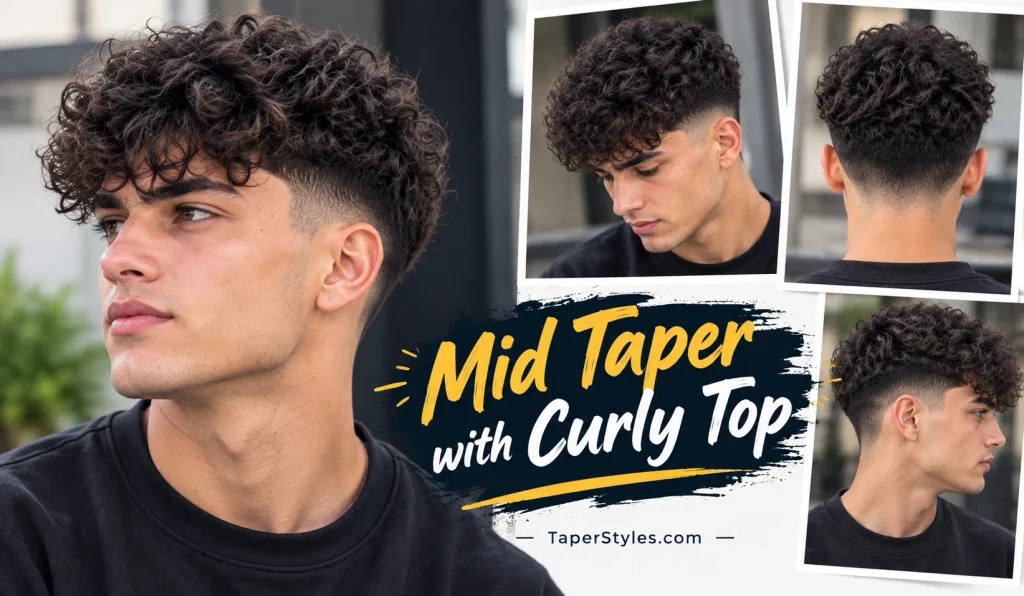
Full natural curls left long on top, tight taper underneath the taper basically steps back and lets the curls do all the talking. You’re gonna need curl cream in the rotation, and don’t go below 2.5 inches, since curls shrink up more than people expect once they dry. This one’s especially good if you’ve got a round or oval face.
3. Mid Taper Comb Over
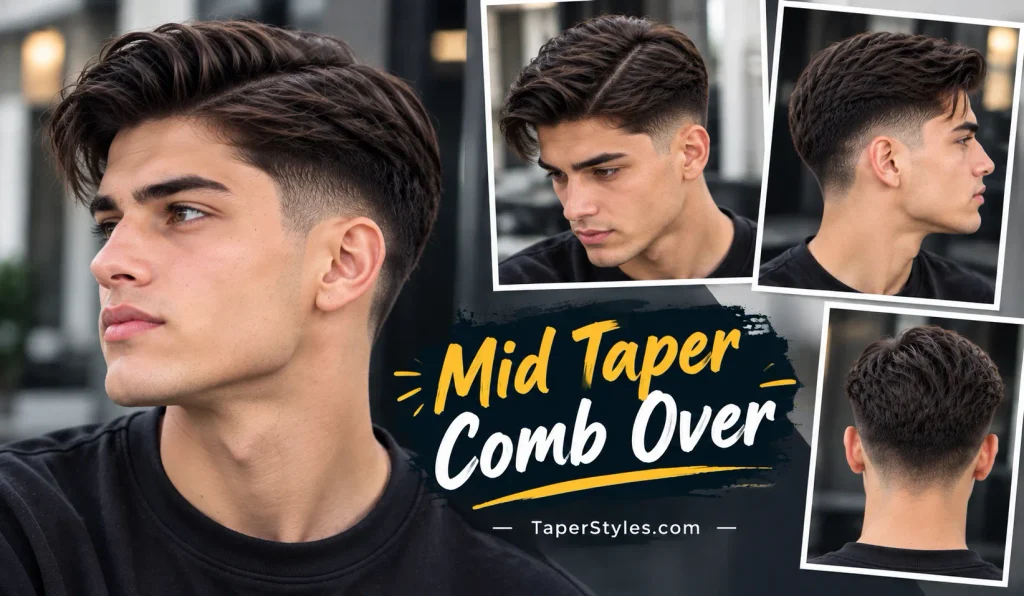
A side part, hair combed over, clean neckline this one reads professional without trying too hard. Probably the most polished option on this list, and it works best on straight to slightly wavy hair.
4. Mid Taper Slick Back
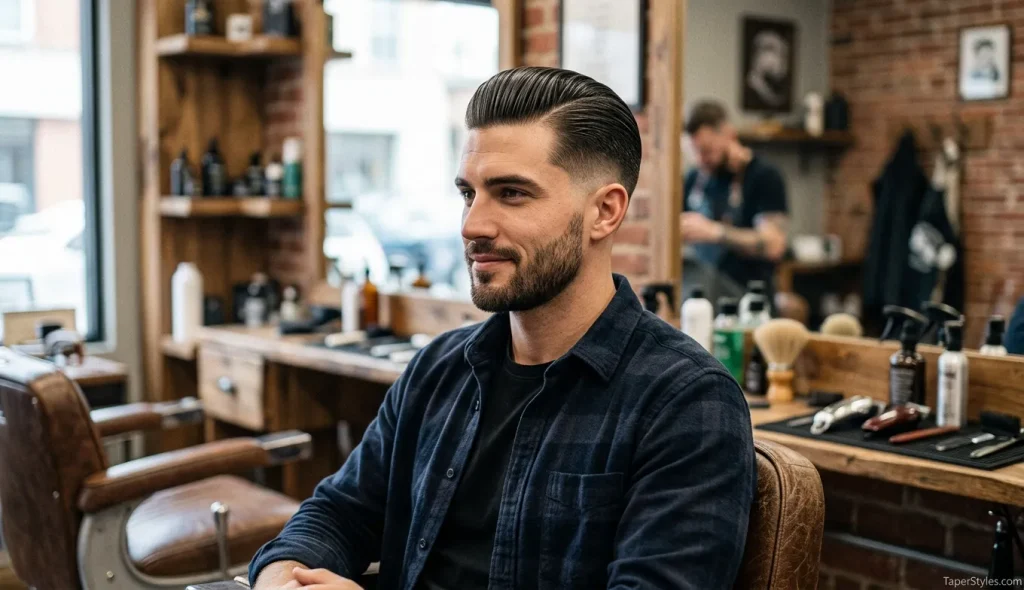
Pomade-heavy, hair slicked straight back this one needs some length and density up top or it just won’t hold its shape. Leans classic overall, and it does best on thick, straight hair.
5. Mid Taper Quiff
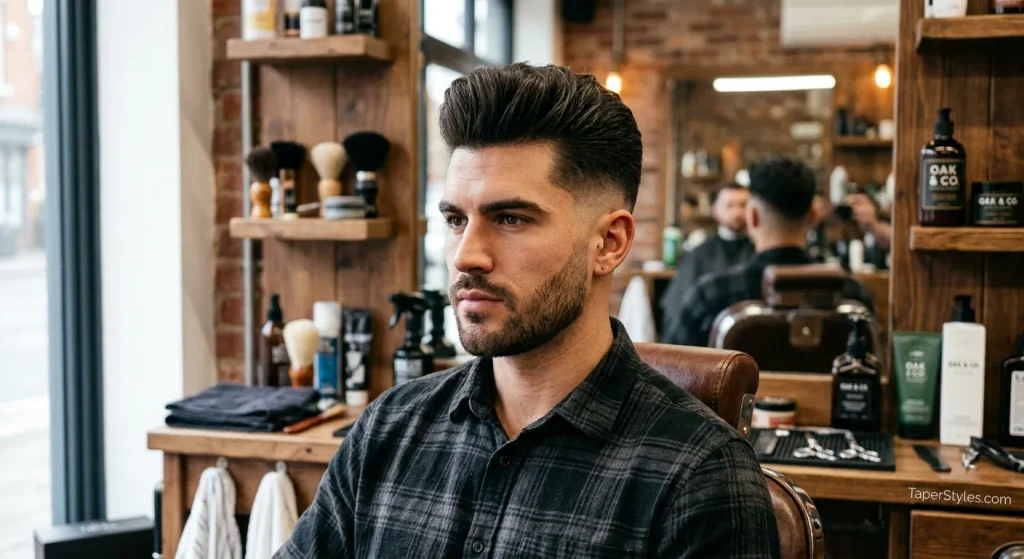
A lifted, swept-back front adds height without much extra work. Solid pick if you’ve got a round face that extra height creates the visual length you’re looking for.
6. Mid Taper French Crop
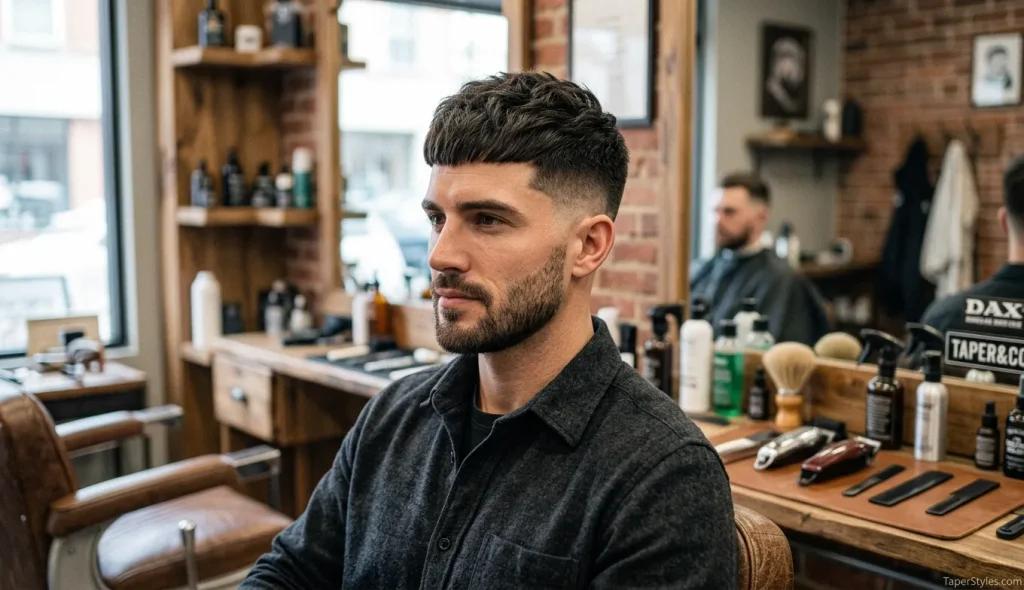
Short, textured top with a forward fringe keeps styling dead simple, and this one honestly works on pretty much any face shape or hair type.
7. Mid Taper with Beard
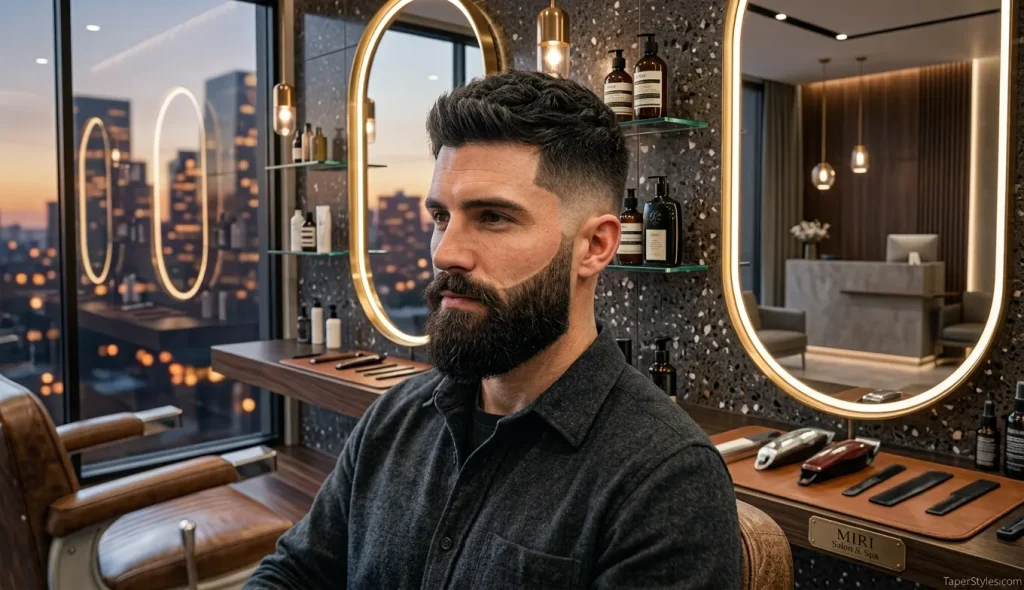
The sideburn’s the hinge point between the haircut and the beard; here they need to blend into each other, not look like two separate decisions. Book them both in the same appointment if you want the cleanest result.
8. Mid Taper Afro
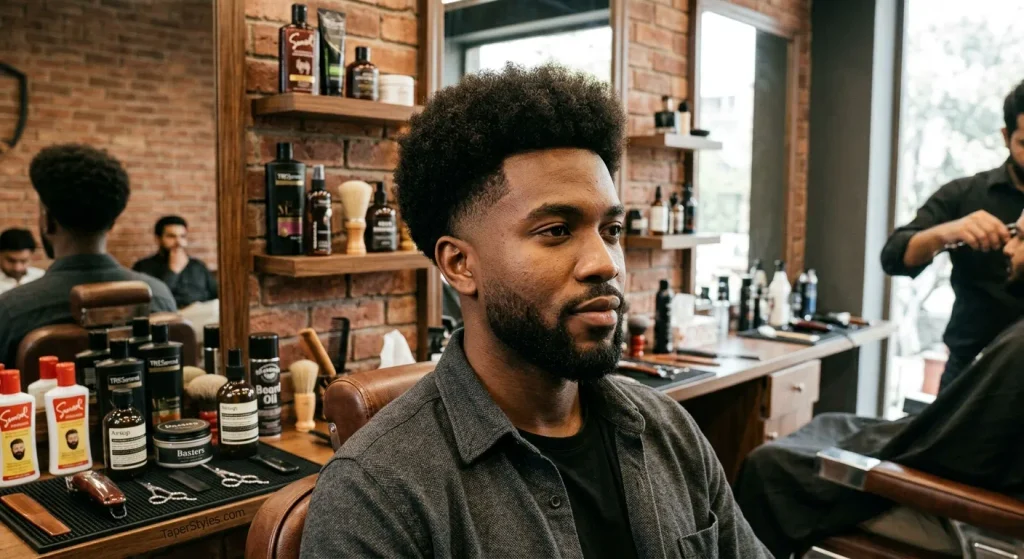
Full afro volume on top against a tight taper on the sides creates real contrast. The tighter the sides, the more the volume on top gets to do the talking.
9. Mid Taper with Twists
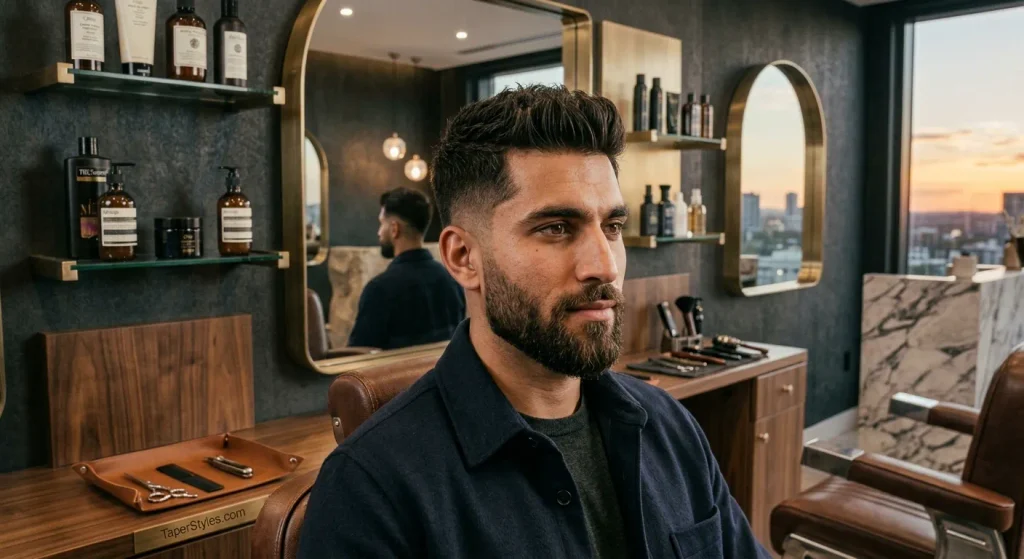
Defined twists on top instead of full afro volume give you texture without the extra height. A solid middle ground for guys who want their natural texture to show without going full volume.
10. Mid Taper Buzz Cut
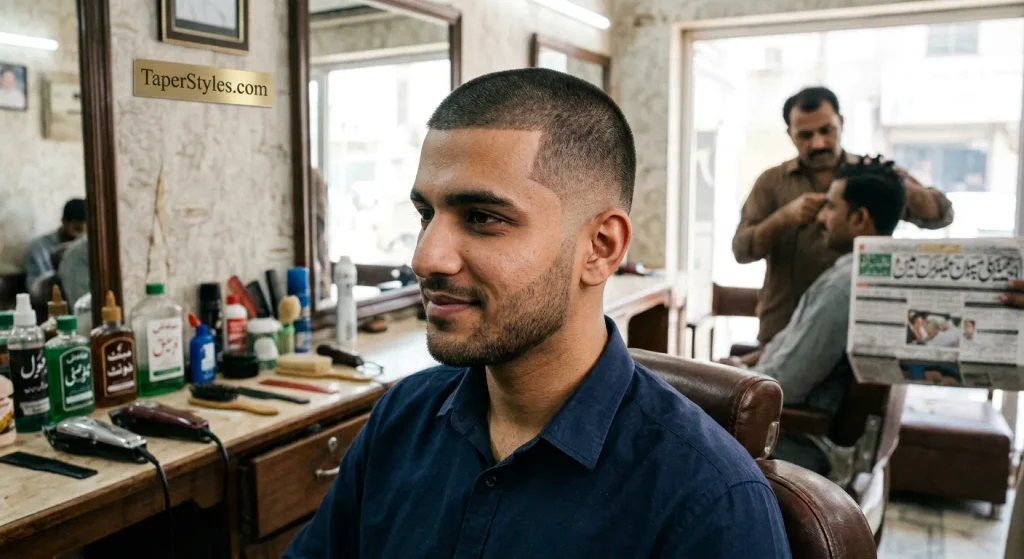
Uniform short length on top paired with a tight taper below is the lowest-maintenance version on this entire list. Towel dry and you’re basically done.
11. Mid Taper to Skin

Take the bottom of the taper all the way to bare skin instead of stopping at a shadow, and you get a sharper, higher-contrast look. The trade-off is it grows out faster on a touch-up every two weeks instead of three.
12. Mid Taper Middle Part
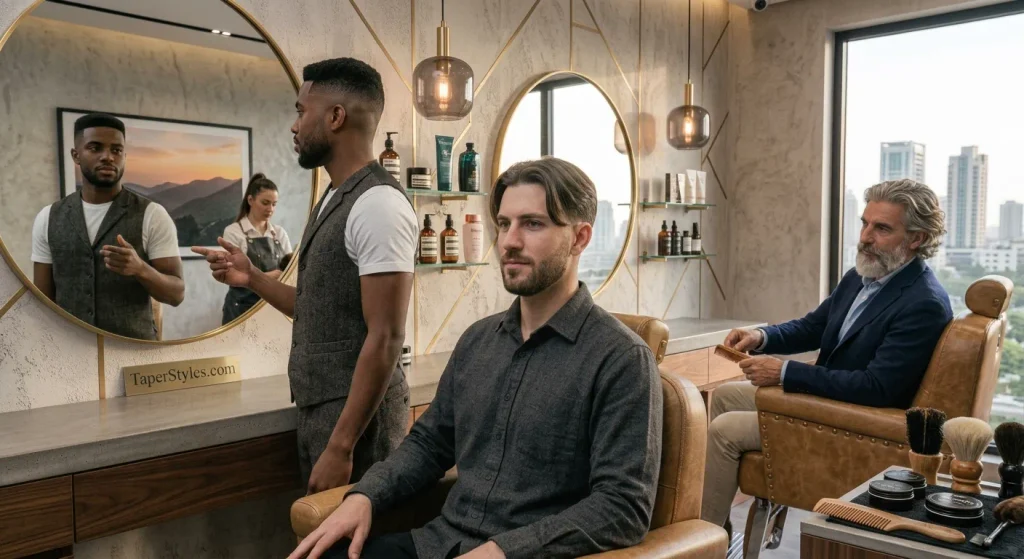
A longer top, parted down the center, this one works especially well with straight to wavy hair, and it’s a nice fit for rounder face shapes.
13. Mid Taper Mullet
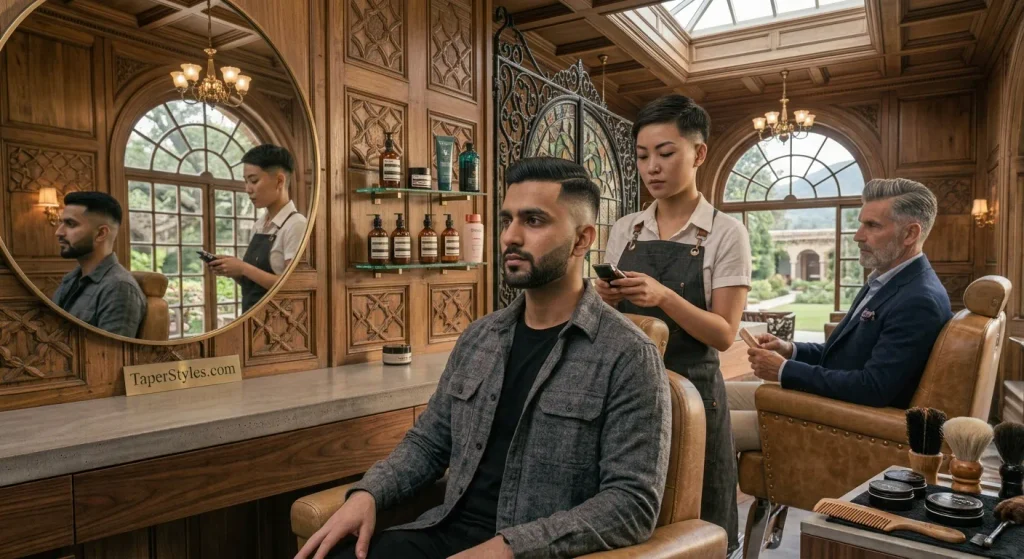
Short sides with length left at the back this one’s making a real comeback lately, and it’s the taper underneath that keeps it from looking dated.
14. Mid Taper Fringe
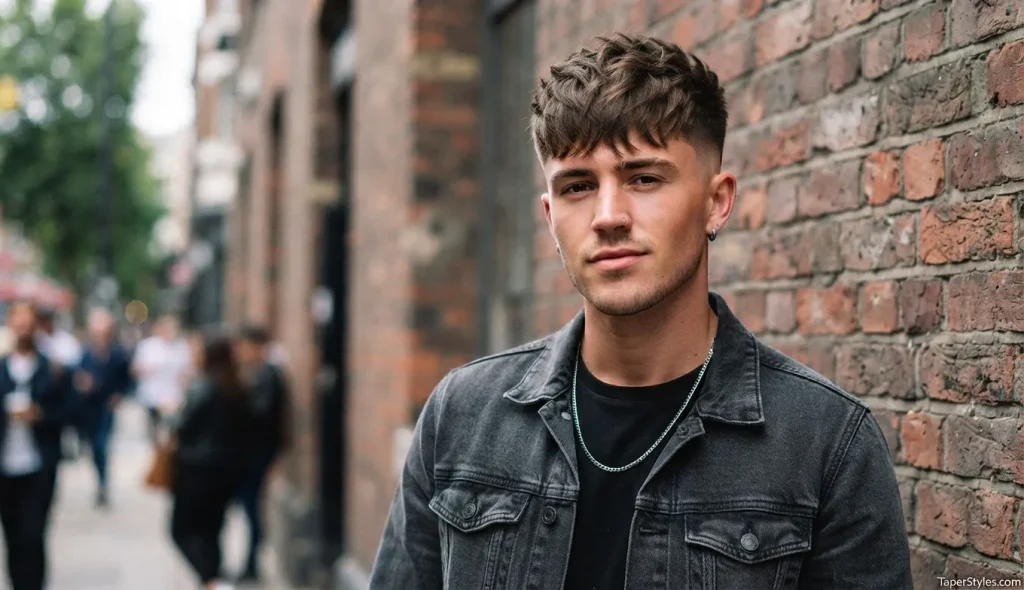
Textured fringe swept forward pairs particularly well with an oval or heart shaped face, and it’s an easy style to maintain day to day.
READ MORE : Mid Taper Fade Fringe: The Complete Guide 2026
15. Mid Taper Blowout
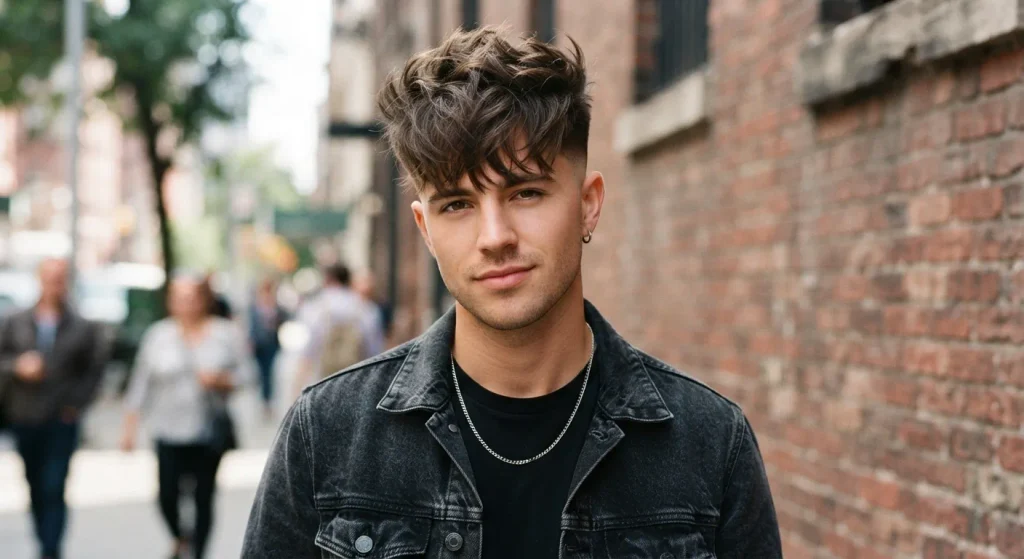
Volume lifted up and out with a blow dryer looks best if you’ve already got naturally fuller hair, and it adds real presence without needing much product.
16. Mid Taper with Dreads or Locs

The tight sides clean up the overall silhouette while the locs keep their natural movement on top. A fresh line up at the hairline makes this combination look sharpest.
17. Mid Taper Undercut
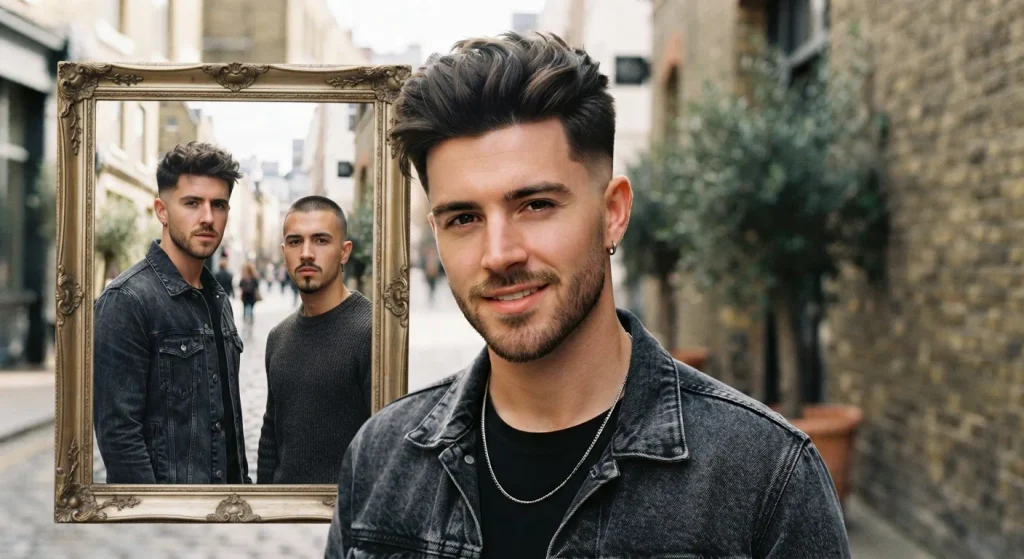
A harder disconnect between the sides and the top than a standard taper gives this one more contrast. It works especially well with thick hair.
18. Mid Taper Drop Fade
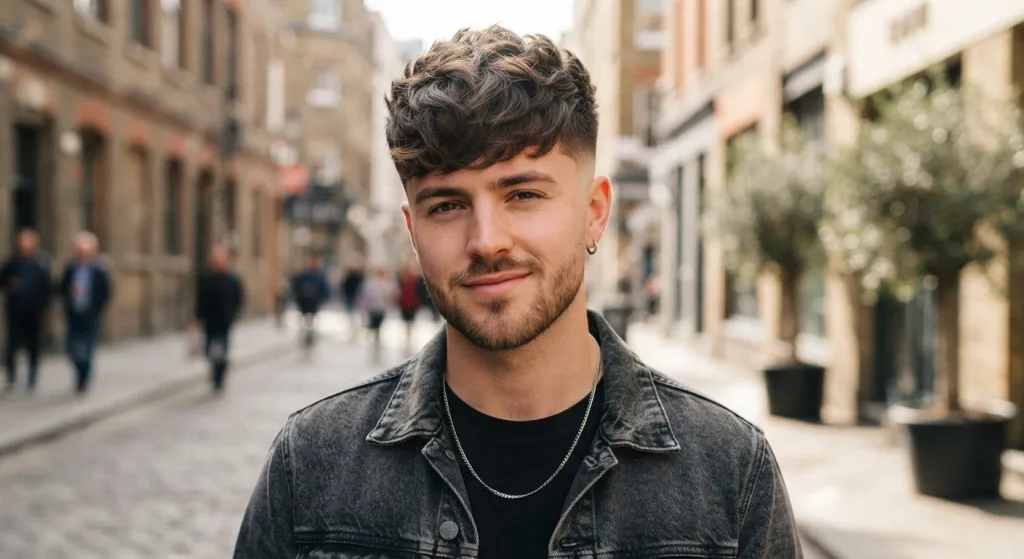
The taper line dips down slightly behind the ear instead of running level, following the natural curve of the skull. You’ve gotta ask for this one specifically, though a standard mid taper just stays level by default.
19. Mid Taper with Design
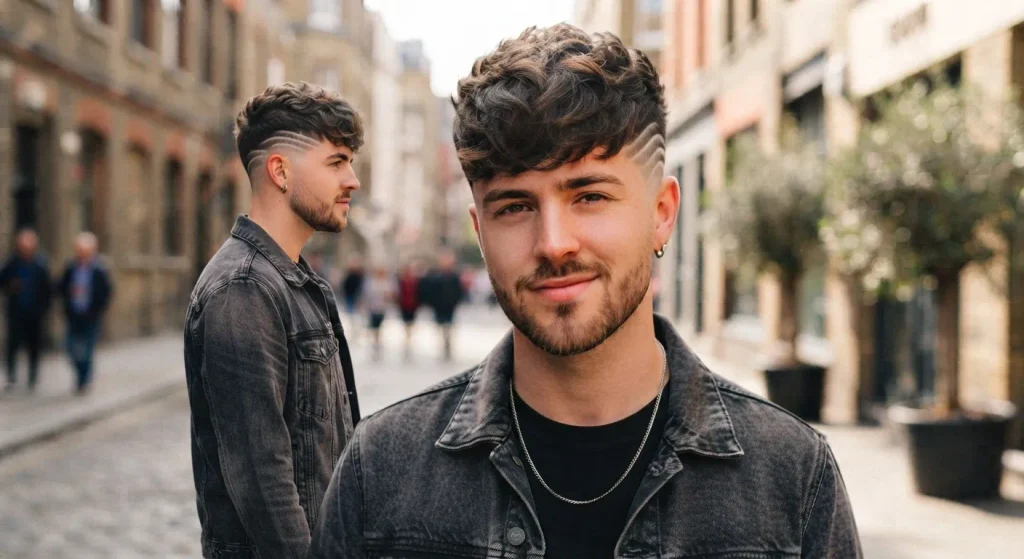
A line or pattern shaved right into the taper adds a personal touch and it shows up best on darker, thicker hair.
20. Mid Taper Wolf Cut
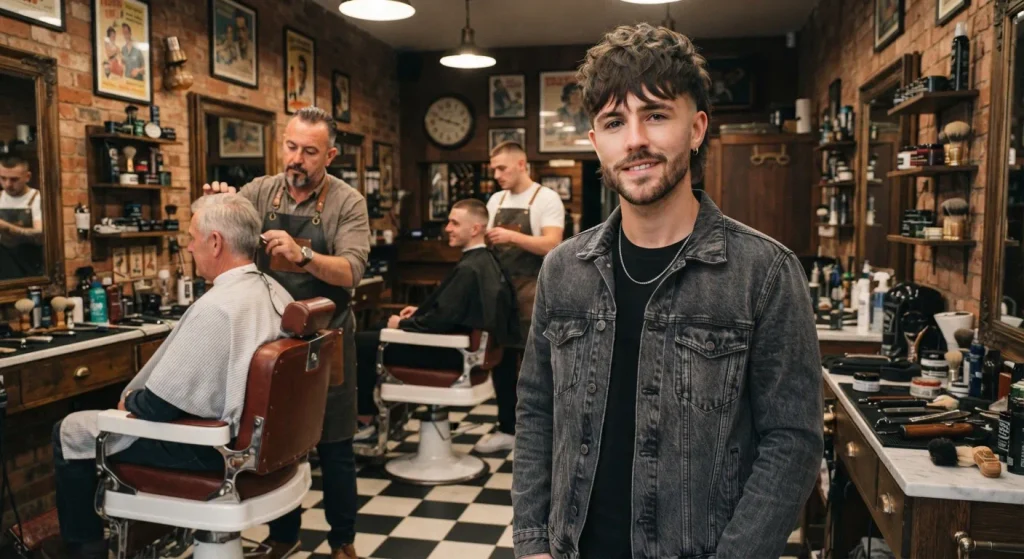
Shaggy, layered length on top with tapered sides it’s a newer combo, and it works best on wavy or straight hair that’s already got some natural movement to it.
Face Shape, Age, and Lifestyle: A Guide, Not a Rulebook
I want to push back a little on how face shape advice usually gets presented, as if there’s one correct haircut per face shape. There isn’t. What matters is proportion, what you want to draw attention to, and honestly, how you actually live day to day. Here’s the general logic on faces:
Lifestyle matters just as much as face shape, honestly maybe more. Teenagers usually push for bolder, higher-contrast stuff that makes sense, there’s more room to experiment before a 9-to-5 routine forces some restraint. Guys in their 20s probably need the widest range of all, since the same haircut’s gotta work for the office, the gym, and a night out, and that’s exactly where a mid taper with a flexible top length pulls its weight.
For professionals or anyone client-facing, I usually push people toward a shadow finish instead of skin, paired with something on top that holds its shape without needing daily product a comb over, or a textured crop, that kind of thing.
Use all of this as a starting point in conversation with your barber, not a strict rule.
How to Talk to Your Barber (This Part Matters Most)
Most bad haircuts I’ve seen, including some I’ve had to fix for other barbers’ clients, come down to a client saying “mid taper fade” and nothing else. Break it into five separate pieces of information:
- Starting point. Touch your own temple. Use a photo. Don’t just say “mid.”
- Bottom finish. Shadow, short, or skin. These look different from each other.
- Weight above the ears. This is the detail almost nobody mentions, and it changes the whole shape of the cut.
- The top, described separately. Crop, fringe, quiff, curls, whatever you want. The top and the taper are two different decisions.
- Neckline and sideburns. People forget to mention these and are surprised by the result later. Say if you want them squared off, rounded, or left natural.
Bring three photos if you can: side, front, and back. The side view shows the taper placement most clearly.
A request I’d be happy to receive: “Start the taper around mid temple, leave a good amount of weight above the ears, take the bottom to a soft shadow instead of skin, and keep the top long enough to add texture.” That one sentence saves both of you fifteen minutes of back and forth.
About Guard Numbers
Clients ask me for “a number 2” constantly, and I always ask back, a number 2 where? A guard number tells me a length. It doesn’t tell me placement, and it doesn’t tell me how the lengths should blend into each other.I’ve thrown a number 2 guard on two totally different cuts in the same day, no joke, same exact guard, different result each time, just came down to placement and how it got blended in.
For reference, a guard 1 leaves about 3mm, a 2 leaves around 6mm, a 3’s close to 10mm, and a 4 lands near 13mm. Most mid tapers I do run a 1 or 2 on the sides, blending up into a 3 or 4 on top. And if you don’t know your guard number, don’t worry about it, most people don’t. A photo does the job better anyway.
Styling, Realistically
- Textured top: Damp hair, a small bit of matte clay, work it in with your fingers instead of a comb you’re going for separation, not smoothness.
- Slick back: Comb it through while it’s still damp, go with a stronger hold product, blow dry directing everything back.
- Quiff: Lift the front as you dry it, push up and slightly back, then a light product once it’s fully dry.
- Curly top: Curl cream or a leave-in while damp, scrunch it rather than brushing, and air dry if you’ve got the time for it.
- Low effort days: Honestly, a light styling cream and your fingers will get you most of the way there in under a minute.
How Long It Actually Holds Up
This varies by individual growth rate, but here’s the pattern I usually see:
- Week 1: Crisp and fresh, the “day of the haircut” version.
- Week 2: Still looks intentional, edges softening a little.
- Week 3: The neckline and sideburns start to get fuzzy first.
- Week 4 and beyond: You’re due for at least a cleanup, if not a full haircut.
A skin finish softens noticeably faster than a shadow finish, so if you can’t realistically get to a barber every two weeks, ask for a shadow finish and a bit more length overall instead of skin.A cut that looks amazing on day one but falls apart by week three? That’s not actually the right cut for you, no matter how good the photo looked. And keeping the scalp clean and moisturized matters more than people think, especially around tight fade lines coily and curly hair in particular needs regular moisture to avoid breakage near the shortest part of the cut.
What It Actually Costs
Pricing varies a lot by city and shop tier, but as a general range across most barbershops in 2026:
| Setting | Typical Price Range |
| Chain/value barbershop | $20 to $35 |
| Independent local barbershop | $35 to $60 |
| Premium/city center barbershop | $60 to $90 |
Common Mistakes to Avoid Before You Even Sit Down
- Saying only “mid taper fade” and nothing else. The name alone leaves too much open to interpretation.
- Skipping the photo. Even a rough reference photo saves more time than you’d expect.
- Not mentioning your hair type upfront. Curly, straight, and coily hair all fade at different speeds, and a barber who knows this before starting gives a cleaner result.
- Not accounting for your actual schedule. Asking for a skin finish when you can only get back once a month sets the cut up to look messy halfway through.
- Choosing a barber based on price alone. A clean blend takes skill. The cheapest option in town isn’t always the one who does tapers well.
When It Goes Wrong, and What to Say Next Time
- Taper too high: Let it grow out. Don’t try to fix it with more cutting right away. Next time, physically point to the spot you mean.
- Sides too short overall: Ask specifically for the blend to stay localized to the perimeter instead of spreading across the whole side.
- Contrast too harsh: Request a shadow finish instead of a skin finish next visit.
- Top doesn’t connect with the sides: This usually means the top wasn’t discussed
before cutting started. Bring it up first, before the clippers come out. - One side looks off: Ask your barber to check both sides in a mirror before you leave. A good barber won’t mind the extra minute.
Frequently Asked Questions
What is a mid taper fade?
A haircut where the graduation starts around mid temple height and blends toward the ear and neckline, finishing at a shadow, short, or skin length.
Is a mid taper fade the same as a mid fade?
Not quite. A mid taper stops short of bare skin. A mid fade blends all the way down to skin for sharper contrast.
Which is better, mid taper or low taper?
Neither one’s objectively better, honestly. Mid taper gives you more visible contrast, while a low taper’s better suited for conservative or more formal settings.
Can a mid taper fade go down to the skin?
Yes, that variation is often called a mid skin fade. Just specify “to the skin” when you ask.
How often should I get it touched up?
Every two to three weeks for most finishes. Shadow finishes can stretch a bit longer than skin finishes.
Is a mid taper fade good for every hair type?
Yes, with small adjustments to length and blend based on your texture.
Is a mid taper fade professional enough for work?
Yes, especially with a shadow finish and a low-key top style like a comb over or textured crop.
How long does it take to grow out?
It’ll hold its shape for roughly four to six weeks before it’s really gone, though it starts losing that crisp look after two or three.
Barbershop or salon, which should I choose?
A barbershop, generally. Fades and tapers are a barbershop specialty, and most stylists at salons see fewer of them.
Can a barber change a mid fade into a low taper later?
Yeah, that’s an easy fix: just tell your barber to move the starting point lower on your next visit.
Final Thoughts
A mid taper fade starts blending at temple height, sitting somewhere between a subtle low fade and a bold skin fade. It works across pretty much every hair type curly, coily, straight, thick with just small tweaks to length and blend. It also works on most face shapes and age groups, and honestly holds up fine whether you’re in a suit or just hanging out. That’s a big reason it’s shaping up to be one of the most requested styles going into 2026.
Here’s the real key though: communication. Spell out the starting point, the bottom finish, how much weight stays above the ears, and what’s happening on top. Separately. Don’t lump it all into one vague request. As for upkeep, you’re looking at every two to three weeks, though shadow finishes tend to outlast skin fades before they need a touch-up. And honestly, how often you can actually make it back to your barber’s chair matters just as much as your face shape or hair type does, maybe more.