
from there.By M. Haroon | Published: September 2026 | Updated: September 2026
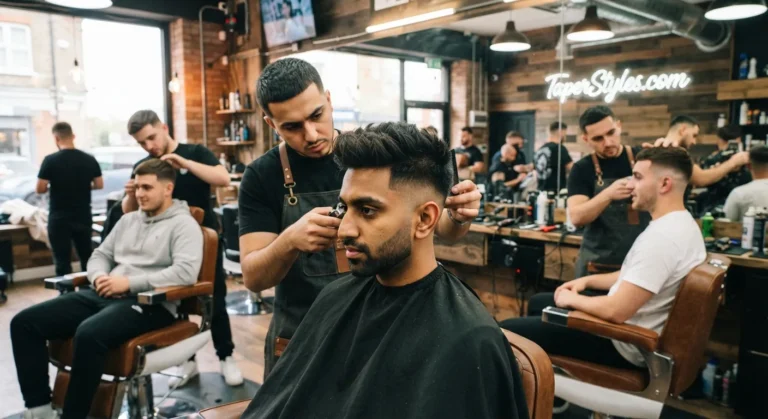
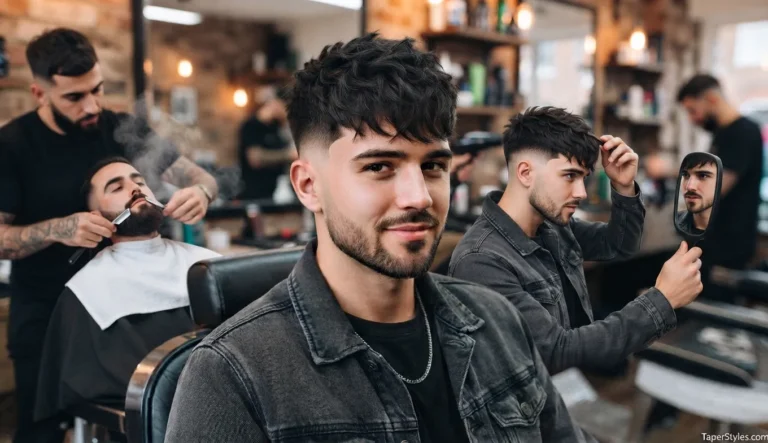
An Edgar haircut has a blunt fringe cut straight across the forehead, faded or tapered sides, and a cropped or textured top. It came out of Latino communities in the U.S. Southwest. Most hair types can wear it, but plan on a trim every two to four weeks, because the sharpness is the whole point.
Edgar haircut at a glance
| Detail | Starting point |
| Fringe | Straight across, between mid-forehead and just above the brows |
| Sides and back | Fade or taper, low to high |
| Top | 1.5 to 3 inches, cropped, textured, or fluffy |
| Best hair types | Straight, wavy, curly, thick (fine hair needs layers) |
| Upkeep | Every 2 to 3 weeks for a high skin fade, up to 4 for a low taper |
| Styling time | About 5 minutes |
What is an Edgar haircut?

Take away the fringe and you’ve got a fade. Take away the fade and you’ve got a bowl cut. The Edgar lives in the combination: a blunt fringe, short faded or tapered sides, and a top that’s either cropped or textured. That contrast between the heavy front and the tight sides is what people recognize from across the street.
Some barber vocabulary helps if you’re new to this. The fringe is the hair across your forehead. “Top” means everything longer than the sides. A fade goes all the way down to skin, while a taper stops short of it. The line-up (or edge-up) is the crisp outline at your hairline and temples, and the nape is the back neckline. Then there’s the parietal ridge, the corner where the top meets the sides. It sounds fussy, but it’s where a lot of Edgars go wrong, so keep it in mind.
You’ll hear other names for this cut: takuache, “cuh,” Mexican bowl cut. They overlap a lot, though each carries its own slang and its own crowd.
Where the Edgar haircut came from
The cut caught on in the border states first: Texas, New Mexico, Arizona, California. Young Latinos wore it before most people had a word for it. Then TikTok and Instagram spread it to Gen Z everywhere else.
The name is a mess. Nobody has confirmed where “Edgar” actually comes from. You’ll see the former Mariners player Edgar Martínez credited all over the internet, but that link is widely described as a misattribution, so I wouldn’t repeat it as fact.
Another claim floating around says the shape echoes older Indigenous hairstyles. Scholars disagree about that. Be wary of any site that treats it as settled.
Edgar vs. Caesar, French crop, bowl cut, and buzz cut
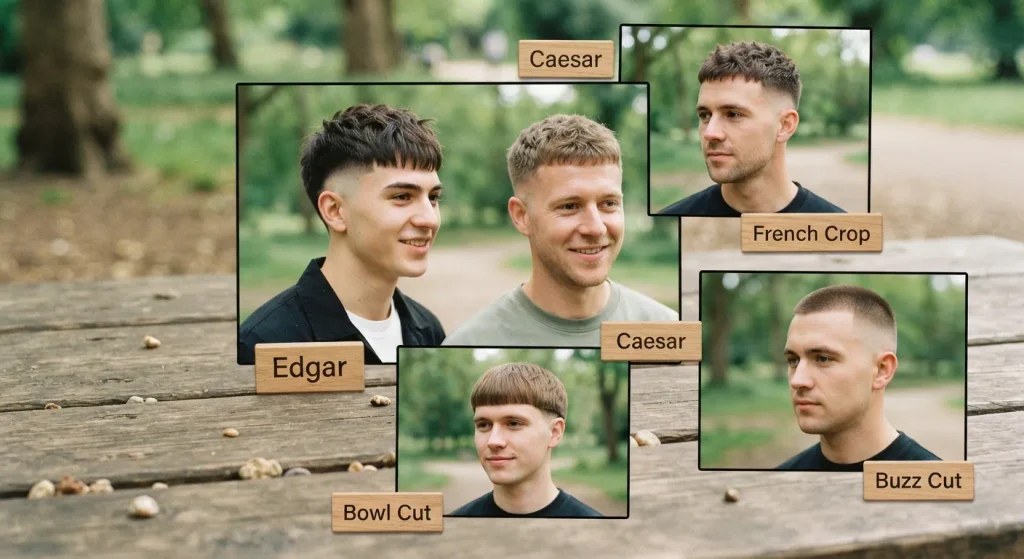
Side by side in photos these cuts look alike. What separates them is the fringe and how much contrast sits on the sides.
| Cut | Fringe | Sides | Contrast |
| Edgar | Blunt, straight, sits low | Faded or tapered, often high | High |
| Caesar | Short, even, lightly textured | Light taper or scissor cut | Low to medium |
| French crop | Short, textured, slightly uneven | Tapered or faded | Medium |
| Bowl cut | Rounded, full, longer | Longer, sometimes undercut | Low |
| Buzz cut | None | Same length all over | None |
If you’re torn between Caesar and Edgar, ask yourself how loud you want the cut to be. Caesar is quiet. Edgar isn’t.
How to ask your barber for an Edgar haircut
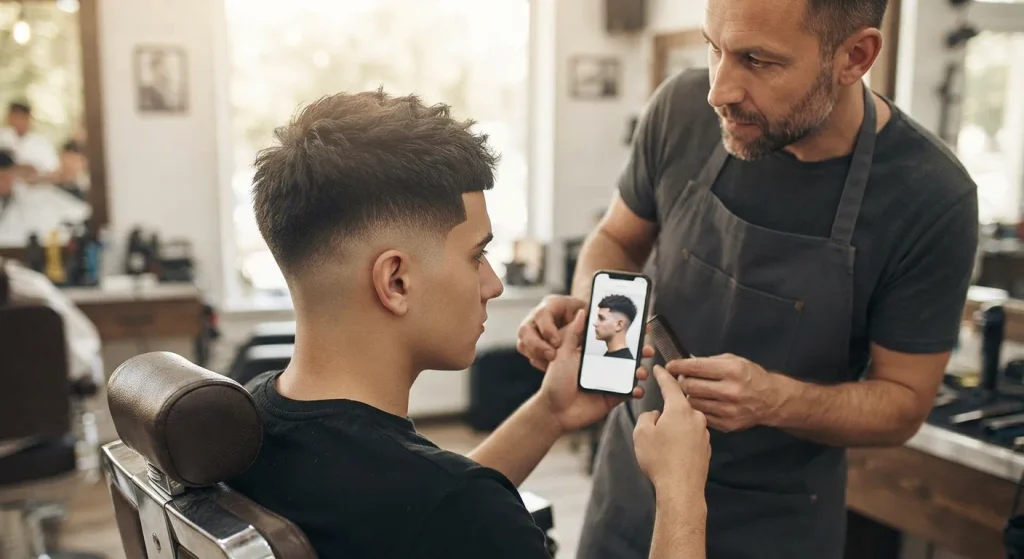
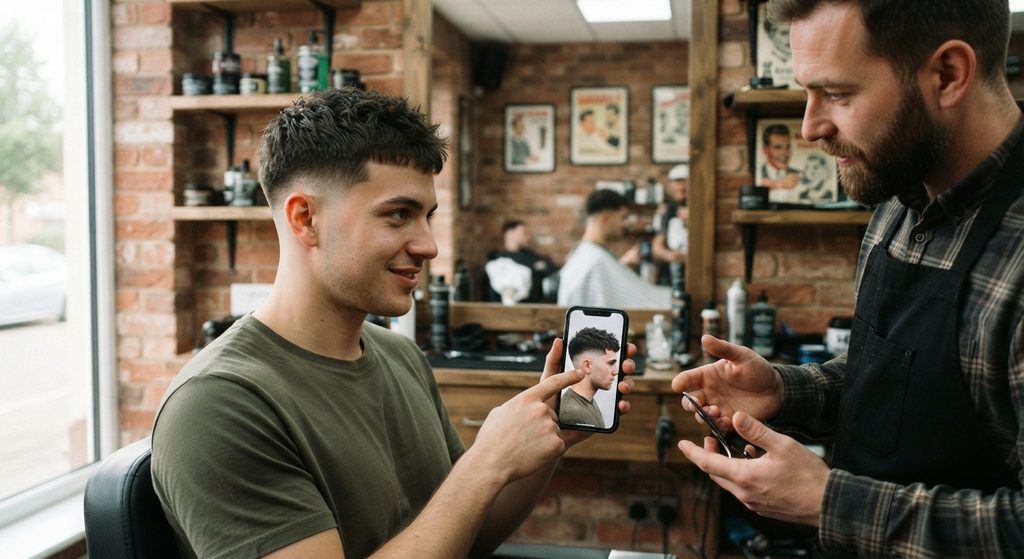
Pointing at your phone and saying “this one” is how people walk out with the wrong cut. Bring two photos, front and side, and then say the details out loud. Here’s a script you can steal:
“I want an Edgar cut. Mid fade, skin at the bottom. Leave about two inches on top. Cut the fringe straight across, just above my eyebrows, and point cut it for texture. Keep the line-up sharp.”
Change the numbers to suit you.
| Detail | Starting point | Note |
| Fade height | Low, mid, or high | High gives the most contrast |
| Bottom of fade | Skin or a #1 guard | Skin looks sharper but grows out faster |
| Top length | 1.5 to 3 inches | Go longer for a fluffy Edgar |
| Fringe | Mid-forehead to just above the brows | Longer hides a high hairline |
| Texture | Point cutting | Keeps the top from looking flat |
| Line-up | Sharp or natural | Natural is easier at school or work |
About those guard numbers: in the U.S. a #1 is usually 1/8 inch and a #2 is 1/4 inch, but they shift a little between clipper brands. Treat them as a rough guide and let the barber adjust as they go.
Mistakes that ruin an Edgar
Check these before you get out of the chair. After that you’re stuck for weeks.
A blend that sits too high is the big one, and it turns the top into a helmet. Then there’s the Parietal Ridge again: if the barber rounds it, your head can look pointed, so ask for it squared off. The fringe is its own minefield. Layer it instead of point cutting and the bangs go flat and heavy. Cut it too short and your hairline is on display. And two mistakes belong to you, not the barber: saying “bowl cut” and getting an actual bowl, or showing up with no photo at all.
Best Edgar styles by hair type
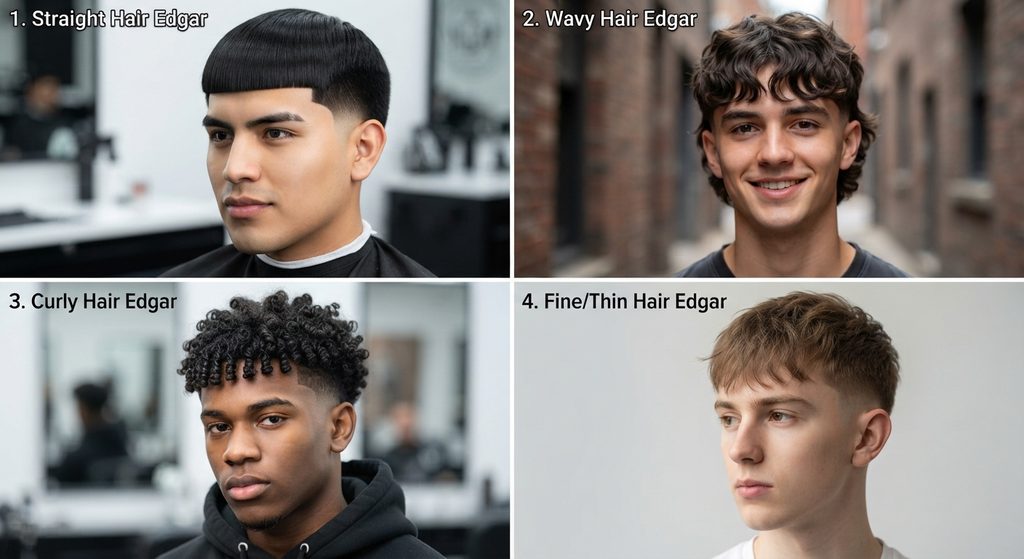
This cut works on every texture. The difference is how you handle the top.
Straight hair is the easy case. The fringe line stays clean with very little effort, and a mid or high fade with a short top is the classic look. Matte clay keeps it crisp.
Wavy hair already has volume, so use it. Ask for a choppy top and a mid taper, and work sea salt spray into damp hair. Slicking waves flat wastes them.
Curly and coily hair piles up on top and gives you the fluffy Edgar. Go with a low or mid fade so the curls stand out. Keep somewhere between 2 and 4 inches, have the barber shape the front into a clean line, and use curl cream with a diffuser.
READ MORE : Low Taper Fade Curly Hair: Styles, Tips & Barber Guide 2026
Thick or coarse hair holds shape well but gets bulky fast. Book the next trim earlier than you would with thinner hair, and ask the barber to thin out the top so it doesn’t puff sideways.
Fine or thin hair needs a bit of help. A short, fluffy Edgar with light layers works, and texture powder at the roots gives lift. Skip a long heavy fringe, since on fine hair it just lies there.
Fade choices
The fade sets the mood. A high fade has the most contrast and demands the most upkeep. A mid fade sits in between, and it’s the one I’d suggest for a first Edgar. A low fade is softer and easier in an office. A taper is gradual, with no skin showing. Drop fades curve down behind the ear, and burst fades curve around it, which looks great with curls and mullets.
Variations worth knowing: the fluffy Edgar, the messy Edgar, the Edgar mullet, a long-top version, an Edgar with a beard, and cuts with color or shaved line designs.
Which Edgar fits your face and hairline?
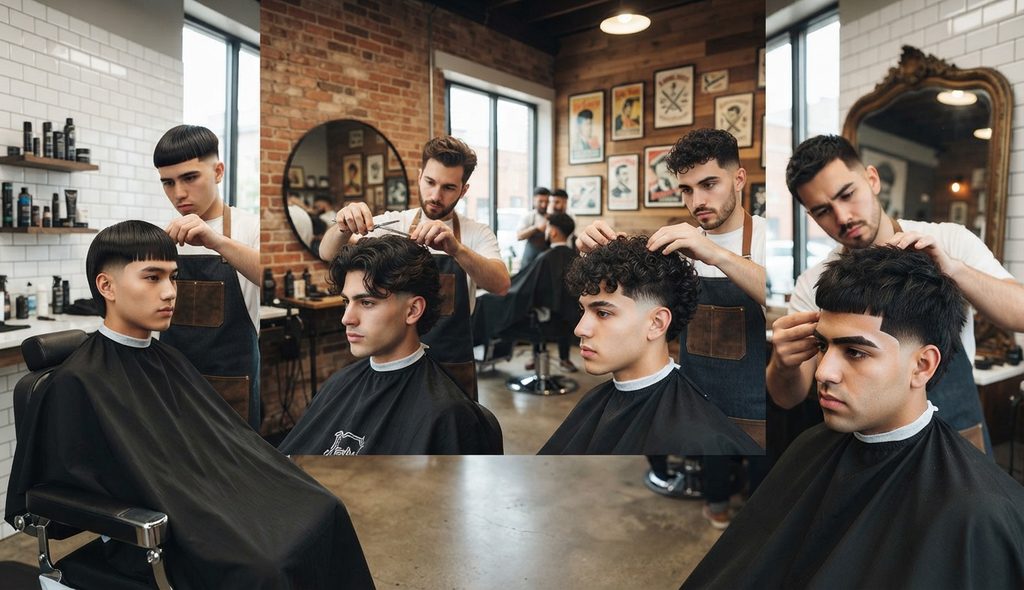
Round faces do well with a taller top, a higher fade, and a textured fringe. Square faces usually want a softer fringe and a low taper to balance a strong jaw. Oval faces are the lucky ones, since almost any version works. Oblong faces look better with a low fringe and a shorter top (extra height only adds length). Heart-shaped faces can use a slightly longer fringe and a mid taper to soften a wide forehead.
Your hairline can change the plan too. A widow’s peak hides behind a slightly longer fringe. A cowlick pushes the fringe upward, so ask the barber to leave extra length there and blow-dry it forward. With a receding hairline, keep the line-up natural and the top short with some texture powder, because a razor-sharp line-up tends to highlight the recession.
Edgar haircut for boys, school, and work
For boys and teens, ask for a low taper and a slightly longer fringe, so there’s room for growth. Men over 30 usually look best with a low fade and a softer fringe.
READ MORE : Low Fade Haircut for Men: 30 Styles, a Barber Script and Care Tips
Check the dress code before you book. Most U.S. schools and offices don’t care, but some restrict high-contrast fades or shaved designs. If yours does, go with a lower fade, a natural line-up, and a slightly longer fringe.
How to style an Edgar in 5 minutes
- Towel dry until your hair is damp, not wet.
- Work in a light pre-styler: sea salt spray for texture, or mousse for volume.
- Blow-dry the top forward, lifting at the roots with your fingers.
- Comb the fringe straight across with your fingers or a small comb.
- Finish with a dime-sized amount of product.
As for the product, matte clay gives a strong hold with no shine and suits thick or straight hair. Paste is more flexible and handles messy textures. Texture powder adds lift on fine hair, and curl cream keeps frizz down. Avoid heavy gel, because it makes the fringe look wet and flat.
On day two, mist your hair with water, add a little powder at the roots, and reshape the fringe.
Upkeep, cost, and growing it out
A skin fade shows regrowth after about two weeks, and the fringe line starts softening around then too. That’s why a high fade needs a visit every two to three weeks, while a low taper can stretch to four. Build your schedule around your fade, not around a number you read somewhere.
Prices depend on your city and shop. Line designs, color, and detail work usually cost extra, so ask before you sit down.
For daily care, use a mild shampoo, plus a clarifying one about once a week to clear product buildup. Keep curls moisturized.
Growing it out? Count on roughly half an inch a month. The fringe hits your eyes around month two, and by month three the fade has turned into a shaggy crop. Book a taper with light layers to guide the change, rather than waiting until it looks messy.
Cutting one yourself is possible, but risky. The top and fringe are manageable. The fade isn’t, and any slip shows immediately. If you try anyway, start with longer guards than you think you need, work upward from the neckline in small strokes, and cut the fringe last, dry, a little at a time. First Edgar? Let a barber do the fade.
The culture behind the cut
Edgar isn’t just a hairstyle. It’s tied to Mexican American and wider Latino youth culture, and reactions to it are mixed. Plenty of people wear it with pride. Others turn it into a joke or lean on a stereotype. A San Antonio restaurant’s “no Edgars” meme drew real backlash because many people saw the style as culturally linked to Latinos. So yes, you may get noticed, and not always kindly. Wear it because you like the shape, and respect where it comes from.
Edgar haircut FAQS
What is an Edgar haircut?
An Edgar haircut is a short cut with a blunt fringe, faded or tapered sides, and a textured top, born in Southwest Latino communities.
What’s the difference between an Edgar and a Caesar?
The fringe and sides differ. An Edgar has a sharper, blunter fringe and higher-contrast faded sides, while a Caesar is softer and more even.
Is the Edgar cut still popular in 2026?
It has stayed visible since going viral around 2020, and barbers still get requests for it. Trends change, so pick it because you like it.
Does it work on curly hair?
Yes. Curls add natural volume on top, and a low or mid fade keeps the sides clean, so the fringe and texture stand out.
Which face shape suits it best?
Oval faces suit nearly every version. Round, square, oblong, and heart-shaped faces also work with small changes to fringe length, top height, and fade height.
How often should I trim it?
Book a trim every two to three weeks for a high or skin fade, and up to four weeks for a low taper.
Why is it called an Edgar?
The origin is unconfirmed. The popular story credits baseball player Edgar Martínez, but it is often called a misattribution and remains unproven.
How do I ask for an Edgar haircut?
Bring front and side photos, then state the fade height, top length, and where the fringe should land, such as just above the eyebrows.
Can I wear it to school or work?
Often yes, but some schools and workplaces restrict high-contrast fades. If rules are strict, ask for a lower fade, natural line-up, and slightly longer fringe.
How long does it take to grow out?
Expect about two to three months to reach a shaggy crop, since scalp hair grows roughly half an inch per month.
Conclusion
The Edgar is simple on paper: a blunt fringe, a fade or taper, and some texture on top. Whether it comes out sharp or sloppy depends mostly on how clearly you talk to your barber. Pick the fade height first, then decide how much length to keep. Bring front and side photos, ask for point cutting, and check the fringe line and those corners before you stand up.
It works on most hair types, but it’s a cut that wants regular trims, usually every two to four weeks, and it comes from a real culture worth knowing about before you wear it. If you like the shape and you’re ready to keep it up, a mid fade is a safe first try. Adjust