By M. Haroon. Research-based haircut, taper fade, and grooming information, reviewed and updated regularly.
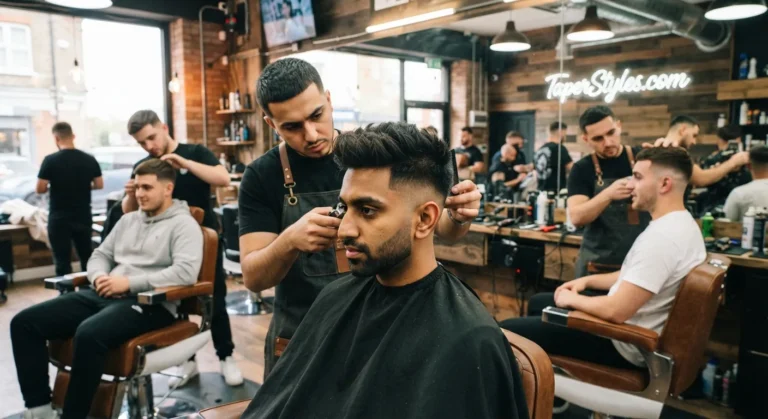
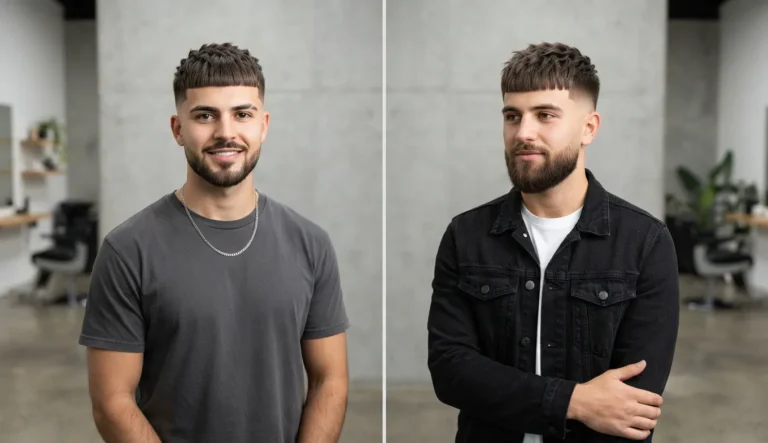
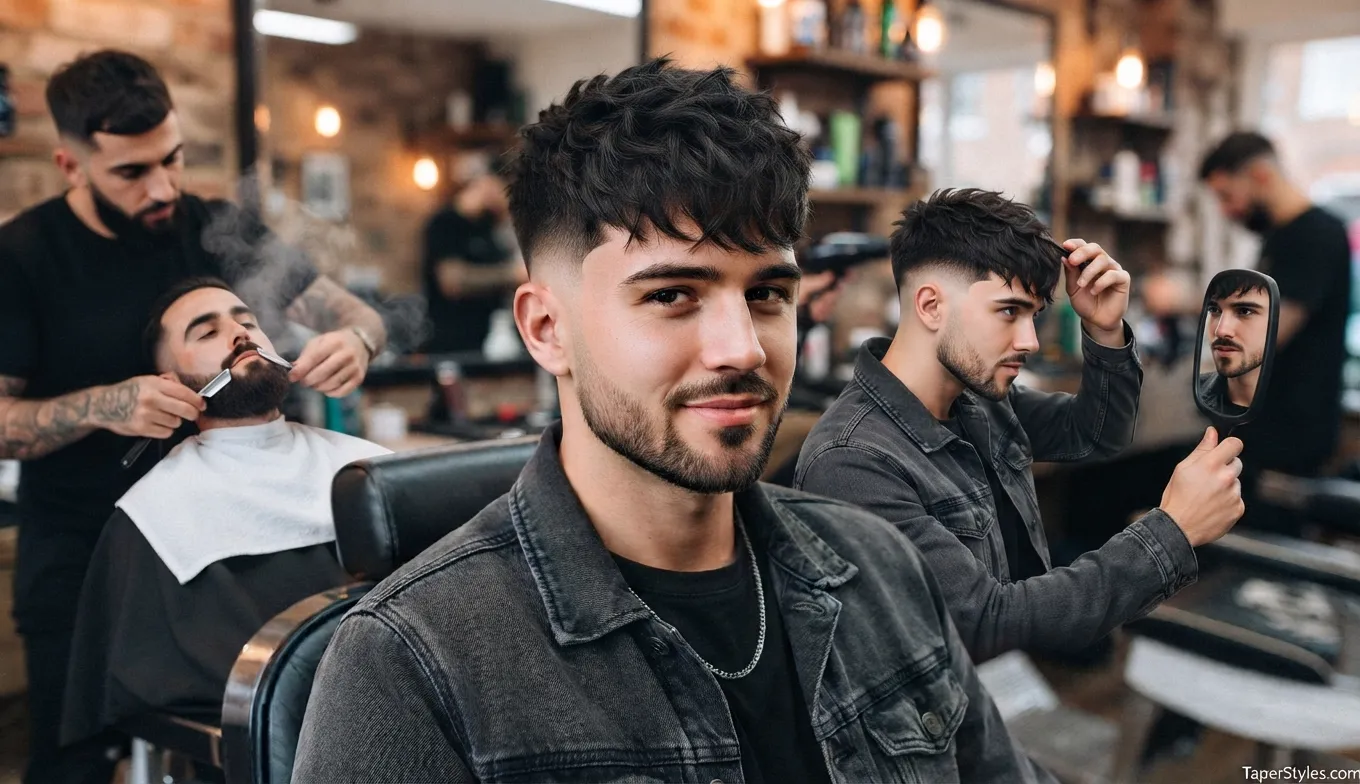
A mid taper fade fringe blends a clean mid taper with a textured fringe on top, giving you a look that’s sharp but still easygoing and it genuinely suits most hair types and face shapes. The sides taper down gradually around the temples and neckline, while the fringe keeps some length and movement up front for that bit of character.
What Is a Mid Taper Fade Fringe Haircut?
Two parts make up this cut. A mid taper on the sides, starting around the temple and blending downward. And a fringe on top, long enough to brush or blow forward across the forehead.
The sides do the heavy lifting. Because a taper grows out slower than a skin fade, you are not back in the chair every ten days just to keep the shape intact. The fringe is where the actual styling happens. Most guys need two to four inches on top before it carries enough weight to fall forward instead of standing up like a cowlick.
It reads sharp without looking like it took effort. Works fine in an office. Works fine on a Saturday night too. I have watched barbers hand this exact cut to guys who came in with three different reference photos and could not agree on one, because it splits the difference between all three.
Fringe, Textured Crop, or French Crop? Not the Same Cut
People mix these up constantly. A textured crop stays short, usually an inch or two, with choppy texture cut in using scissors or a razor. A French crop looks close to that but carries a straight, blunt line across the front instead of movement. A disconnected fringe goes further still, with a hard line separating the top from the sides instead of a gradual blend.
A mid taper fade fringe carries more length than any of these. It sits lower, closer to the eyebrows, and it actually moves when you turn your head. Short and low effort, ask for a crop. Length and something you can restyle daily, this is the one.
Mid Taper, Mid Fade, or Skin Fade? The Word You Use Matters
Barbers throw these terms around loosely, but they are not interchangeable. A taper reduces length gradually and usually does not reach the skin. A fade goes further, and a full skin fade takes the sides down to bare skin for maximum contrast. A high fade starts above the temple and creates the boldest version of this contrast. A low fade starts just above the ear for the opposite effect, subtle and understated.
For a fringe cut specifically, taper almost always wins. A softer blend fits a top that’s supposed to look relaxed rather than razor sharp. Go with a skin fade or high fade instead, and you get a hard edge that fights the fringe for attention rather than framing it. So if you want the fringe to be the focal point, ask for a taper not a fade when you sit in the chair.
The Fringe Cannot Do the Work Alone
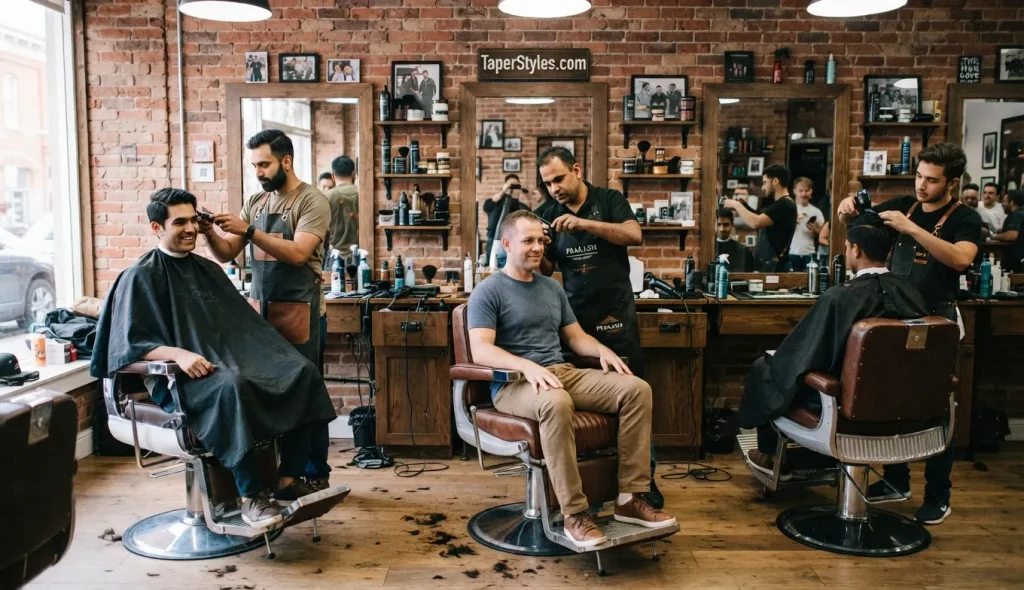
Here is the part most guides skip entirely. A fringe only holds its shape if the hair underneath it is cut to actually support it.
Leave too much weight in the crown, and the fringe gets dragged down by it. It goes flat within a day, sometimes faster, no matter how much product goes in. The taper on the sides is not decoration. Its job is to frame the fringe cleanly without pulling attention away from it.
Ask your barber to thin the layer sitting underneath the fringe. Some barbers do this freehand with thinning shears. Others use a clipper-over-comb technique for more control on thicker sections. Either works, but skipping the step entirely means even a perfectly cut fringe length looks tired by the second morning.
Cutting the Fringe Right for Your Hair Type
The same fringe length looks completely different depending on your hair. This decides more of the final result than most people realize walking in.
Fine Hair
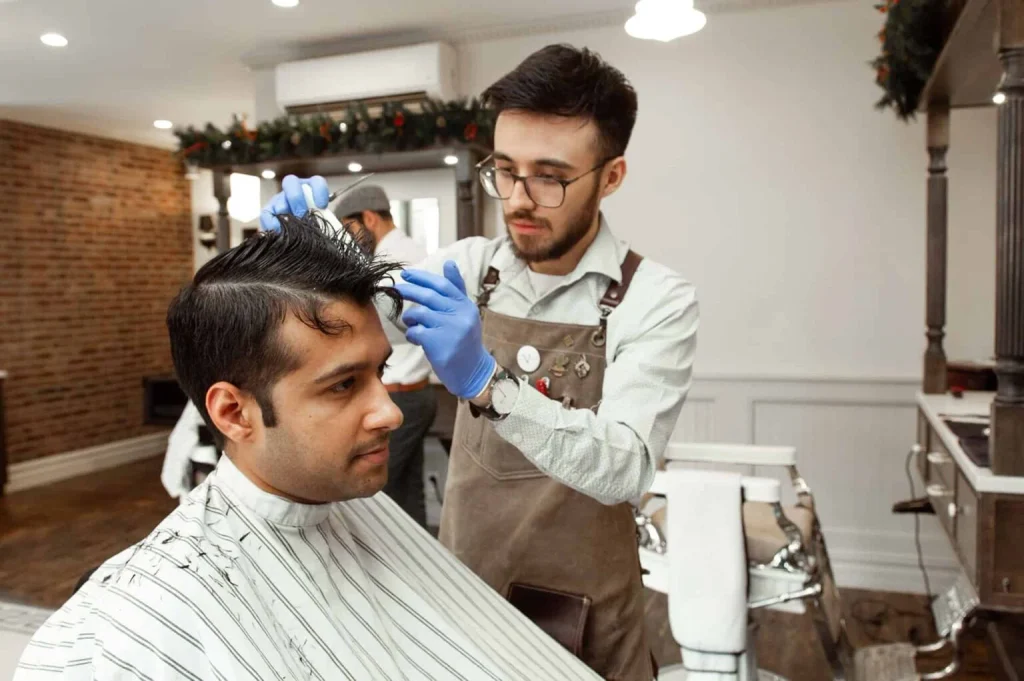
Fine hair loses shape fast. A shorter fringe, closer to two inches, holds longer than something more dramatic. Point cutting the ends helps, since it fakes a bit of thickness without adding actual bulk. Skip heavy pomade here. It weighs fine hair down within an hour.
Thick Hair
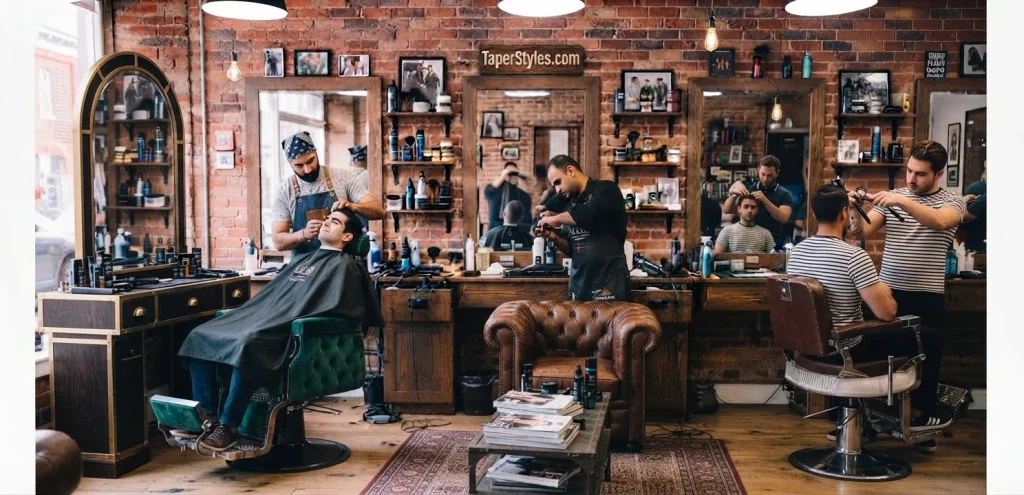
Thick hair needs weight removed, not just length trimmed off. Skip the thinning, and the fringe pushes down instead of forward. Ask specifically for texturizing scissors or a razor along the underside.
Wavy Hair
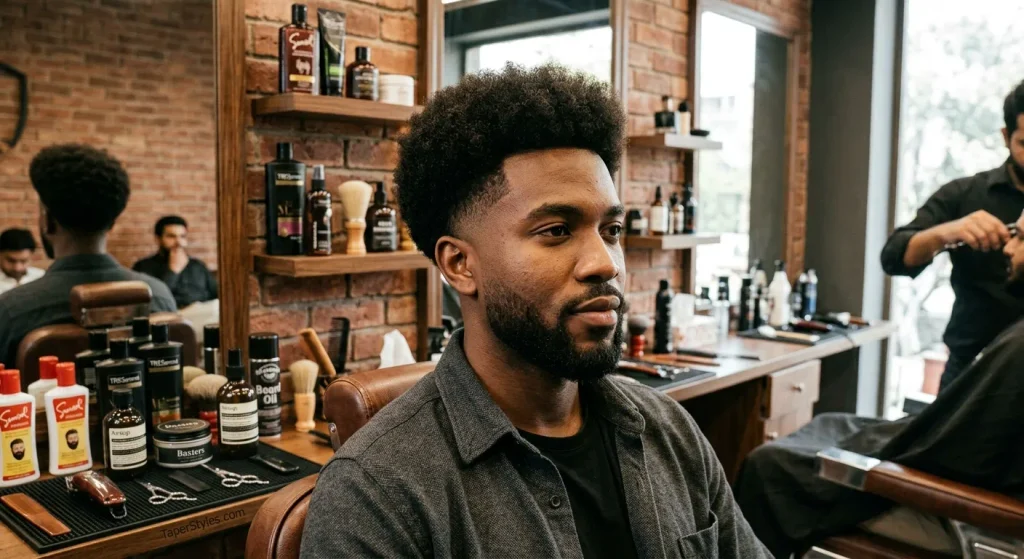
Wavy hair gives the fringe something to work with on its own. Keep at least three inches of length so the wave pattern has room to show once it dries. And go for a side-swept fringe over a straight-across one; it works with the direction your waves naturally fall instead of against it.
READ MORE: Mid Taper Fade Guide: Styles & Face Shapes (2026)
Curly or Coily Hair
Curls shrink once they dry, sometimes noticeably. Leave more length than feels right in the chair, usually three to four inches, so it still reaches the forehead once it curls up. A diffuser keeps the pattern defined instead of frizzy.
Straight Down or Side Swept, Decide Before the Clippers Start
This is not just a styling preference.It changes how the barber approaches the fringe altogether. A straight-down fringe needs an even line across the front. A side-swept one needs graduated length shorter on one side, longer on the other so it naturally falls in one direction. Make sure to say which one you want before the cut starts, not halfway through.
8 Mid Taper Fade Fringe Styles to Try
Fringe length and styling direction change the whole look. Here’s a quick comparison before we break each one down individually.
| Fringe Style | Best Face Shape | Best Hair Type |
|---|---|---|
| Short Fringe | Oval, Round | Fine to Medium |
| Curtain Fringe | Oval, Long | Medium to Thick |
| Side-Swept Fringe | Square, Oval | All Types |
| Choppy Fringe | Round, Square | Medium to Thick |
| Messy Fringe | Oval, Heart | Wavy, Curly |
| Wavy Fringe | Oval, Long | Wavy |
| Curly Fringe | Round, Oval | Curly, Coily |
| Blowout Fringe | Round, Square | Thick, Straight |
| Disconnected Fringe | Square, Diamond | Thick, Straight |
1. Short Fringe with Mid Taper Fade
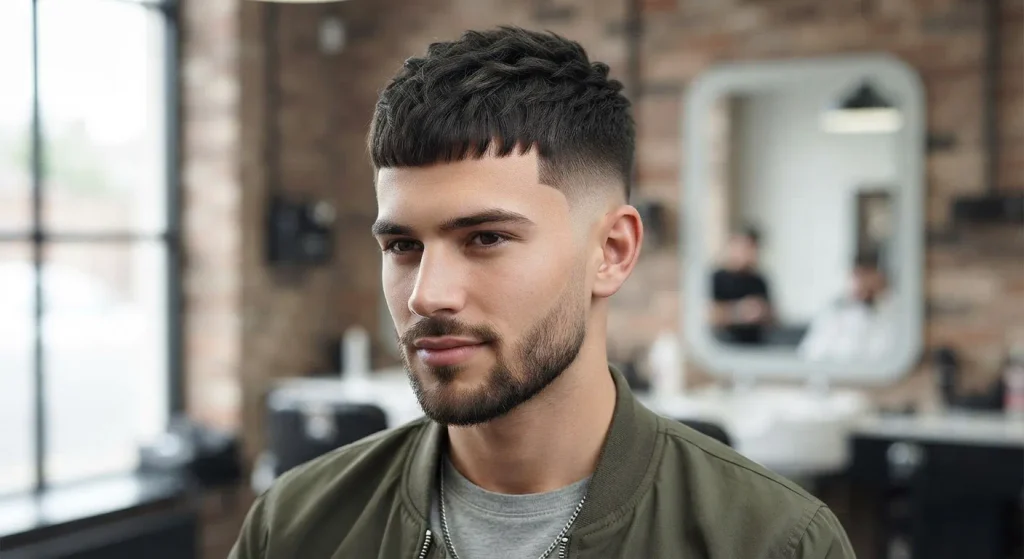
Sits just above the brow, no drama, no daily fuss. This is the version guys pick when they want the look without committing to two minutes of styling every morning. Because there’s less weight up top, it also holds its shape longer between trims than any other fringe on this list.
2. Curtain Fringe with Mid Taper Fade

Parted down the middle and swept to both sides, framing the face from two directions instead of one. It needs enough weight to fall and stay put, which is why thinner hair usually can’t carry it as well as medium-to-thick hair can.
3. Side-Swept Fringe with Mid Taper Fade
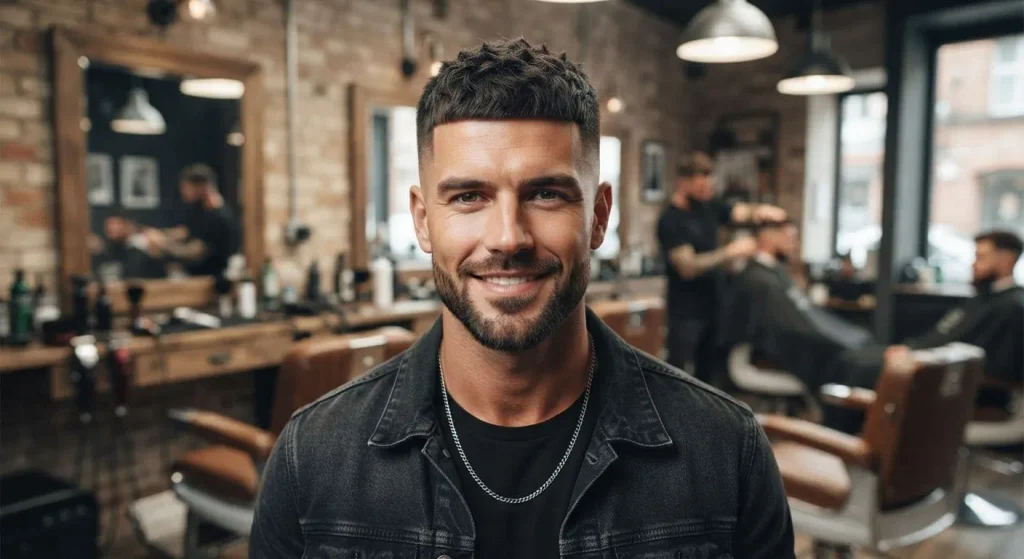
Combed to one side instead of falling straight down, which gives it more structure than a classic forward fringe. It’s also the most forgiving option here since it works across almost any hair texture, not just one.
4. Choppy Fringe with Mid Taper Fade
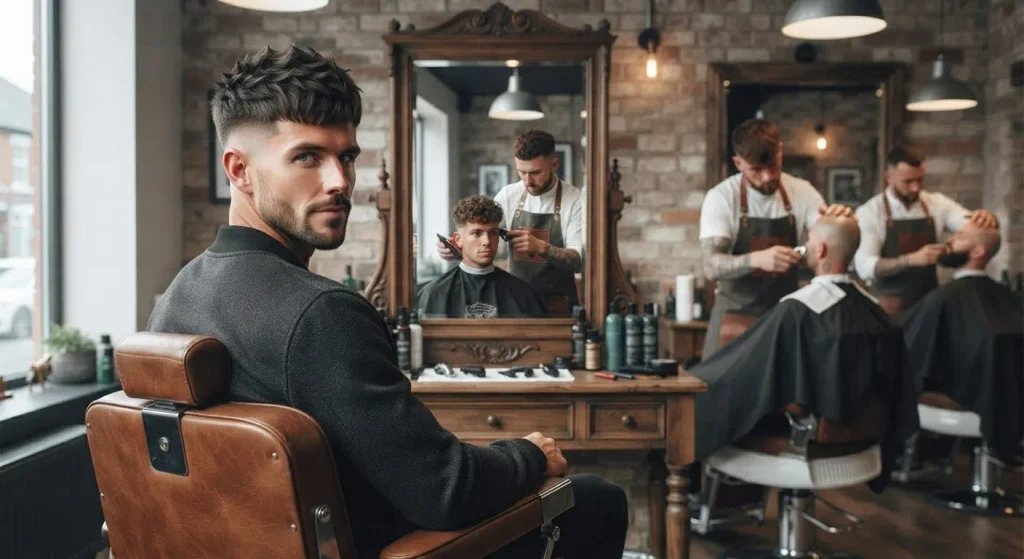
Uneven, broken ends cut with scissors or a razor instead of a blunt guard line. It’s built to look a little undone on purpose, and it pairs well with a rougher, less-polished styling routine overall.
5. Messy Fringe with Mid Taper Fade
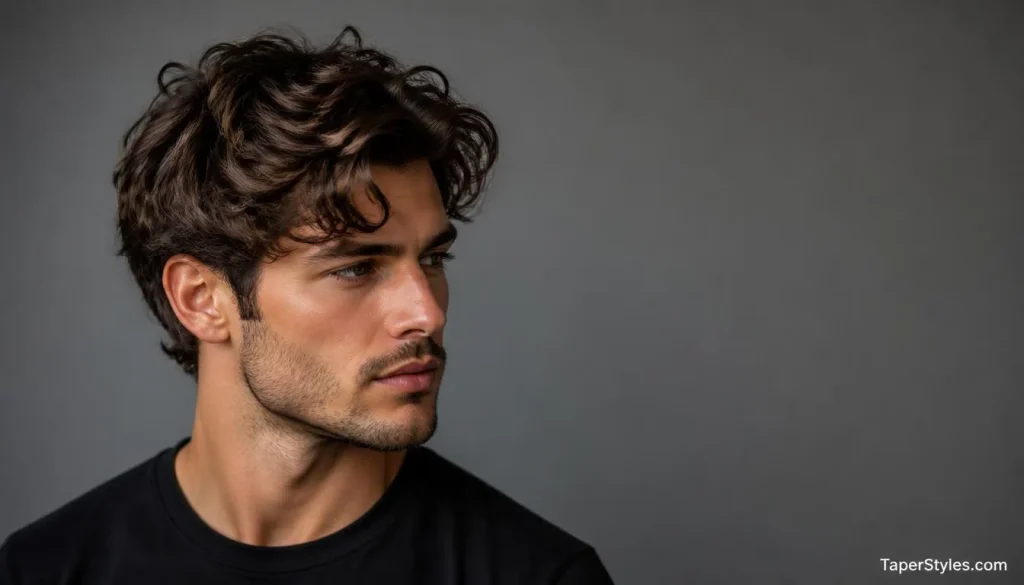
This one’s all about that just-got-out-of-bed vibe no comb, just fingers doing the work. No sharp part, no forced direction, just letting it fall where it wants. Honestly, it looks best when your hair’s already got some natural movement to play with that’s when this style really comes alive.
6. Wavy Fringe with Mid Taper Fade
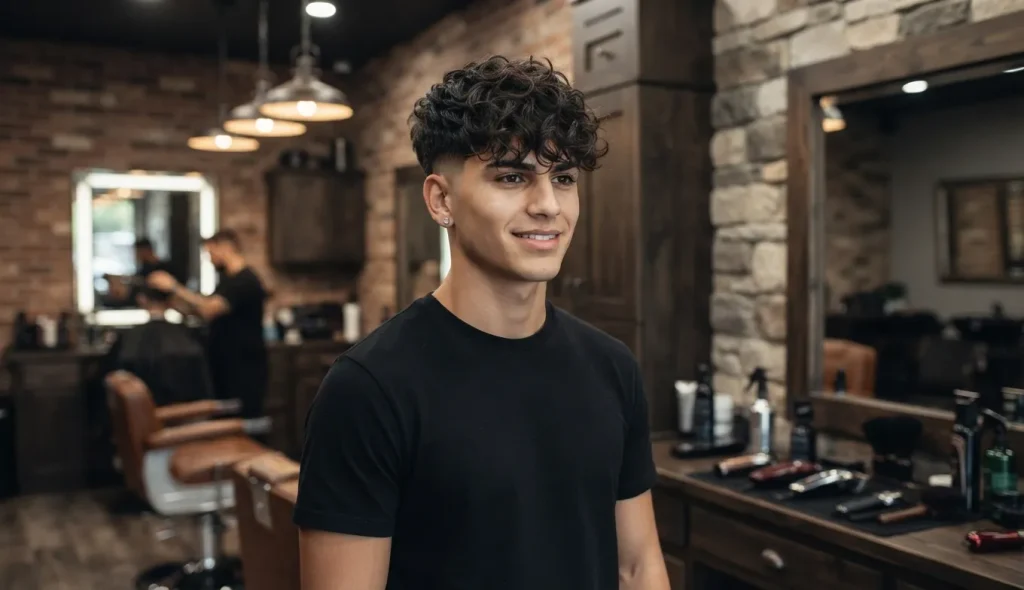
Natural wave does most of the work here, adding texture and movement without much product. Keep enough length so the wave pattern actually shows once it dries instead of getting cut away before it can do anything.
7. Curly Fringe with Mid Taper Fade

Built around the curl pattern instead of fighting it flat. Curls shrink noticeably once dry, so this one needs more length left in the chair than any other style on this list to still reach the forehead afterward.
READ MORE : Mid Taper Fade Curly Hair: Style, Cost, and Care Guide
8. Blowout Fringe with Mid Taper Fade
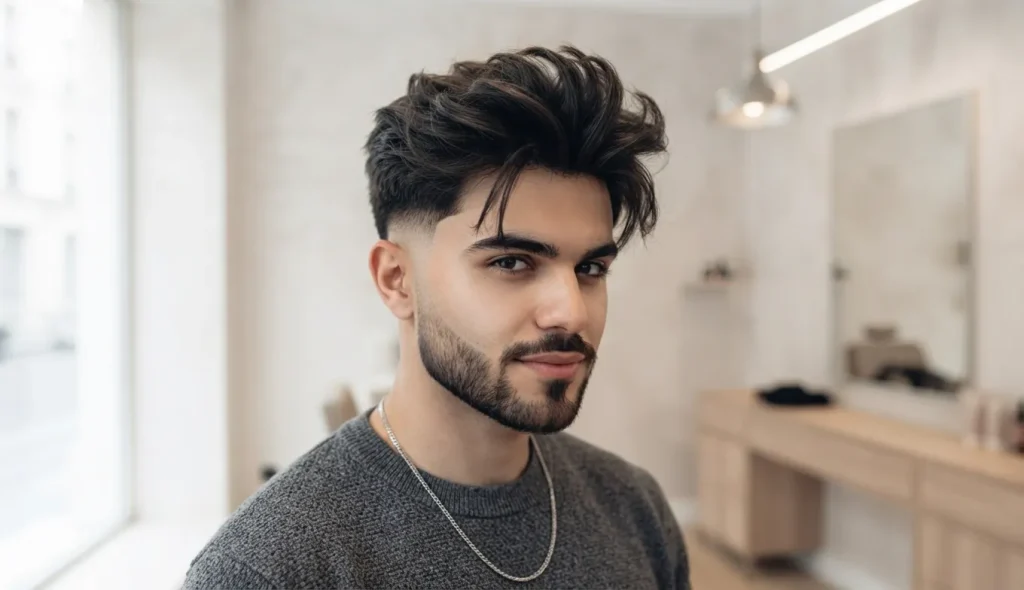
Extra volume and lift on top instead of letting the fringe fall flat. The taper underneath stays clean so the added height on top has something to contrast against rather than competing with it.
Mistakes That Ruin This Haircut
Most problems here trace back to what got said, or did not get said, in the chair.
Cutting the fringe too short is the biggest mistake. Once it’s gone, you’re stuck waiting months before it grows back to a workable length. Start longer than feels necessary.
Letting the barber guard-cut the fringe is another. A guard leaves an even, blunt result. What actually works is scissor or razor work that breaks up the texture.
Asking for a skin fade or high fade instead of a taper causes the exact clash covered earlier, a hard line sitting under a soft fringe.
Saying thin it out when you mean break up the texture gets you the wrong result too. Thinning removes bulk evenly across the whole section. Broken texture creates the uneven, choppy movement that actually makes a fringe look intentional.
Skipping Heat Protection dries the ends out over time and makes the whole thing harder to shape. Heavy wax flattens texture instead of working with it, so avoid that as well.
Overloading the fringe with pomade is a common one too. Pomade shines and holds, but it also flattens broken texture almost immediately. Save that look for slicked-back styles; it doesn’t work here.
And don’t wait too long between trims, either: the taper starts to soften and the fringe droops into your eyeline at the same time, which makes the whole cut look unfinished rather than just a bit grown out.
How Fast Does It Grow Out?
This cut does not lose its shape all at once. The fringe softens first, usually within two weeks, since it grows into the eyeline faster than the sides fade out. The taper itself holds a defined edge for close to three weeks before the blend starts looking soft. By week four, most guys notice both happening together, which is the real signal it is time for a trim rather than a touch-up.
Styling It Day to Day
This cut takes less time than it looks like from the outside, once you know the order to do things in.
- Start with hair that is damp, not soaked. Product spreads more evenly this way.
- Blow dry the fringe forward, angling it slightly downward, using a round brush or just your fingers. This sets the direction before it fully dries.
- Apply a light amount of product. Sea salt spray first for grip, if your hair needs it.
- Layer in texture clay, molding paste, or a light cream depending on the finish you want. Clay leans matter with a strong hold. Paste stays flexible for restyling later. Cream gives light hold and controls flyaways without shine.
- Work it through with your fingers, not a comb. A comb flattens the broken texture you just paid for.
- Stop before it looks wet or heavy. Less product, reapplied later in the day, beats one heavy application in the morning.
If you want more shine and a slicked, controlled finish instead of texture, a light pomade works better than clay here, though it will weigh fine hair down faster than any other product on this list.
The rule that actually matters: product should rough up the texture, not flatten it. That single habit separates a fringe that looks styled from one that looks combed.
Trim the fringe every three to four weeks. It grows into your eyeline faster than the rest of the cut does.
Matching the Fringe to Your Face Shape
Oval faces can wear nearly any version of this without much thought.
Round faces do better with a side-swept or textured fringe, since the extra angle helps. A heavy, straight-across fringe can shorten the face further, so skip that one.
Square faces look better with something softer and more textured. Sharp, blunt lines just repeat the jawline instead of balancing it.
Long faces benefit from a fuller, straight fringe. It adds width up top and shortens the overall look.
Heart-shaped faces do well with a side-swept fringe carrying some volume. It softens a wider forehead and balances a narrower chin below it.
Diamond faces, widest at the cheekbones, do well with a disconnected or choppy fringe that adds width up top to balance the cheekbone contrast.
Does This Work in a Professional Setting?
Mostly, yes. It comes down to length and how it is styled. Keep the fringe shorter and controlled, off the eyes, and it reads as polished. Let it grow longer and messier, and it leans casual fast. If your workplace runs a strict dress code, tell your barber to keep both the fringe and the sides a little tighter than you normally would, and consider a line up around the hairline for a sharper finish that reads well in client-facing roles.
What Does It Cost?
Prices swing based on where you live and who is holding the clippers.
| Barbershop Tier | Typical Price | What You Get |
| Local barbershop | $10 to $25 | Basic taper and fringe trim, minimal styling |
| Mid-range salon | $25 to $45 | Cleaner blend, basic style finish included |
| Premium salon | $45 and up | Full texturizing, precise point cutting, complete style |
Some shops add a small fee on top of the base price for the extra scissor work a fringe needs, since it takes longer than a straightforward clipper cut. Treat these numbers as a general guide. Your city, your barber’s experience, and the salon itself will move things around.
How to Ask For This Cut, Step by Step
Pointing at a photo and hoping rarely works as well as being specific does.
- Say it plainly. “I want a mid taper fade with a fringe.”
- Specify the blend. “Keep the taper soft, not a full fade down to skin.”
- Give a length. “Leave about three inches on top.”
- State the direction. Side swept or straight down, mention it directly, since straight down is usually the default.
- Bring a photo that matches your actual hair type, not just a style you liked on someone with completely different hair.
- Ask for broken texture specifically, not a guard-cut fringe or a heavily thinned one.
- If you want a sharper finish, ask for a line up around the hairline and temples once the fade is done.
A few terms are worth knowing before you sit down. Broken texture means uneven, choppy ends made with scissors or a razor, not a guard. Point cutting is when the barber angles the scissors into the ends to soften them. Disconnection is a hard, visible line between two different lengths instead of a smooth blend. A line up, sometimes called an edge up, is the sharp outline shaped around the hairline and temples. Guard number refers to the clipper attachment size that controls how much length stays on the sides. Freehand fading means the barber works without a guard for a more customized blend.
Knowing these gets you a lot closer to what you actually picture, instead of leaving the outcome up to guesswork.
Keeping It Looking Right Between Cuts
Wash it two or three times a week, nothing harsh. If you wash daily, the ends dry out fast and you’ll fight your hair more than style it. A light conditioner does the trick too, keeping things soft without flattening the top.
If the sides start growing out before your next appointment, a quick neckline trim at home can buy you some extra time. And sleeping on a silk or satin pillowcase helps too less friction overnight means the fringe isn’t fighting bedhead every morning.
Book your next trim every three to four weeks. The fringe loses its shape before anything else on this cut does, so it really sets the schedule for everything.
The American Academy of Dermatology also points out that keeping the scalp clean and moisturized helps prevent dryness and irritation and that matters even more here, given how much detail work happens right around the hairline with this cut.
How It Compares to Other Options
A low taper fade textured crop is the shorter, lower-effort version of this idea, with less length on top.A classic scissor cut with tapered sides skips the fade altogether for something more old-school. An undercut with a textured fringe pushes things further instead of a gradual blend, you get a hard, visible line separating the top from the sides. And a high fade with a fringe cranks the contrast up even more, ditching the relaxed vibe of a taper for something bolder that’s built to grab attention.
Choose the mid taper fade fringe if you want real length and styling range up top, but still want the sides to stay clean without much upkeep in between visits.
Where It Wins and Where It Falls Short
| Benefits | Drawbacks |
| Works across most hair types and face shapes | Needs a trim every three to four weeks |
| Sides stay low maintenance | Fringe needs daily attention |
| Flexible between casual and formal looks | Depends heavily on the barber’s texture work |
| Adds shape without going too bold | Tough on very fine hair without daily product |
| Restyles easily between messy and polished | Grows out unevenly if the underlayer wasn’t thinned properly |
Watch It Done: Mid Taper Fade Fringe in Action
Reading through the steps is one thing. Watching a barber actually work through the taper and shape the fringe makes the technique clearer, especially the thinning work underneath the top layer that most guides only describe in words. Pay attention to how the barber angles the scissors during point cutting, how the clipper-over-comb technique handles the thicker sections, and how gradually the taper blends compared to a full skin fade. That gradual blend is the detail that separates this cut from a sharper, higher-contrast fade.
Who Should Actually Get This Cut
Get this cut if you have medium to thick hair and want a fringe with real movement, without committing to the upkeep a full skin fade demands.
Think twice if you have very fine hair and are not willing to style daily. The fringe will need product and attention every morning to avoid going flat, and a shorter crop will likely serve you better with less daily effort.
Get this cut if you switch between formal and casual settings often. It restyles in under two minutes between a polished look and a messier one.
Think twice if you want the boldest possible contrast on the sides. A high fade or skin fade delivers that more directly than a taper ever will.
Frequently Asked Questions
What is a mid taper fade fringe?
A mid taper fade fringe combines a gradual taper around the sides and neckline with longer hair on top styled forward as a fringe.
Does a mid taper fade fringe work with curly hair?
Yes, it works well with curly hair when enough length is retained to show the curl pattern and prevent excessive shrinkage.
Does a mid taper fade fringe work with straight hair?
Yes, straight hair can create a clean, defined fringe, while light texturing helps prevent the top from looking flat or overly heavy.
Can I wear a mid taper fade fringe with a round face?
Yes, a textured or side-swept fringe can suit a round face by adding direction and reducing the appearance of excessive facial width.
How long should the fringe be?
A fringe commonly works with around two to four inches of length, depending on hair texture, desired shape, and whether it sits forward.
How often should I get a mid taper fade fringe trimmed?
Most people benefit from a trim every three to four weeks to maintain the taper, clean neckline, and manageable fringe length.
Can I style it one day and leave it messy the next?
Yes, the fringe can be styled neatly one day and worn naturally messy the next, especially when the top has enough texture.
Is a mid taper better than a skin fade for a fringe?
A mid taper usually creates a softer transition, making it easier to balance a fringe without the stronger contrast created by a skin fade.
What product should I use for a mid taper fade fringe?
A lightweight styling clay, molding paste, or texture cream usually works well, depending on your hair thickness, texture, and desired finish.
Conclusion
A mid taper fade fringe combines a gradual taper on the sides with a longer, textured fringe up top, a versatile style that works well across most hair types and face shapes. Getting it right depends a lot on how well you communicate with your barber: ask for a soft taper rather than a skin fade, broken texture instead of a straight guard-cut, and some thinning underneath the fringe so it doesn’t sit flat against your forehead. Ideal length varies by hair type. Too fine hair usually looks best around two inches, while curly hair can carry up to four inches without losing its shape.
In terms of upkeep, plan on trims every three to four weeks, a light styling product daily, and gentle washing to keep the texture intact. Prices range anywhere from $10 to $45 or more, depending on the salon’s tier. This cut is a great choice if you want styling flexibility without a ton of daily effort though if you have fine hair, you might get better results (and less maintenance) with a simpler crop instead.