By M. Haroon. Last updated September 2026. Reviewed for accuracy against current barbering technique.
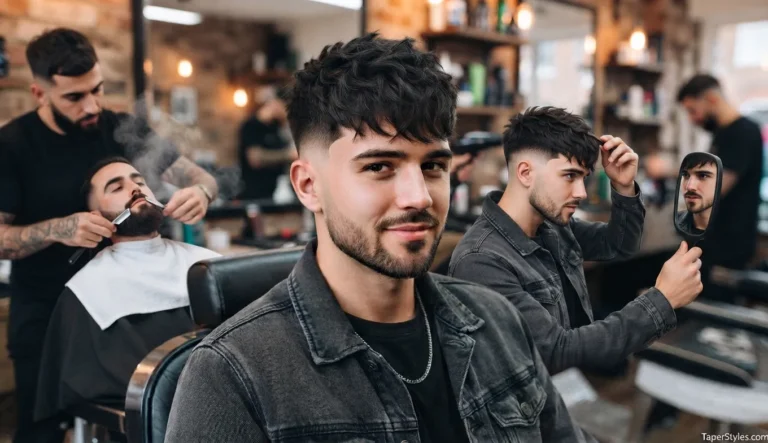
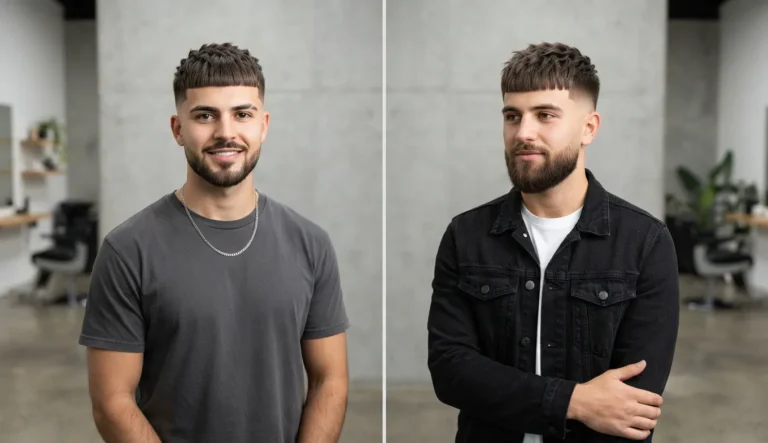
Ever heard of a low burst fade? It’s basically a low fade but with a twist instead of that straight diagonal line you get with a regular fade, taper, or drop fade, the line curves in a half-circle right around your ear. Usher’s the reason this one blew up, honestly.
His barber, Curtis Smith, is the guy behind it, and that’s why some people call it the “South of France” fad too. If your hair’s curly, coily, or wavy, this cut just works better for you since the curve follows how your hair naturally grows instead of forcing it into a straight line. You’ve got options too low, mid, or high and it looks good whether you’ve got a round face, square, oval, or heart-shaped.
We’re going to cover everything here: how to style it, what you’ll pay, how often you need to get it touched up, and the exact thing to tell your barber so you don’t end up with the wrong cut.
Key takeaways
- A low burst fade keeps the shortest hair down near the ear and neckline, then curves that fade line around the ear instead of cutting it straight.
- The curve, called the burst, is what separates it from a plain low fade. It follows the shape of the ear rather than running diagonally across the side of the head.
- It’s one of the strongest matches for curly, coily, and wavy hair, because a curved line sits underneath the natural texture better than a straight one.
- Expect a touch up every 2 to 4 weeks. The curve is the first detail to lose its shape as hair grows out.
- Most barbershops charge between $20 and $45 for the base cut; add ons like a shaved design or line up cost extra.
READ MORE : 35 Best Haircuts for Men with Straight Hair 2026 Guide
What a Low Burst Fade Actually Is
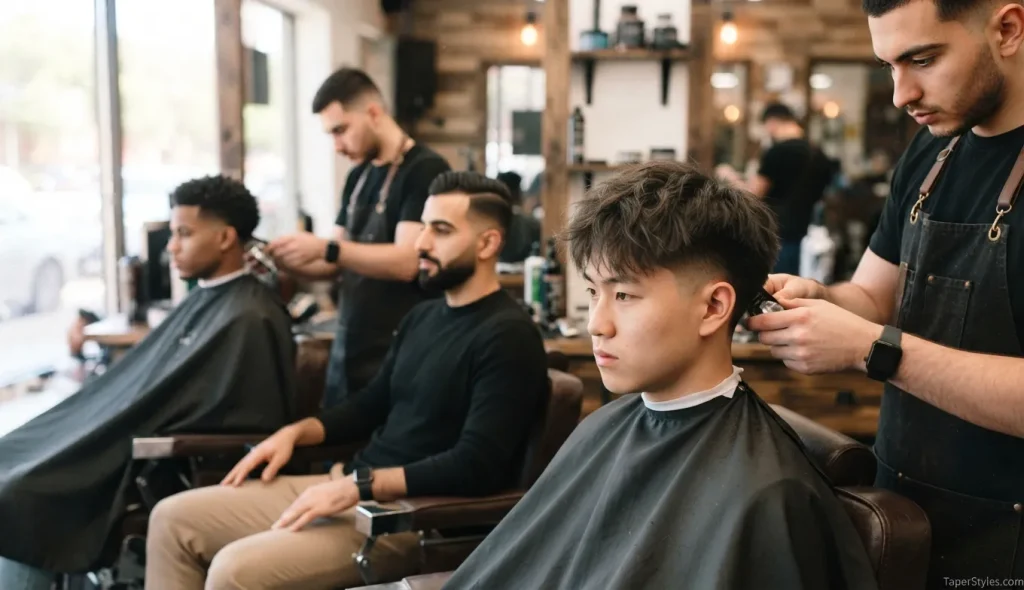
A low burst fade is really two decisions stacked on top of each other: where the fade sits on the head, and how the fade line is shaped.
“Low” answers the first question. Instead of starting near the temple, the shortest hair sits down around the ear and the neckline. Most of the hair on the sides is left alone. Only a narrow band right at the ear actually fades down toward skin.
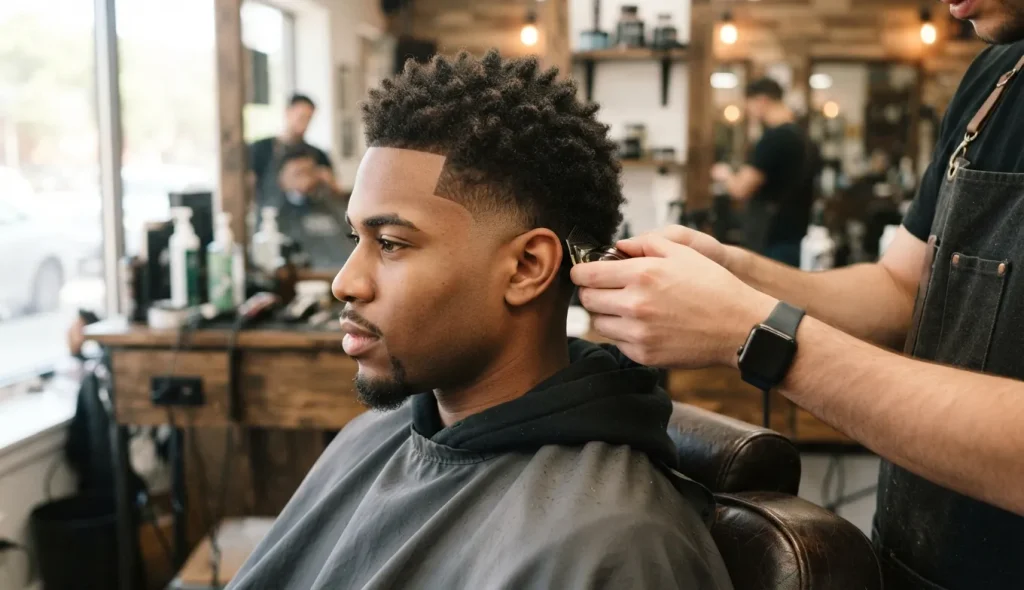
“Burst” answers the second. A standard fade runs in a straight diagonal line from the temple toward the back of the head. A burst fade skips that straight line entirely and replaces it with a curve that wraps around the ear in a half circle, tight where it meets the ear and opening up as it moves outward. Picture the fade radiating out from the ear like a small sunburst; that’s genuinely where the name comes from.
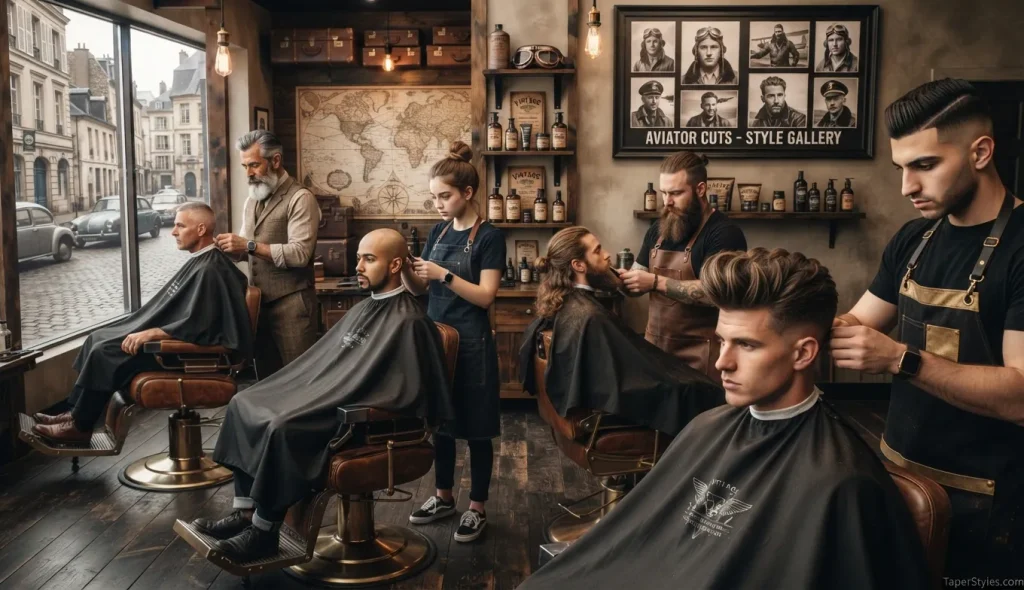
Put the two together and you get a haircut that looks understated from straight on, but has a rounded, sculpted detail around the ear the moment you turn your head. It’s a small technical change that has an outsized effect on how the whole cut reads.
Expert tip: The burst only holds its shape if the barber leaves enough hair around the ear to support the curve. Ask to see the fade from the side before you leave the chair; that’s the only angle where a rushed burst becomes obvious.
The technique itself has real roots. Curved fades run through classic barbering and Black hair cutting traditions going back decades, and the style picked up wider mainstream attention over the last ten to fifteen years, with Usher and his longtime barber, Curtis Smith, frequently credited for putting the modern curved fade in front of a much bigger audience. You’ll still hear some barbers call it the “South of France” cut for that reason.
Because the line curves instead of cutting straight, a low burst fade sits especially well underneath length and texture. Curls, waves, mullets, and fringes all rest naturally on top of it instead of fighting against a hard, straight edge the way they would on a conventional fade.
Low, Mid, and High Burst Fades Compared
“Low” isn’t the only option, and knowing where it sits against the alternatives helps you avoid asking for the wrong one.
| Height | Where It Starts | Look | Best For |
| Low burst fade | Near the ear and neckline | Subtle, close to the head, more hair retained on the sides | Curly hair, conservative settings, lower maintenance |
| Mid burst fade | Roughly at the temple | More visible contrast, added height | Round faces wanting more slimming, bolder everyday looks |
| High burst fade | Well above the ear | Strong, dramatic contrast between the fade and the top | Thick or coily hair, statement styles |
A low burst fade is the version most barbers recommend for a first-timer, since it grows out gracefully and reads well in almost any setting. A mid or high burst fade gives more contrast but needs tighter maintenance and suits fewer face shapes without adjustment.
Burst Fade vs Taper vs Fade vs Drop Fade
These four words get used interchangeably by clients, which is exactly how people end up leaving the chair with a haircut they didn’t actually ask for.
| Term | What It Means | Skin Shown? | Best For |
| Taper | Gradual shortening near the neckline and ears, no hard line | No | Conservative, office friendly looks |
| Fade | Hair shortens down to skin in a straight line (low, mid, or high) | Yes | Bold, defined looks |
| Burst Fade | A curved fade that wraps around the ear in a half circle | Usually, close to the ear | Mullets, curls, textured tops |
| Drop Fade | A fade that curves down behind the ear toward the neck | Yes | Structured looks, often paired with a beard |
The detail people mix up most: a burst and a drop fade both involve a curve, but the curves go in opposite directions. A burst wraps around the ear. A drop fade curves downward and back, tracking the shape of the skull toward the nape instead. Saying “curved fade” without clarifying which direction is the single most common way clients end up with a fade they didn’t want.
Who a Low Burst Fade Suits
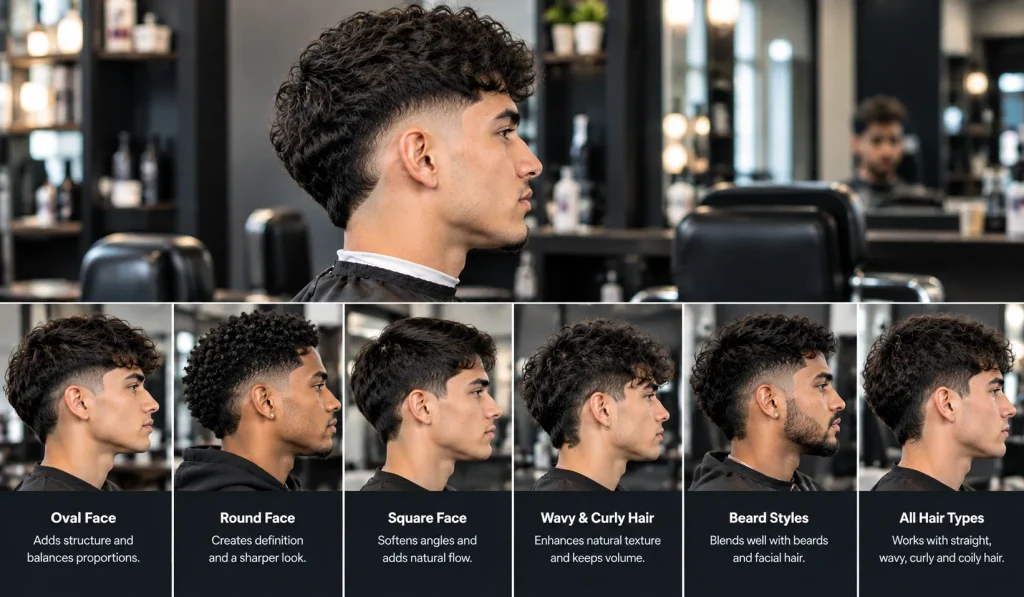
By Face Shape
- Round faces. Length and height on top do most of the balancing work here, more than the fade line itself. Keep volume up top rather than cutting it flat.
- Square faces. The curved line softens a strong jaw. A straight, hard fade line tends to do the opposite and sharpen it further.
- Oval faces. The forgiving case. Nearly every version of this cut, from a crop to a mullet, works without adjustment.
- Heart shaped faces. Volume on top paired with a low fade line balances a narrower chin against a broader forehead.
By Hair Type
- Curly hair. Probably the single best match for this cut. The curve follows the natural curl pattern instead of cutting against it.
- Wavy hair. Works with very little extra effort, since natural movement plays off the curve on its own.
- Straight hair. Takes the cut well, but the fade line shows clearly against straight strands, so precision matters more here than with textured hair.
- Coily hair. Holds the shape well over time, and because the fade stays low, there’s less exposed skin to show uneven regrowth.
READ MORE : Mid Taper Fade Curly Hair: Style, Cost, and Care Guide
10 Best Low Burst Fade Styles to Ask For
The fade underneath stays constant across all of these. What changes is the length and texture left on top, and that’s really what sets the personality of the whole cut.
- Textured crop. Short, choppy layers that flatter nearly every face shape and take about thirty seconds to style.
- Burst fade mullet. Length kept at the back for that classic silhouette, tight curved sides up front.
- Curly top. Curls left full and bouncy on top, tightly faded and curved around the ear.
- Low burst fade with beard. The curve extends into the sideburn and blends directly into facial hair.
- Quiff. A lifted, forward section balanced against the low, curved sides.
- Slick back. Hair combed straight back with the product, which shows off the curve underneath rather than hiding it.
- Textured fringe. A soft, forward-falling fringe balanced by the tight curve at the ear.
- Buzz cut top. The lowest maintenance version of the cut; the fade alone carries the whole look.
- 360 waves. For anyone maintaining a wave pattern on top, the low fade keeps the sides tidy without competing with the wave lines.
- Afro top with burst fade. A full, rounded afro paired with a tight curve around the ear; a strong option for thicker, coily hair.
The Exact Script to Use With Your Barber

A vague description gets a vague result. Say something close to this at the chair: “I want a low fade that curves around my ear in a burst shape, not a straight line. Keep it close to my neckline, and leave [state a length] on top.”
Bring a Reference Photo that shows the front, side, and back. The curve around the ear is genuinely difficult to judge from a front-facing photo alone, so a side angle matters more here than for most haircuts. Mention your hair type as well, since a curly burst and a straight-hair burst are cut with noticeably different techniques.
Two mistakes come up constantly. The first is saying “fade” without specifying low and burst, which leaves the barber to default to a straight line. The second is skipping a length for the top entirely, which leaves far too much open to interpretation.
How Much Does a Low Burst Fade Cost?
Pricing depends heavily on location and the type of shop:
- Standard barbershop: roughly $20 to $45
- High end salon: $50 and up
- Add ons such as a shaved design or a line up: priced separately at most shops
Big cities and chain salons tend to sit toward the higher end of that range. Independent, neighborhood barbershops are usually more affordable. It’s worth confirming add-on pricing before the cut starts rather than after.
Styling It at Home
- Start with damp, towel-dried hair. Not soaking wet.
- Warm a small, pea-sized amount of product between your fingers.
- Matte clay for a textured finish with no shine.
- Pomade for shine and slicked-back styles.
- Texture powder if your hair is fine or straight and tends to fall flat.
- Work the product through with your fingers rather than a comb; it gives a more natural finish.
- Lift at the roots for height, or press down for a flatter, closer look.
Once it’s part of your routine, the whole process takes about two minutes.
Maintenance and Touch Up Timeline
Most people need a touch up every 2 to 4 weeks. Where you land in that range depends on:
- How quickly your hair grows
- How tight the fade was cut in the first place (tighter fades show growth sooner)
- Your hair type (curly hair hides regrowth noticeably better than straight hair)
Between visits, a home trimmer with a close guard can clean up the neckline. Go slowly and follow your natural hairline rather than carving a hard, artificial edge. Trim sideburns in small amounts at a time; it’s far easier to take off too much than to fix it afterward.
Mistakes That Ruin the Cut
- The fade creeps upward over time. A low fade can quietly turn into a mid fade over a few visits if you don’t confirm placement with your barber each time.
- Too much hair removed around the ear. This flattens the burst into an ordinary fade. The curve needs enough hair left around it to hold its rounded shape.
- Poor blending at the back. Rarely visible on the day of the cut itself, this shows up a week or two later once the hair starts growing unevenly.
Is a Low Burst Fade Okay for School or Work?
Yes, in most cases. The low placement keeps it conservative enough for most dress codes, while the curve adds just enough detail to avoid looking plain. For the most formal-friendly version, keep the top short to medium in length. Longer styles like a mullet or a full fringe may push past what stricter environments allow.
FAQs
Is a burst fade the same as a taper fade?
No. A taper fade shortens gradually and never fully exposes skin. A burst fade curves around the ear and typically does show some skin close to the ear itself.
What’s the difference between a burst fade and a drop fade?
A burst fade curves around the ear in a half circle. A drop fade curves downward, behind the ear, toward the neck; the opposite direction from a burst.
Does a low burst fade work with curly hair?
Yes, very well. The curved line follows the natural curl pattern instead of cutting against it, which is why barbers often recommend it specifically for curly clients.
How often do I need a touch up?
Every 2 to 4 weeks for most people. Faster hair growth or a tighter fade pushes you toward the shorter end of that range.
Is a low burst fade good for round faces?
It can be, though the slimming effect comes mainly from length and volume on top rather than the fade line itself. A mid burst fade adds slightly more height if you want a stronger effect.
Is this haircut expensive to maintain?
The price per visit is the same as any other haircut. The added cost over time comes from visiting more often than you would for a plain taper.
Can I get this cut with a beard?
Yes. Many barbers carry the curve into the sideburn so it blends directly into the beard line.
Will a low burst fade look overgrown quickly?
The curve is the first part to soften as hair grows, but a low placement grows out more gracefully than a mid or high fade, since less skin is exposed to begin with.
Final words
So a low burst fade is basically that haircut where they cut it shortest right around your ear and neckline, but instead of a straight line like most fades, it curves around your ear. That’s the whole point of a low burst, actually the curve. Curly, wavy, coily hair? This cut loves that. Pretty much any face shape can rock it too, and you can pick low, mid, or high depending on how much contrast you’re after.
Just don’t tell your barber “give me a fade” and leave it at that. Say “low, curved burst fade,” give them your top length, done. You’ll need a touch-up every 2-4 weeks or it starts creeping up and loses that curve. Costs about $20-45 usually.